There is a certain patience that belongs only to the ocean. It does not hurry its stories. It does not rush its revelations. Beneath the shifting surface, where light fades and time stretches into something almost unrecognizable, change happens quietly—grain by grain, current by current, life unfolding without witness.
And yet, sometimes, we find a way to watch.
In what is being described as the world’s longest underwater timelapse recording, scientists have managed to capture a prolonged, uninterrupted glimpse into this hidden realm. Over months—sometimes even years—cameras rested silently on the ocean floor, observing what the human eye could never endure in a single sitting. The result is not a spectacle of sudden drama, but something far more subtle and, perhaps, more profound: a slow choreography of life and environment, unfolding at its own deliberate pace.
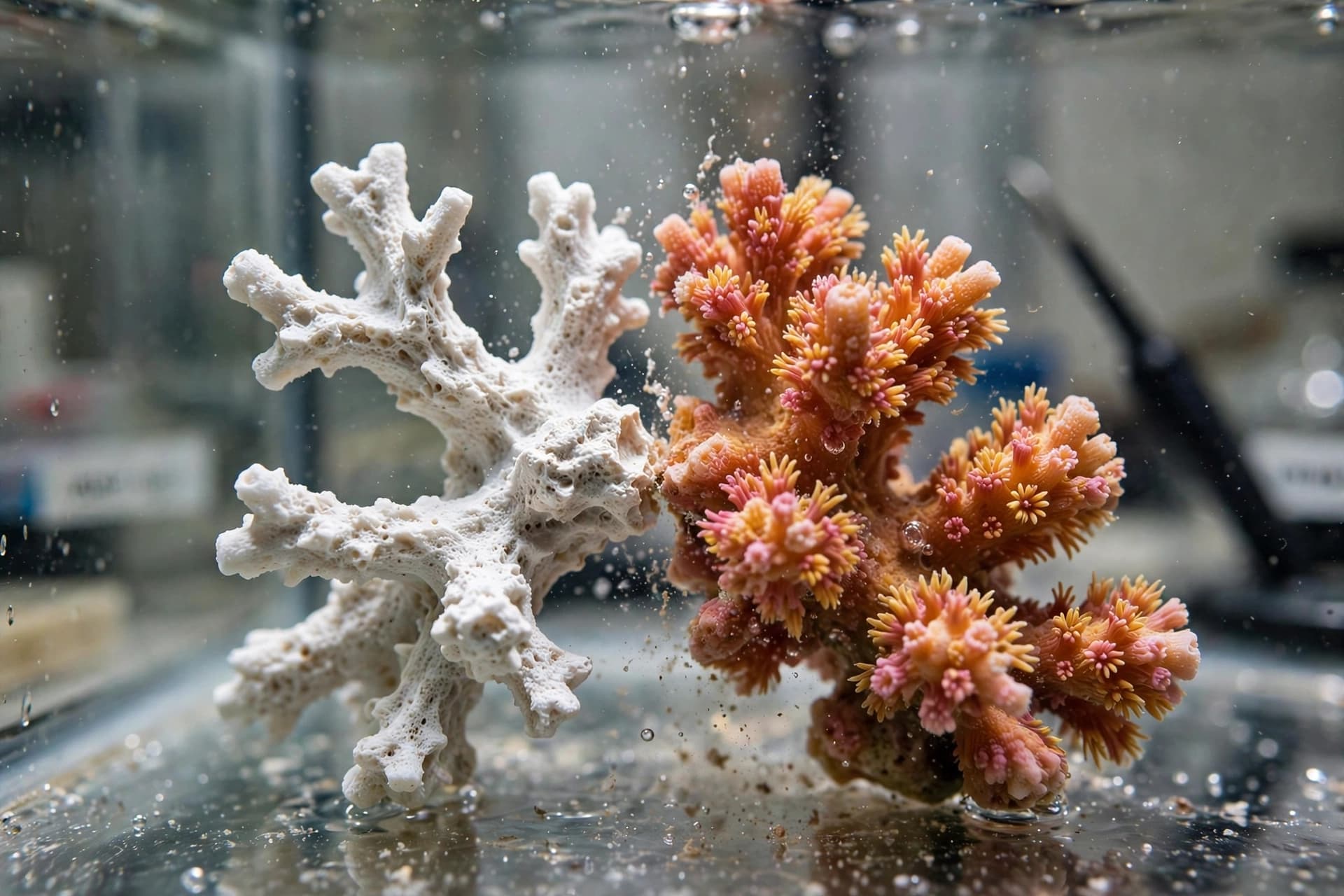
At first glance, the footage might appear uneventful. The seafloor remains still, currents drift like breath, and creatures come and go without urgency. But as the timelapse accelerates time itself, patterns begin to emerge. Sediment shifts like weather across the ocean bed. Coral structures expand, almost imperceptibly, reaching outward in fragile persistence. Marine life—small, often overlooked—reveals rhythms of activity that were once invisible to us.
What astonishes scientists is not a single moment, but the accumulation of many quiet ones. Predators and prey cross paths in delicate balance. Burrowing creatures reshape the landscape beneath them. Entire micro-ecosystems pulse with life, governed by cycles that do not align with human schedules but instead follow deeper, older clocks.
The timelapse also offers insight into environmental change. Subtle disturbances—whether from natural shifts or human influence—become more apparent when compressed into motion. Areas that seem stable over a day or a week reveal vulnerability over longer spans. The ocean floor, often imagined as static, is anything but. It is responsive, dynamic, and, at times, fragile.
Technology plays a quiet but essential role in this discovery. The cameras, designed to withstand pressure, darkness, and time itself, act as patient observers. They do not interfere. They do not interpret. They simply remain, allowing the ocean to speak in its own language. In doing so, they provide scientists with a rare continuity—an unbroken narrative of life beneath the waves.
There is also something humbling in this method of observation. Unlike expeditions that arrive and depart, the timelapse does not impose presence. It listens. And in listening, it reveals not just what happens in the ocean, but how it happens—slowly, steadily, without spectacle.
For researchers, the findings hold both scientific and philosophical weight. Understanding these long-term processes can inform conservation efforts, helping to identify how ecosystems respond to stress and how they might be protected. But beyond data, there is a shift in perspective. The ocean is no longer just a place of isolated events; it becomes a continuum, a living system in constant, quiet motion.
As the footage continues to be analyzed, scientists expect further insights to emerge—about biodiversity, environmental resilience, and the intricate connections that define underwater life. The work is ongoing, much like the ocean itself.
In the end, the longest underwater timelapse does not astonish through sudden revelation, but through persistence. It invites us to see differently, to measure time not in moments but in movements. And in doing so, it reminds us that some of the most important stories are not the loudest, but the longest—and the ones that require us, above all, to be patient enough to watch.
Source Check (Credible Media Outlets): BBC News The Guardian National Geographic CNN Smithsonian Magazine
Published by Banx Network. This article is part of the Banx decentralized media programme, powered by the BXE token on the XRP Ledger.