There is a particular weight that attaches to a fatality inquiry—not the sharp finality of a criminal verdict, but the slower, more methodical work of understanding what went wrong and why, so that the same mistakes might not be repeated. In Alberta this week, that work produced findings that are difficult to read without a sense of sorrow, because they describe a tragedy that seems, in retrospect, to have been waiting to happen.
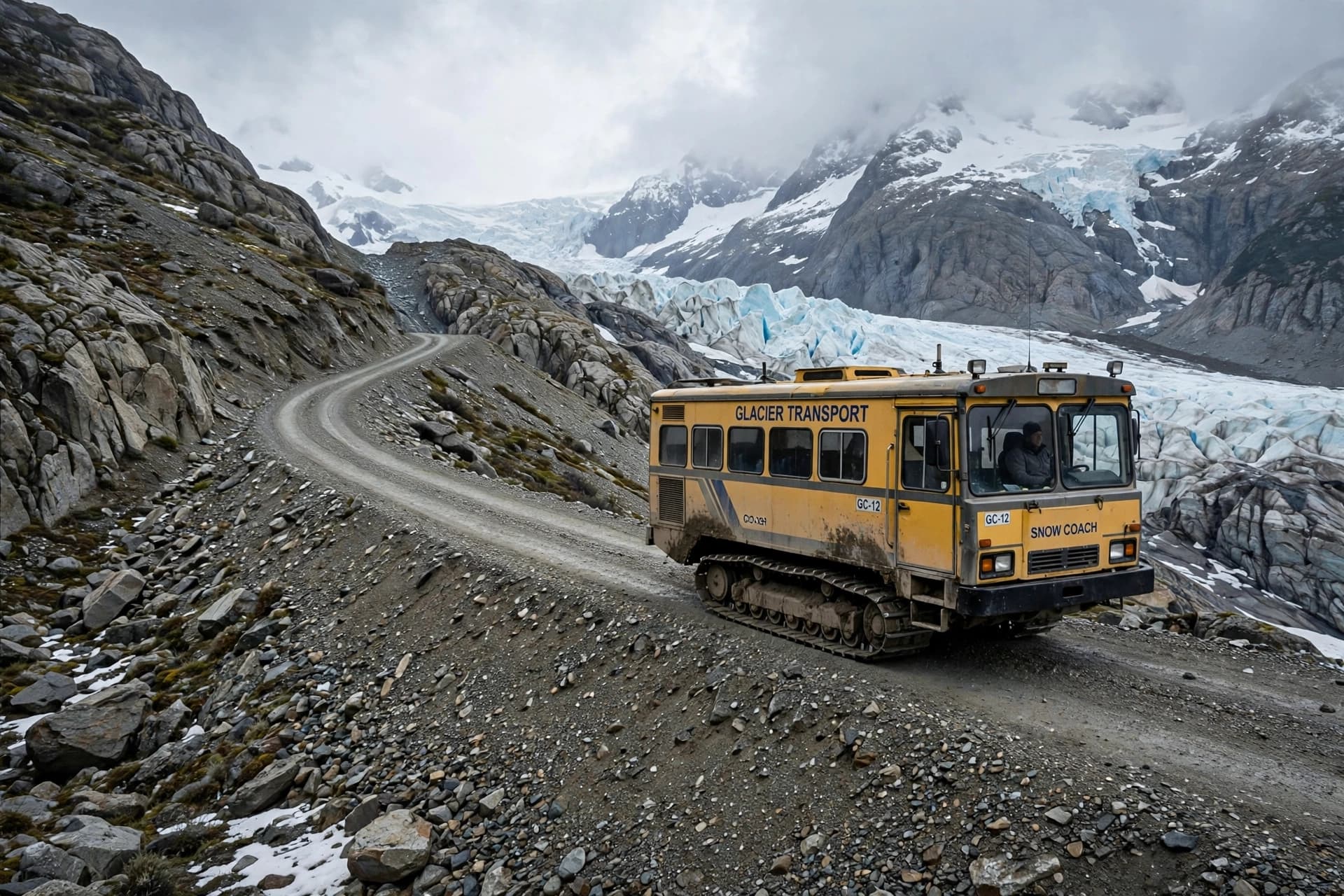
Three people died and fourteen were seriously injured when an Ice Explorer tour bus rolled down an embankment at the Columbia Icefield in July 2020 . The vehicle, carrying twenty-four tourists across the Athabasca Glacier, tumbled one and a half times before landing on its roof . Dionne Durocher, 24, Kamleshbhai Patel, 58, and Griva Patel, 28, were ejected and died within minutes .
Judge Vaughn Myers of the Alberta Court of Justice released his report late last week, and his conclusions are unambiguous. The bus had dangerously worn components, inadequate brake power, and lacked routine maintenance . Five days before the crash, a driver formally reported a major braking issue, noting that full pedal depression was required to stop the vehicle and requesting an inspection . That defect was never inspected or repaired, nor was it carried forward on subsequent daily reports .
The mechanical inspection after the crash revealed that only one of the six wheels had the power to brake safely as required . The bus had been in neutral as it descended the Lateral Moraine Road, a configuration that allowed speed to accumulate rapidly—reaching between 41 and 49 kilometers per hour, far beyond its maximum powered speed of 14 kilometers per hour . When the driver applied the manual brakes, they failed .
“In short, the brakes suffered a catastrophic failure because they were worn, improperly inspected and concerns with respect to the brakes functioning were not attended to,” Myers wrote .
The inquiry also found that on-site mechanics were new and inexperienced with Ice Explorers and lacked proper training . The bus had been serviced by Wajax, a heavy-duty repair company, two months before the crash, returning to service just twelve days before the fatal rollover .
Pursuit, the company that operates the tours, pleaded guilty to two charges under Alberta’s Occupational Health and Safety Act and was fined $475,000 for failing to mandate seatbelts and failing to control hazards . The company has since added seatbelts, changed driver training, and ensured Ice Explorers remain in full-wheel drive for the entire trip .
Judge Myers has called on Pursuit to make a series of further safety improvements . The inquiry cannot assign blame, but its findings offer a clear account of what failed—and a quiet reminder that the distance between a routine inspection and a fatal crash can be measured in overlooked paperwork and unattended warnings.
AI Image Disclaimer: The visual elements accompanying this report were generated using artificial intelligence and are intended for illustrative purposes only, not as documentary records of the individuals or events described.
Sources: CBC News, The Canadian Press, Toronto Star, Radio-Canada
Published by Banx Network. This article is part of the Banx decentralized media programme, powered by the BXE token on the XRP Ledger.