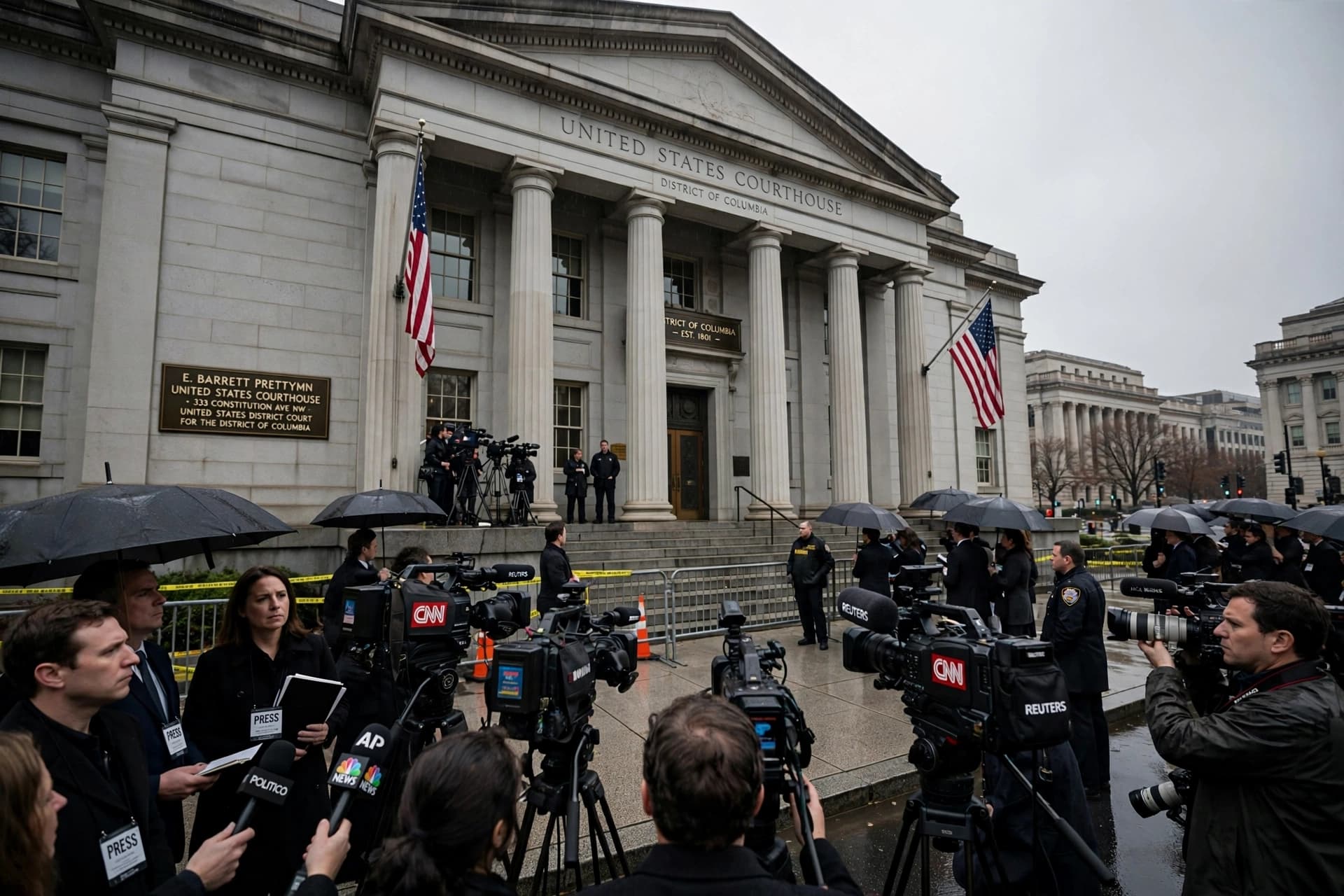
There is a particular gravity to charges filed against a former head of state—charges that transform a political figure into a defendant, that reframe the exercise of power as the commission of crimes, and that ask a court to hold accountable what the world once accepted as the prerogative of office. On Wednesday, the U.S. Department of Justice unsealed an indictment charging Nicolás Maduro, the ousted president of Venezuela, and his wife, Celia Flores, with torture and other human rights violations. The charges represent a significant escalation in the legal pursuit of a man who ruled Venezuela for more than a decade and whose departure from power has left the country in a state of uncertain transition .
The indictment, filed in federal court, alleges that Maduro and Flores oversaw a systematic campaign of torture and repression against political opponents, activists, and ordinary citizens who dissented from his government. The charges are the first to directly accuse Maduro of torture, though he and his associates have faced previous indictments on drug trafficking and corruption charges in the United States . The timing of the unsealing is notable: it comes as Venezuela continues to navigate a fragile political transition following Maduro's ouster, and as international efforts to hold him accountable for his rule intensify.
The specifics of the indictment have not been fully detailed by prosecutors, but officials have described a pattern of abuse that included arbitrary detention, physical and psychological torture, and the targeting of family members. The charges are based in part on testimony from victims and witnesses, as well as on documentary evidence gathered by human rights organizations over the years. For the families of those who suffered under Maduro's rule, the indictment represents a form of recognition—an official acknowledgment that what they endured was not merely political persecution but criminal conduct.
Maduro has denied all charges and has dismissed the indictment as a politically motivated act by the United States. He remains in Venezuela, where he retains a base of support and where the new government has not indicated whether it will cooperate with U.S. legal proceedings. The indictment does not require his presence in the United States to proceed, but the practical effect of the charges—whether they lead to arrest, extradition, or further isolation—will depend on diplomatic and political developments that are difficult to predict.
For Venezuela, the indictment raises difficult questions about the path forward. The country is struggling to rebuild its institutions, to address the economic devastation of Maduro's tenure, and to reconcile a population deeply divided by years of repression and hardship. The pursuit of justice for the crimes of the past must be balanced against the need for stability in the present. The indictment is a step toward accountability. It is not a resolution. The legal process will continue. And the people of Venezuela, who have borne the consequences of Maduro's rule, will watch to see whether the charges bring anything more than a headline.
AI Image Disclaimer: The images accompanying this article were generated by artificial intelligence and are for illustrative purposes only.
Sources: U.S. Department of Justice, Reuters, Associated Press, El Nacional
Published by Banx Network. This article is part of the Banx decentralized media programme, powered by the BXE token on the XRP Ledger.