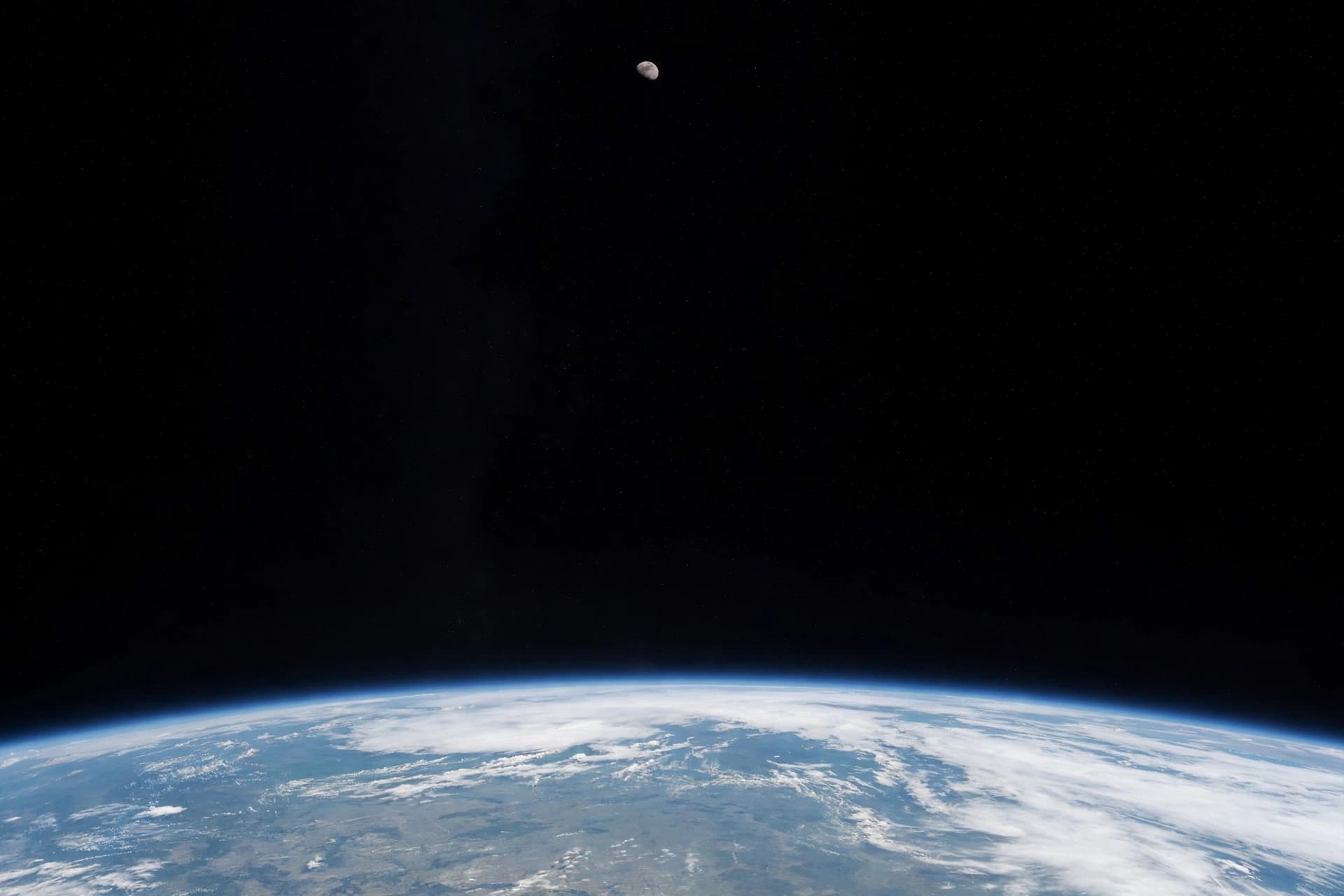
There is a quiet reassurance in the idea that the body, when asked to endure the unfamiliar, can find its footing again. For astronauts, the unfamiliar is not a place but a condition—a weightless drift that remakes the heart’s daily labor into something lighter, and therefore something weaker. The question that has lingered over plans for Mars is whether that remade heart could remember how to work under gravity again, even the gentle gravity of a distant world.
A new study led by Northwestern Medicine, UT Southwestern, and UT Houston offers an answer that is careful but encouraging. Researchers tracked the heart function of 13 astronauts during roughly six-month missions aboard the International Space Station, using echocardiograms performed before, during, and after spaceflight . The findings, published in Circulation, suggest that with a rigorous exercise regimen, the heart adapts to microgravity and then tolerates simulated Martian gravity upon return—a transition that has long worried mission planners .
The concern is not abstract. In weightlessness, blood no longer pools in the legs as it does on Earth; it drifts upward, and the heart, freed from some of its usual work, begins to shrink. Previous astronauts have returned dizzy and lightheaded, struggling to stand as blood pressure dropped—a phenomenon called orthostatic hypotension . For a crew arriving on Mars after months of travel, such fragility could compromise the mission before it truly begins.
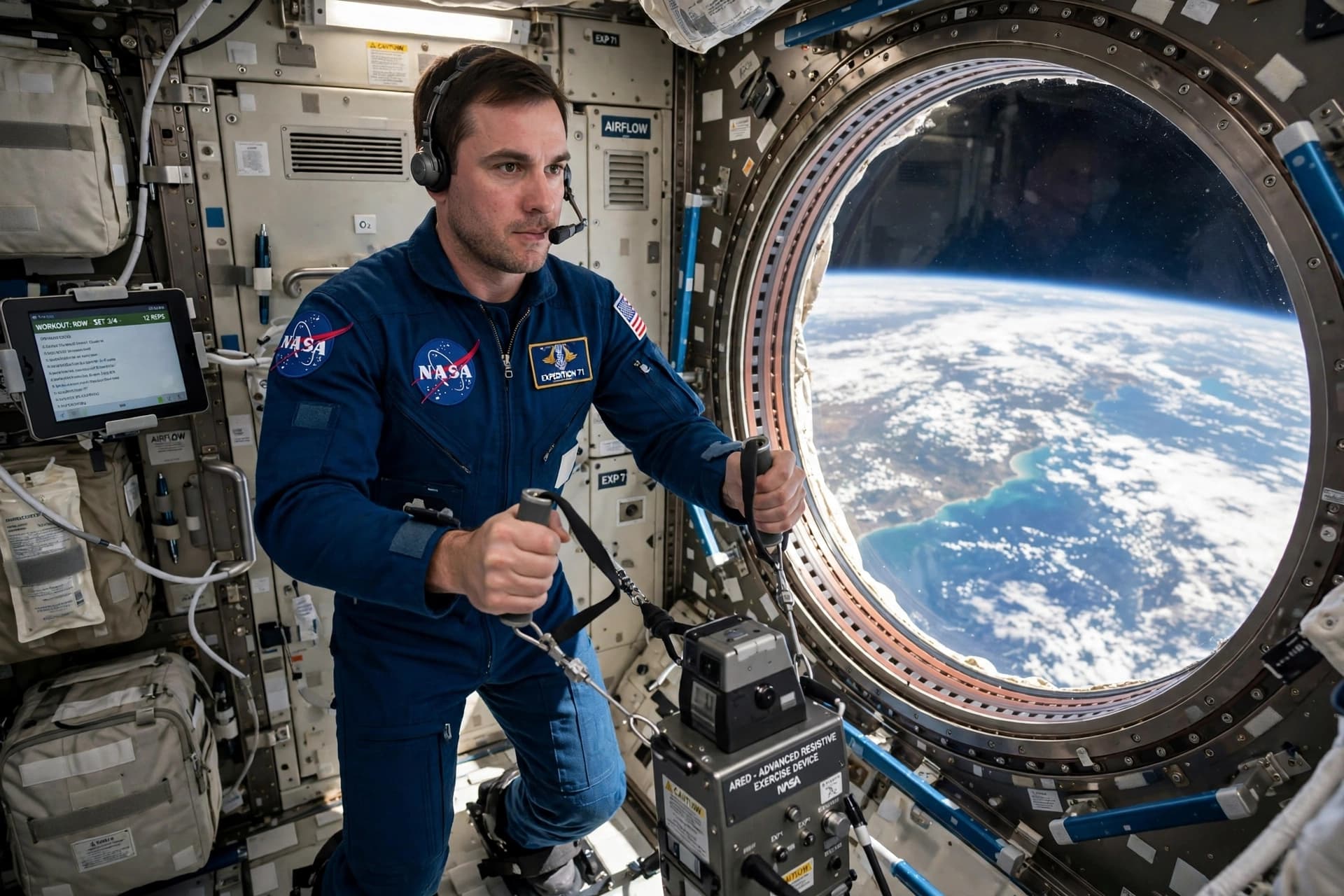
What appears to make the difference is exercise, and a considerable amount of it. The astronauts followed NASA’s Exercise Countermeasures program, working out for up to two hours daily, including 30 to 45 minutes of endurance exercise and 60 to 75 minutes of resistance training . During the first two weeks of spaceflight, their hearts did show signs of adaptation—less blood filling between beats, less pumped with each contraction—but as the mission progressed and exercise continued, those measures gradually returned toward preflight levels .
To approximate arrival on Mars, researchers tilted the astronauts 22 degrees upward after their return, shifting blood toward the lower body to mimic the planet’s weaker gravity . The astronauts’ hearts handled the simulated Martian environment as well as they had handled standing upright on Earth before launch . As study senior author Dr. James Thomas put it, there is now reason to think humans could traverse to Mars, arrive, and work on the surface .
The study is small and exploratory, and it does not resolve every cardiovascular question that deep space raises. But it does shift a major uncertainty from the realm of worry to the realm of evidence. The heart, it seems, is not a passive casualty of weightlessness but a responsive organ, capable of being maintained through effort. The daily discipline of exercise, unglamorous as it is, may be one of the quiet foundations of any future journey to another world.
For now, the finding remains a promise rather than a guarantee. Mars is still distant, and many other physiological challenges remain. But the astronauts who returned from the space station with hearts still steady under simulated Martian gravity offer something valuable: a reason to believe the body can be prepared for the journey, one workout at a time.
Image note: The visual accompanying this article is an AI-generated illustration and does not depict actual astronaut medical data.
Sources: EurekAlert!, UT Southwestern Medical Center, Circulation, Universe Today, Yahoo
Published by Banx Network. This article is part of the Banx decentralized media programme, powered by the BXE token on the XRP Ledger.