Every story of a beginning implies an ending, though we rarely like to dwell on the latter. The sun rises each morning with a reliability that feels permanent, and the planets trace their orbits with a steadiness that invites us to forget they are moving through time at all. But stars are not permanent. They are engines, and engines run out of fuel. When they do, they do not simply switch off. They swell, they shed, they collapse. And sometimes, in the wreckage, something survives. Astronomers have now found a distant system that shows us, with uncommon clarity, what that aftermath might look like—and by extension, what may one day become of our own solar system .
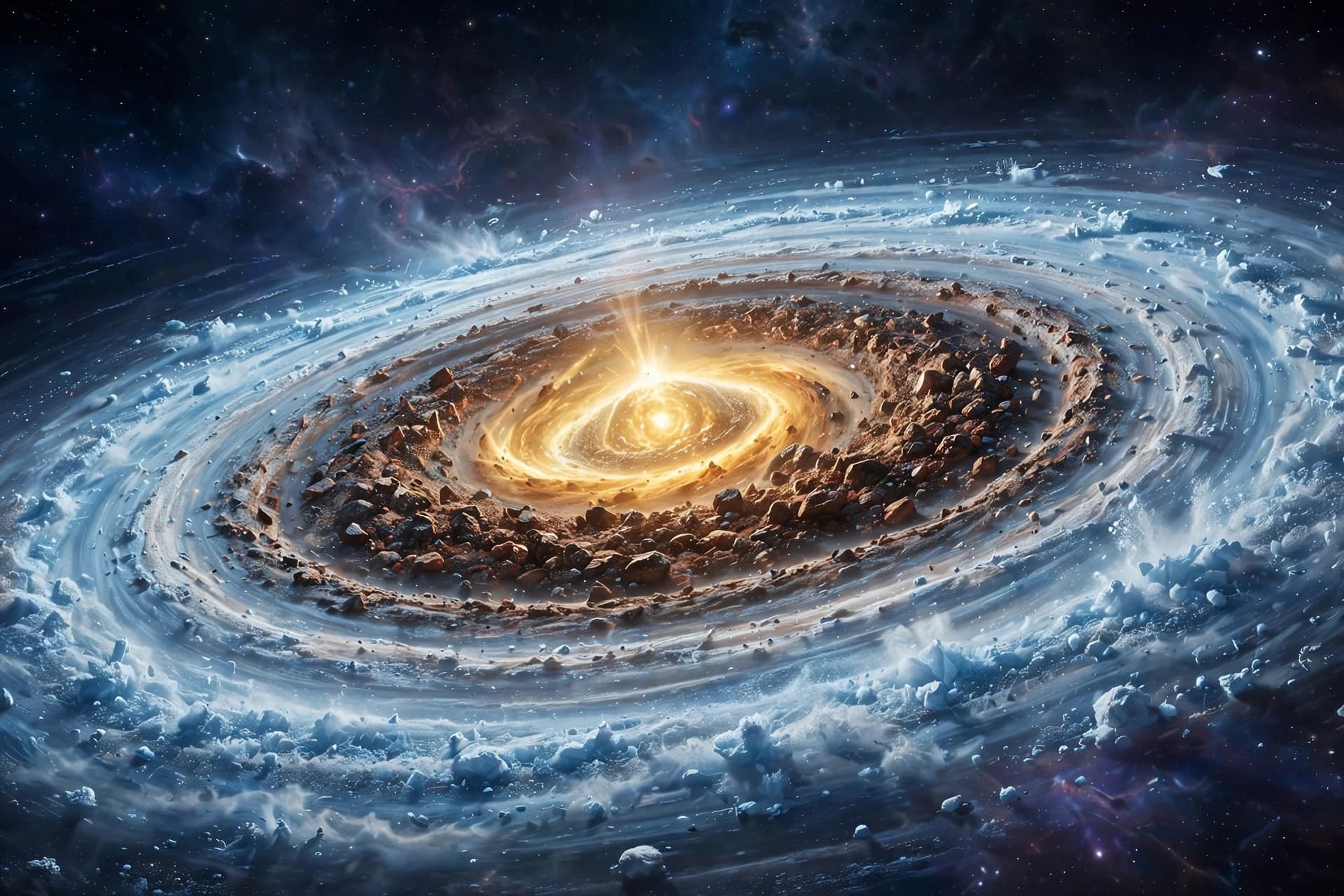
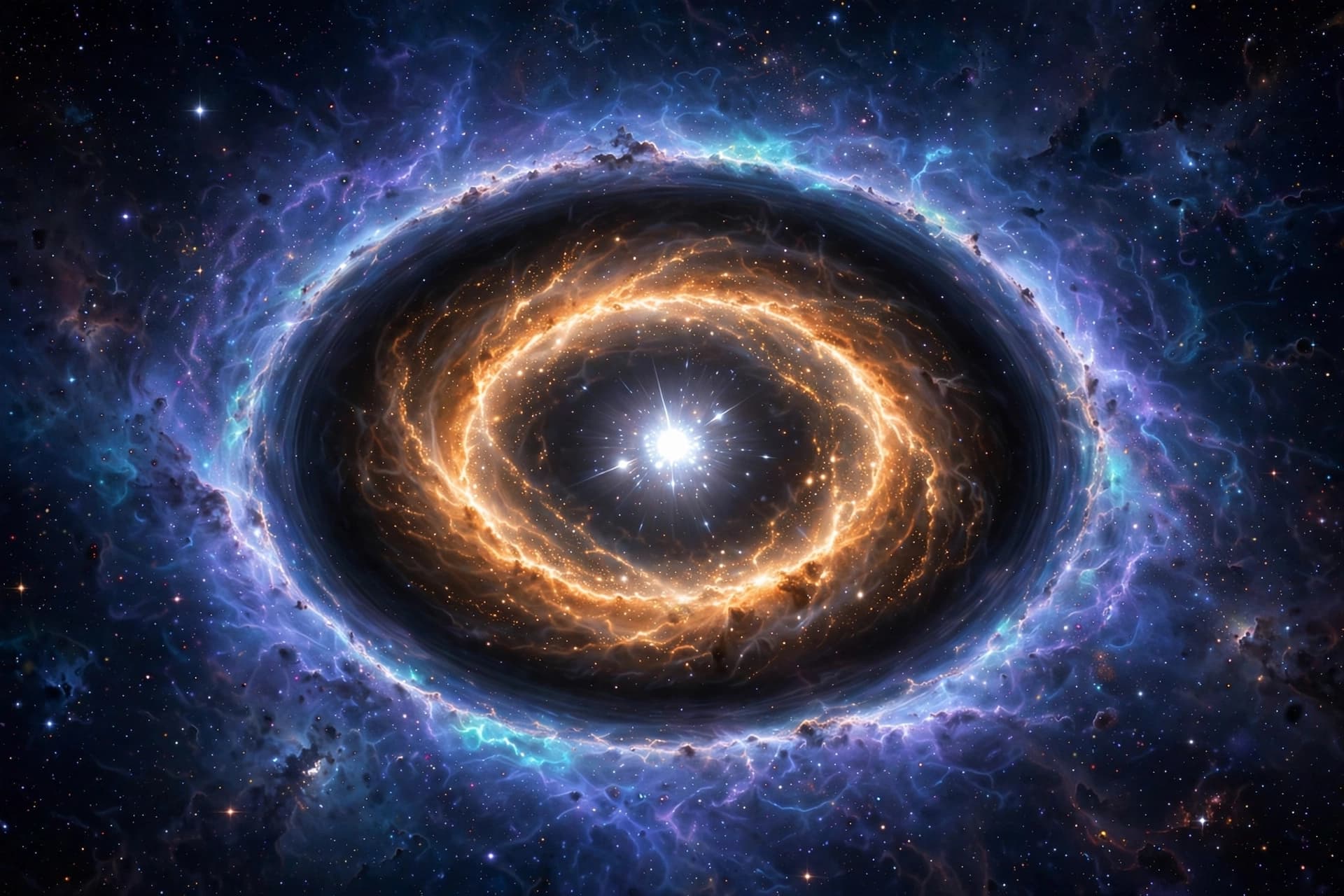
The system in question centers on a white dwarf designated J1328−1450, located about 1,600 light-years from Earth. White dwarfs are the exposed cores of stars that have exhausted their hydrogen fuel, expanded into red giants, and then blown away their outer layers. What remains is a dense, hot, Earth-sized ember. Many white dwarfs are surrounded by debris disks—the pulverized remains of planets or asteroids that strayed too close and were torn apart by the dead star's gravity. But J1328−1450 is different. Using the Very Large Telescope in Chile, a team of astronomers has found that it possesses not one but two distinct rings of gas and dust, separated by a clear gap .
The structure of this double ring is unusual. Most debris disks around white dwarfs appear as a single, flat, rotating band of material. The two rings around J1328−1450 are remarkably stable and well-separated, and the most likely explanation is that they are being shepherded by two surviving planetary bodies . The inner ring, the researchers suggest, is shaped by an object only a few kilometers across—the size of a typical asteroid. The outer ring may be influenced by something much larger, perhaps as massive as Pluto or even our Moon. These bodies, if they exist, are the remnants of a planetary system that once orbited the star before it died. They are witnesses to a catastrophe, and their gravity continues to shape the debris of their lost neighbors.
The composition of the debris tells its own story. The rings contain calcium, oxygen, magnesium, and iron—elements consistent with rocky planetary material, similar to the building blocks of Earth and the other inner planets of our solar system . But the two rings differ in composition. The inner ring is rich in magnesium gas, while the outer ring is largely stripped of it. This suggests that the material in the two rings came from two different source bodies, perhaps two planets with distinct compositions that were destroyed at different times or in different ways . Alternatively, the rings might originate from different layers of a single body—the crust and the core, separated and spread across orbits.
For those of us living on a rocky planet orbiting a star that will, in roughly five billion years, enter its own red giant phase, this distant system is more than a curiosity. It is a preview. When the sun exhausts its core hydrogen, it will expand, possibly engulfing Mercury, Venus, and perhaps Earth. It will then shed its outer layers and settle into a white dwarf. Any planets that survive this transformation—those that orbited far enough out, or those that formed in the outer solar system—may eventually be disrupted, their debris forming a disk around the dead sun. The white dwarf J1328−1450 shows us that such disks can exist, that they can be complex, and that some planetary bodies may endure even as their star dies .
There is something both sobering and strangely comforting in this. The end of a planetary system is not a single, clean event. It is a long unraveling, a gradual sorting of what survives and what is ground to dust. The white dwarf does not simply erase its planets; it may, in some cases, leave behind a few witnesses—small, silent bodies tracing their orbits around an ember, shaping the debris of a world that once was. The astronomers who study these systems are, in a sense, archaeologists of the future. They sift through the rubble of dead stars to understand what might remain of our own.
The discovery of J1328−1450's double ring does not answer every question about the fate of planetary systems. It raises new ones. How common are such surviving bodies? How long can they persist? What does their existence tell us about the conditions under which planets form and die? These are questions for future observations, future instruments, future patience. But for now, the system offers a glimpse—distant, faint, but unmistakable—of what the end of the solar system could look like. It is a portrait painted in debris and gas, and we are learning to read it.
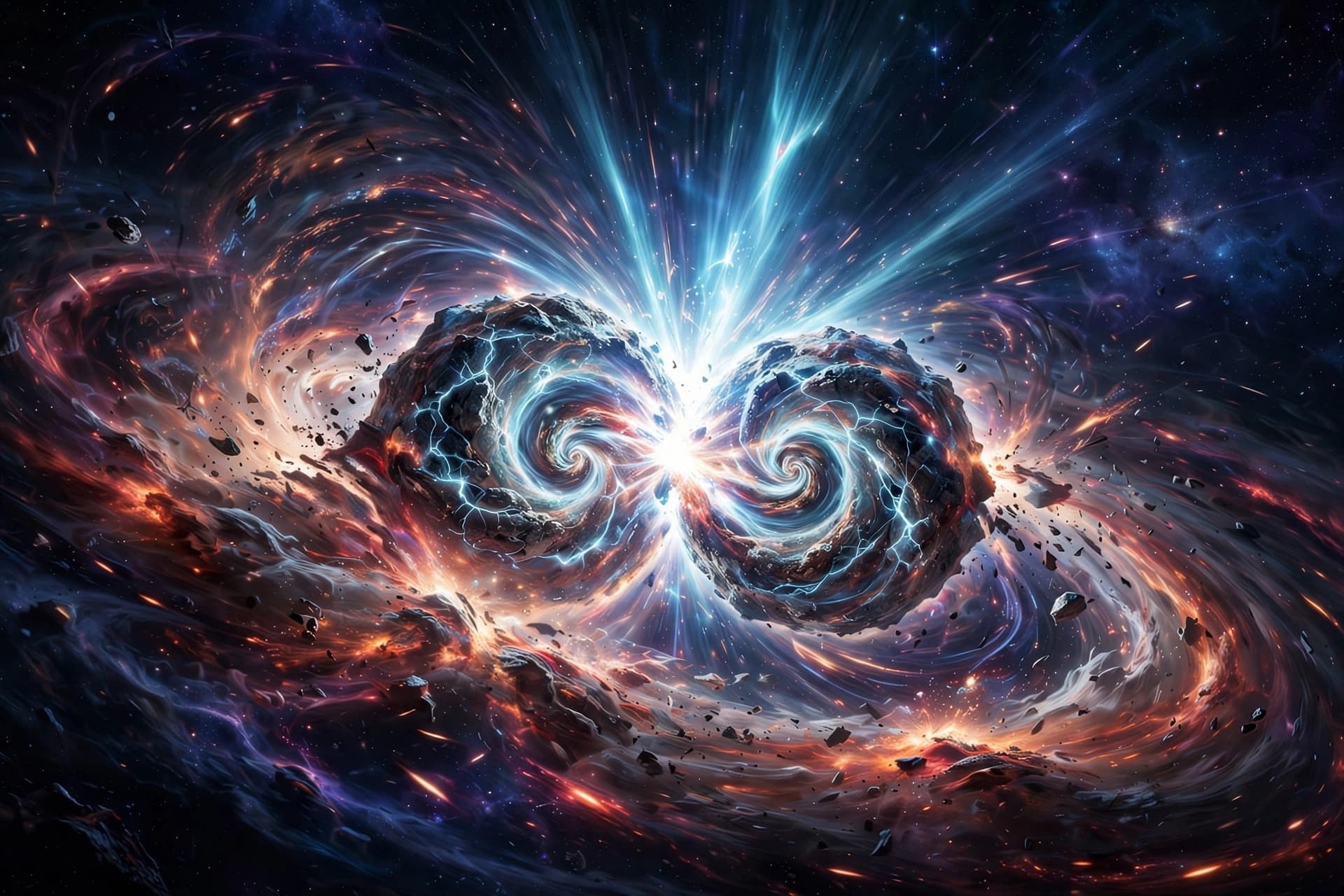
Image Disclaimer: This article's illustration was produced using AI image generation and should not be taken as an astronomical photograph.
Sources: WIRED, European Southern Observatory (ESO), Nature Astronomy, Media Indonesia
Published by Banx Network. This article is part of the Banx decentralized media programme, powered by the BXE token on the XRP Ledger.