Deep beneath our feet, far beyond the reach of drills or direct observation, the Earth keeps its quietest secrets. Like a story told in layers, each deeper than the last, the planet’s core continues to invite questions that science can only approach through careful listening rather than direct sight.
Recent scientific research suggests that a previously unknown structure may exist within Earth’s inner core, offering a new perspective on how the planet’s deepest layer is organized. This insight comes from the analysis of seismic waves, which travel through the Earth during earthquakes and provide indirect clues about its internal composition.
Seismologists have long used these waves as a form of natural imaging, observing how they slow down, speed up, or change direction as they pass through different materials. Subtle variations in these patterns have now led researchers to propose that the inner core may contain an additional structural layer.
This potential “hidden” structure appears to differ in the alignment of iron crystals compared to the rest of the inner core. Such differences could influence how seismic waves propagate, helping explain anomalies that have puzzled scientists for years.
The findings build on decades of research into Earth’s interior, which is traditionally understood as consisting of the crust, mantle, outer core, and inner core. The suggestion of further complexity within the inner core adds nuance to this established model.
Scientists emphasize that these conclusions are based on indirect measurements and require further verification. Because the core lies thousands of kilometers beneath the surface, direct sampling remains impossible with current technology.
Even so, the discovery highlights the evolving nature of Earth science, where new tools and methods continue to refine understanding of familiar concepts. It also underscores how much remains unknown about the planet we inhabit.
Ongoing studies aim to gather more seismic data from earthquakes around the world, which may help confirm or refine the proposed structure.
While the idea of a hidden layer within Earth’s core remains under investigation, it reflects the steady progress of science in illuminating even the most inaccessible parts of our world.
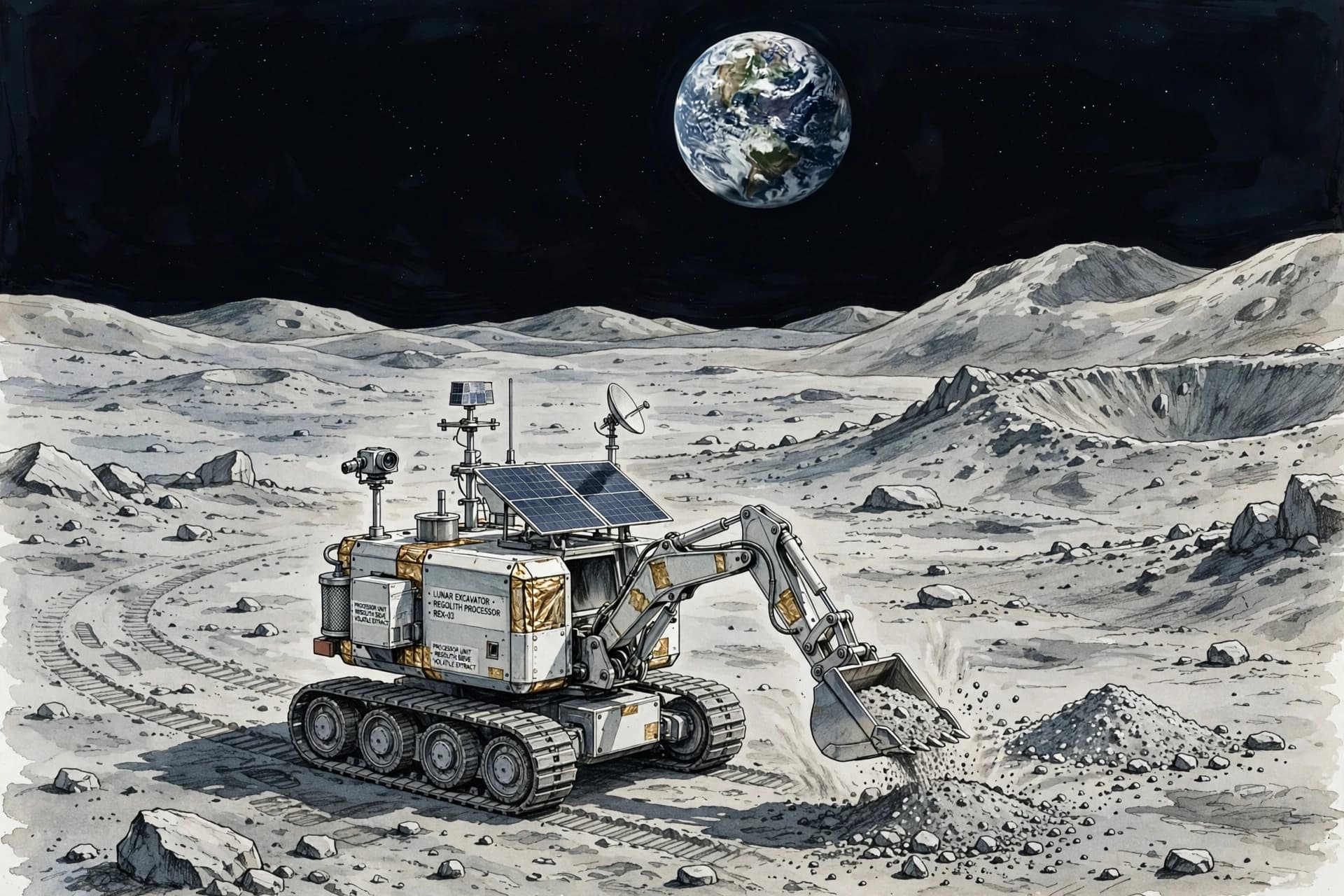
AI Image Disclaimer: Some images used to illustrate Earth’s interior are AI-generated representations.
Sources: Nature Geoscience, BBC News, CNN, USGS
Published by Banx Network. This article is part of the Banx decentralized media programme, powered by the BXE token on the XRP Ledger.