There is a particular kind of elegance in tools that can change their purpose without being rebuilt. A hammer cannot become a saw; a screwdriver cannot become a wrench. Yet in the miniature world of light and matter, researchers have found a way to let a single device wear many faces, not by replacing its parts but by simply shining a light upon it.
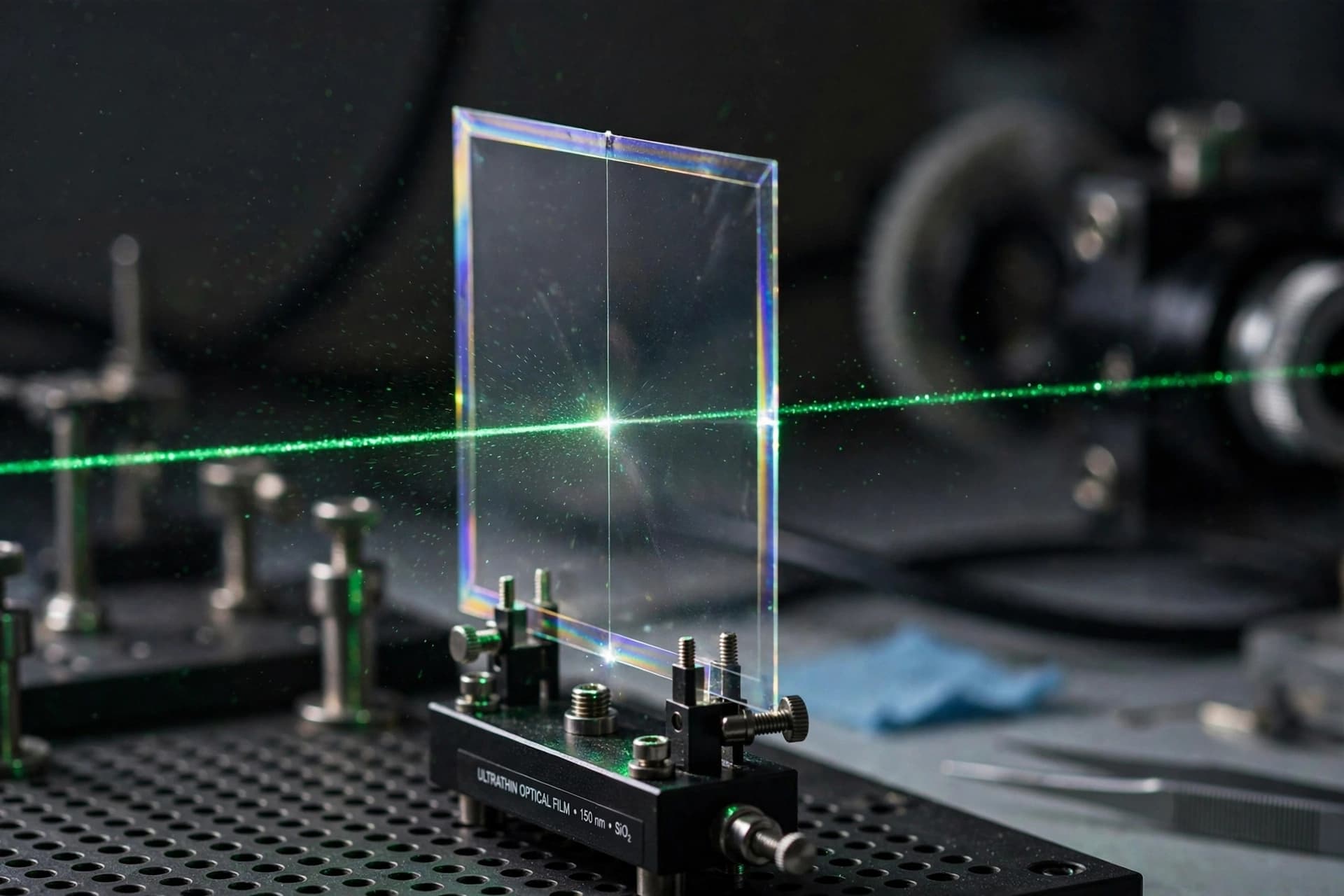
An international team led by the ARC Center for Transformative Meta-Optical Systems at The Australian National University has demonstrated that a laser can temporarily reprogram an ultrathin optical device without needing electrodes or physical rewiring . The research, published in Science Advances, represents a step toward adaptable technologies for computing, imaging, and telecommunications—systems that could be tuned after fabrication rather than fixed in place at the moment of manufacture .
At the heart of the device is a metasurface—a thin material covered with structures smaller than a human hair, designed to control the properties of light such as color, intensity, and direction . The researchers imagined it as a "road system" for light, determining where light can travel and what happens along the way. For most metasurfaces, those roads are permanently paved once the device is built.
The team's innovation was to surround the metasurface's silicon structures with liquid crystals, the same material found in many electronic displays . Liquid crystal molecules can change direction in response to an outside force—normally an electric field controlled by electrodes. The researchers asked a different question: could light itself rotate the molecules and alter the device?
When a laser was shone on the structure, it produced a tiny twisting force known as optical torque, which rotated the liquid crystal molecules . This changed the optical conditions around the silicon structures and altered how the metasurface responded—the laser temporarily rearranged the road system. "With a static metasurface, you cannot change its response or its function after you fabricate it," said lead researcher Ziwei Yang. "But by shining light on the liquid crystal, we have another way to tune that function without fabricating the device again" .
The team first demonstrated that the laser could shift the metasurface's resonance—the wavelength of light with which it interacts most strongly. But the most compelling result emerged when they explored nonlinear optics, where intense light produces effects not seen under ordinary conditions. They used the device to convert invisible infrared light into visible green-yellow light through a process called third-harmonic generation . As the laser rotated the liquid crystals, it shifted the metasurface's resonance, which could increase or decrease the amount of visible light produced. The laser was doing two things at once: generating the new light and changing how the device generated it.
"This achievement is important because the device does more than turn a light signal on or off," Yang explained. "It suggests that light could be used to alter the function of an optical component while it is operating" . The key advance, he added, is that this function is no longer permanently built into the material.
Experiments using light to control liquid crystals have been documented since the late 1990s, but the changes were small and difficult to observe. Adding the metasurface, Yang said, works as a platform or amplifier that makes these changes much easier to see . The research involved collaborators from Nottingham Trent University in the UK and Friedrich Schiller University Jena in Germany, with Jena researchers contributing experimental work within the International Research Training Group "META-ACTIVE" .
While the work remains a fundamental demonstration rather than a product ready for practical use, it points toward a future where optical components could be reconfigured on the fly. In a world increasingly hungry for faster and more energy-efficient ways to process information, the ability to tune a device with light rather than electricity may prove to be a path worth traveling.
The findings appear in the journal Science Advances.
The images accompanying this article are generated by artificial intelligence for illustrative purposes.
Sources: Phys.org, Friedrich-Schiller-Universität Jena, Science Advances
Published by Banx Network. This article is part of the Banx decentralized media programme, powered by the BXE token on the XRP Ledger.