The courtroom is a place where time moves strangely. Minutes stretch into hours; allegations from years past are examined under the cold light of the present. In the ACT Magistrates Court this week, a case involving a former retail manager and four young female employees raised a question that courts grapple with often: where should such matters be heard, and what does the answer say about the seriousness of what is alleged?
Scott Ian Whittaker, 44, faces 24 charges relating to allegations of indecent or physical abuse involving four teenage girls who worked with him at retail stores in Belconnen Westfield between 2017 and 2020. He has pleaded not guilty to charges linked to the first two complainants. The matter returned to court on October 1 as prosecutor James Melloy sought to have the case elevated to the ACT Supreme Court, arguing that any trial or hearing would span multiple weeks.
The prosecutor acknowledged that individual charges might fall "to the lower end of objective seriousness, if proved." But he emphasized the complexity of the matter: multiple charges, multiple complainants, 17 civilian witnesses, and three police officers. "Right now, everything is in issue," Melloy told the court. It was a statement that captures the nature of defended criminal proceedings—where every element, every memory, every document becomes a site of contestation.
Whittaker's lawyer, Ryan Mackenzie of Legal Aid, noted that regardless of where the matter proceeds, it would require further adjournment in the Magistrates Court. He also pointed out that eight fresh charges handed to his client were alternatives or backups to existing charges, reflecting uncertainty about one complainant's age at the time of the alleged offenses. These are the technical details that shape the architecture of a case, often invisible to the public but decisive in determining how justice is administered.
Magistrate Ian Temby ultimately declined to send the matter to the Supreme Court. He found nothing about the case that took it outside the expertise of the Magistrates Court and noted that, if Whittaker were found guilty, he was unlikely to receive a sentence exceeding what the lower court could impose. The magistrate allowed the prosecution the option to make another application based on trial length if it deemed that appropriate. The matter was adjourned to October 21.
What remains, beyond the procedural skirmishing, is the human dimension that courts are not always equipped to address. Four young women. A workplace that should have been a place of first jobs and small responsibilities. Allegations that, if proven, represent a profound breach of the trust that exists between a manager and those he supervises. The legal system will process these claims through evidence, cross-examination, and judgment. But the question of how such allegations are allowed to arise in the first place—and what workplaces can do to prevent them—belongs to a different conversation entirely.
It is worth remembering that charges are allegations, and Whittaker is presumed innocent unless and until proven otherwise. The court has not yet heard the evidence in full, and it would be premature to draw conclusions about guilt or innocence. What the proceedings do reveal, however, is a system attempting to balance the rights of the accused with the gravity of the claims, and the practical realities of a case that will likely consume weeks of court time whenever and wherever it is finally heard.
---
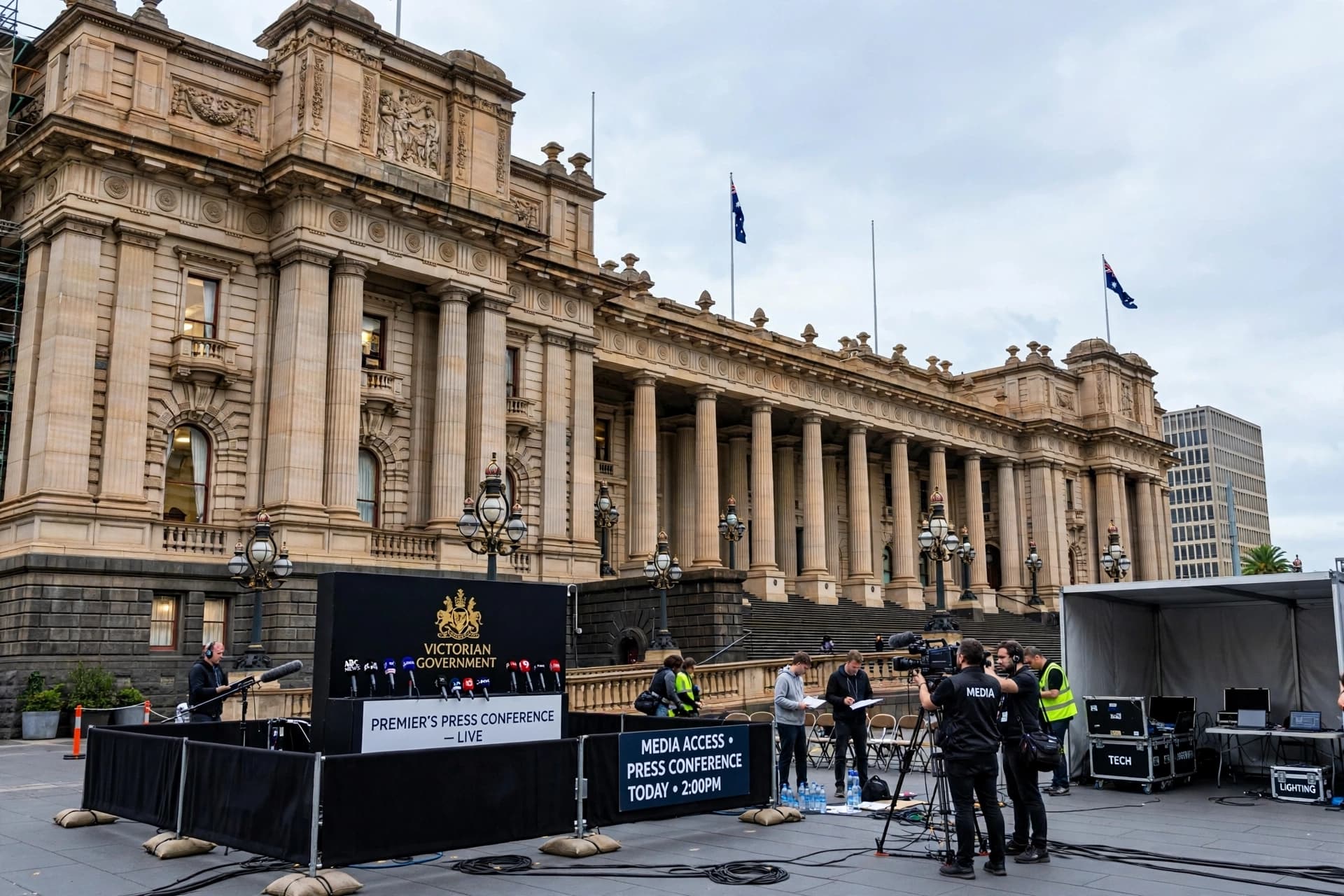
AI Image Disclaimer: The images associated with this article are AI-generated and are not representative of actual individuals or court proceedings.
Sources: Region Canberra, ACT Magistrates Court records
Published by Banx Network. This article is part of the Banx decentralized media programme, powered by the BXE token on the XRP Ledger.