There is a particular impatience that surrounds the return to the moon, a sense that the Apollo generation is aging and the Artemis generation is waiting, and that the gap between the two is measured not only in years but in the slow, unglamorous work of testing and retesting systems that have never flown before. At the International Astronautical Congress in Antalya this month, NASA's Steve Creech laid out the timelines for the two commercial landers that will carry astronauts to the surface, and the picture that emerged was one of ambition constrained by physics and engineering.
The plan, as revised in February, has shifted the architecture of Artemis. Artemis III, once intended as the first crewed landing, is now a low Earth orbit mission targeted for the third quarter of 2027. Four astronauts will launch aboard Orion, rendezvous with test versions of both SpaceX's Starship and Blue Origin's Blue Moon, and dock with them for interoperability checkouts. The first actual landing has moved to Artemis IV, targeted for early 2028 .
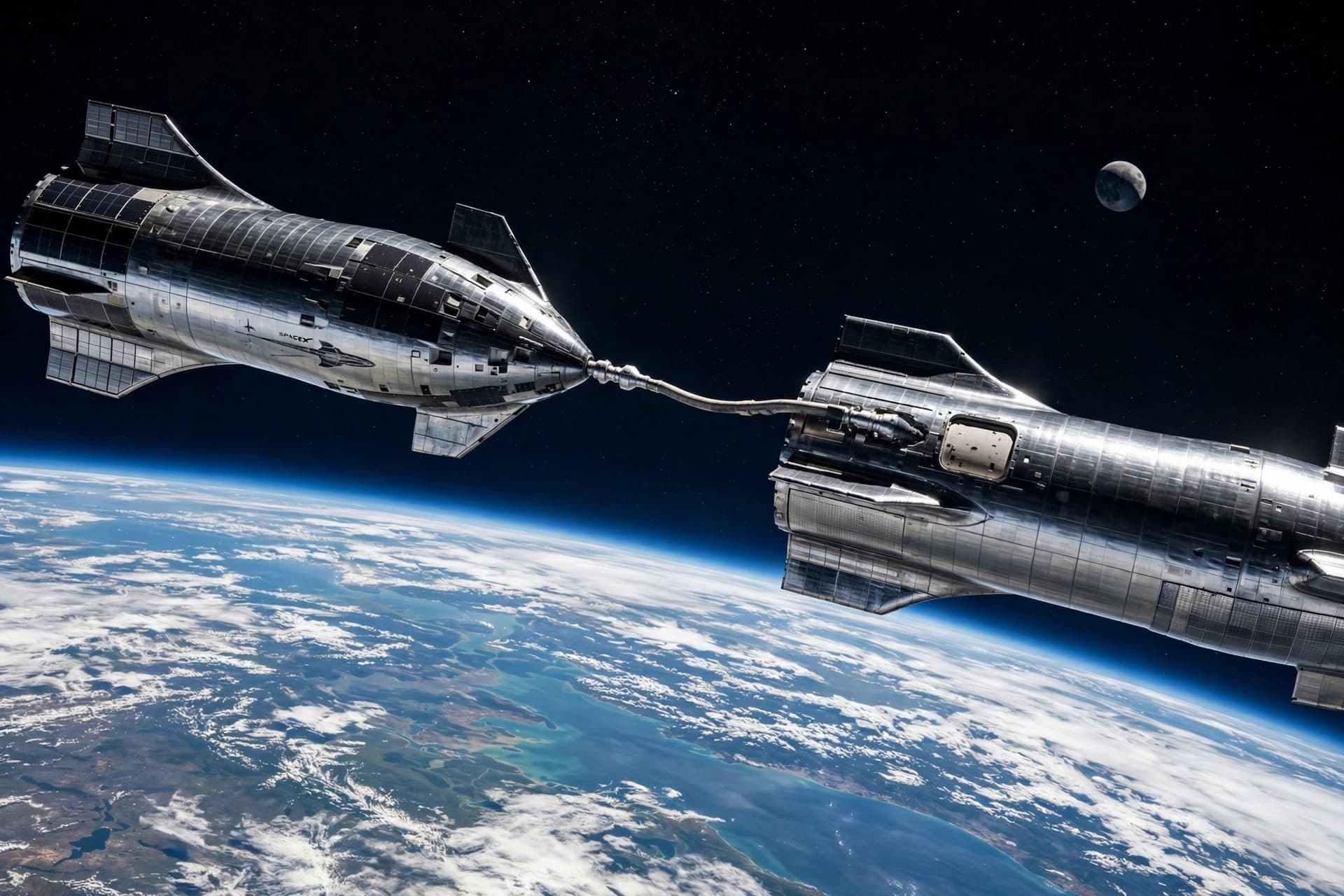
For SpaceX, the path to that landing is crowded with milestones. By the end of 2026, the company is expected to complete the first catch of its upgraded V3 booster, the first Starship launch from Florida, and the initial build of the lunar lander's crew cabin. In early 2027, the focus shifts to orbital propellant transfer—a technology that has never been demonstrated at this scale and that is essential for Starship to travel beyond low Earth orbit. The vehicle arrives in orbit with nearly empty tanks and must be refueled by other Starships before it can head to the moon .
The Artemis III mission itself will use a modified Starship upper stage that lacks a crew cabin for astronauts to enter. It will dock with Orion, test the systems, and return. A separate uncrewed lunar landing is scheduled for late 2027, months before astronauts attempt the descent. Blue Origin's Blue Moon, a smaller vehicle with a more conventional ladder-based egress, is on a parallel track, and NASA has not yet decided which lander will carry the first crew to the surface .
There is a quiet significance in the fact that NASA is requiring both companies to demonstrate uncrewed landings before committing astronauts. The Apollo program, for all its daring, did not have the luxury of such caution. The Artemis program, shaped by budget constraints and the memory of past failures, has built redundancy into its schedule. Two landers, two paths, and a decision point that will be made only after the hardware has proven itself.
For now, the timelines are targets, not guarantees. SpaceX has a history of missing deadlines and then accelerating when the hardware is ready. Blue Origin has been slower and quieter. The moon, as always, is patient. It has waited four billion years for visitors. It can wait a little longer while the rockets are tested and the fuel is transferred and the crews are trained. What NASA has offered this month is not a promise but a plan, and a plan is what the program has needed.
---
AI Image Disclaimer: The imagery in this article is generated by artificial intelligence and is intended for illustrative purposes only.
Sources: Yahoo Tech, Numerama, Xinhua
Published by Banx Network. This article is part of the Banx decentralized media programme, powered by the BXE token on the XRP Ledger.