There is a quiet ambition in the field of molecular engineering: to build machines so small they move through the same Brownian currents that buffet living cells, yet steer those random collisions into purposeful motion. Natural motor proteins have perfected this art over billions of years, gliding along cellular tracks at speeds of 100 to 1,000 nanometers per second. Artificial motors, for all their ingenuity, still lag behind.
A new set of simulations from researchers at the Institute for Molecular Science and SOKENDAI offers a clearer map of why that gap exists—and how it might be closed. Published in Biophysical Journal, the work examines DNA-nano/microparticle motors, among the fastest artificial molecular motors reported, which move at roughly 30 nanometers per second on RNA-coated surfaces . The puzzle the simulations address is a curious one: whether the particle is 100 nanometers wide or 5,000, the speed remains stubbornly the same.
The explanation lies in a trade-off that is almost poetic in its symmetry. Large particles take longer steps, covering more ground with each Brownian lurch, but they also pause longer between those steps. The two effects cancel each other out, leaving speed largely independent of size . What size does change is stamina. Larger particles form more bonds with the surface, resisting detachment and traveling farther before falling away. Their many footholds also bias each step forward, improving unidirectionality .
The simulations did not stop at description. When the researchers virtually increased the rates of the underlying biochemical reactions—DNA/RNA hybridization, enzyme binding, and hydrolysis—by tenfold, predicted speeds jumped above 200 nanometers per second across the size range . Under those fast-reaction conditions, however, the largest particles began to stumble. Their slow rotational diffusion became a bottleneck, a reminder that scale carries its own penalties.
The findings sketch a design principle rather than a single blueprint. Small motors, it seems, retain the most room for acceleration. A nanoscale body can roll and react quickly enough to approach the speeds of natural motor proteins, while larger bodies trade velocity for persistence . For engineers dreaming of molecular machines that can sense, compute, or ferry cargo through microscopic landscapes, such distinctions matter.
There is something humbling in watching these simulations. They do not announce a breakthrough so much as illuminate the constraints that shape it. The burnt-bridge Brownian ratchet, the mechanism by which these motors burn the footholds they leave behind to prevent backward motion, is elegant in concept. But elegance, in the real world of thermal noise and enzymatic kinetics, must negotiate with physics .
The work does not promise that artificial motors will soon match their biological counterparts. It offers something more measured: a set of conditions under which improvement is possible, and a clearer understanding of the trade-offs that come with size. In the long project of building machines at the scale of molecules, knowing where the walls are is the first step toward finding the doors.
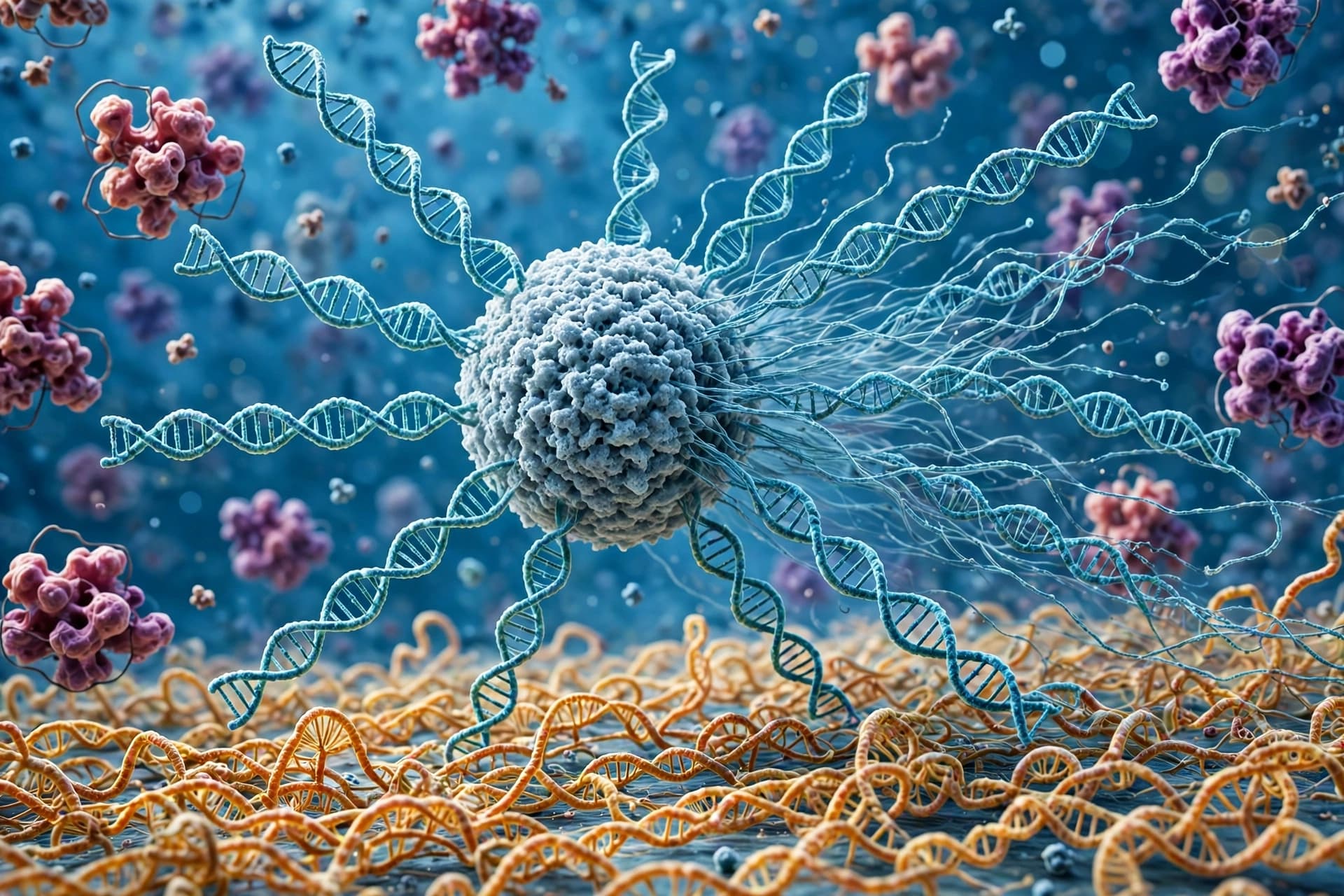
Image note: The accompanying visual is an AI-generated illustration and does not represent actual laboratory imagery.
Sources: EurekAlert!, Biophysical Journal, Institute for Molecular Science, Europe PMC
Published by Banx Network. This article is part of the Banx decentralized media programme, powered by the BXE token on the XRP Ledger.