
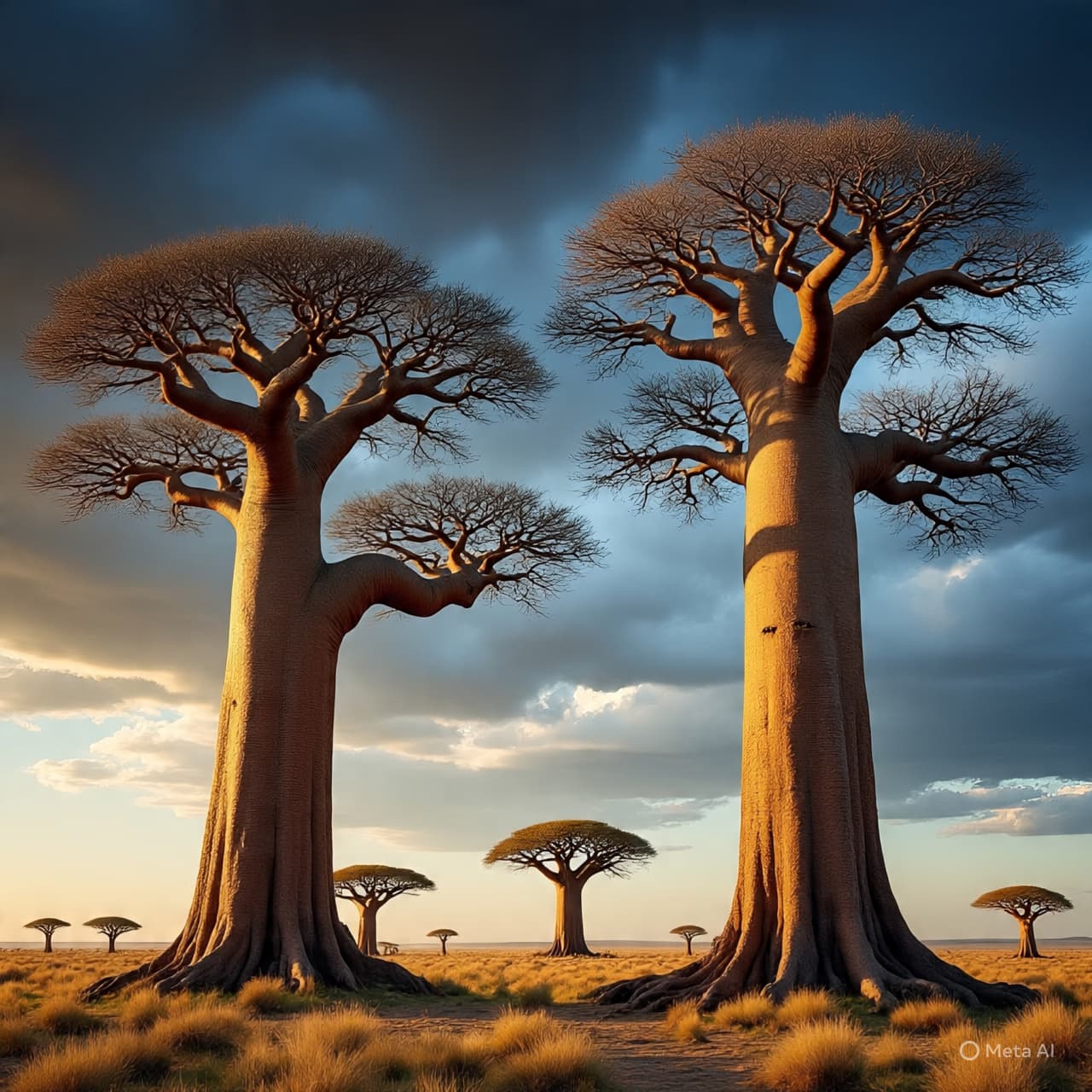
Time, when held within living forms, tells stories that no archive can fully capture. In the ancient silhouettes of baobab trees scattered across Madagascar, centuries have been quietly recorded, each ring a whisper of seasons long past.
Scientists studying Madagascar’s iconic baobab trees have uncovered detailed climate records spanning approximately 700 years. The findings provide new insights into historical rainfall patterns and environmental changes across the region.
Researchers analyzed the internal structure of these long-living trees, which can store climatic information in their growth layers. Unlike typical tree rings, baobabs present complex patterns that require specialized techniques to interpret.
The study reveals fluctuations in rainfall over centuries, highlighting periods of both abundance and drought. These patterns offer valuable context for understanding current climate variability in southern Africa and the Indian Ocean region.
Experts note that such long-term data is crucial for improving climate models. By examining historical trends, scientists can better anticipate how ecosystems may respond to ongoing environmental changes.
The research also underscores the ecological significance of baobab trees, which serve as vital components of their ecosystems. Beyond their cultural symbolism, they function as natural archives of environmental history.
At the same time, scientists have raised concerns about the vulnerability of baobabs to climate stress. In recent decades, some of the oldest specimens have shown signs of decline, prompting further study into their resilience.
The work adds to a growing body of evidence that natural systems can provide detailed records of Earth’s changing climate, often in ways that complement modern instruments.
Researchers emphasize that continued study of these trees may deepen understanding of long-term climate dynamics and inform future environmental planning.
AI Image Disclaimer: Certain images included are AI-generated representations of baobab landscapes and may not depict exact locations.
Sources: Nature Climate Change, BBC News, National Geographic, Scientific American
Published by Banx Network. This article is part of the Banx decentralized media programme, powered by the BXE token on the XRP Ledger.



