The James Webb Space Telescope continues to redefine our view of the cosmos, peering into regions previously obscured by dust and darkness. In its latest revelation, the telescope has identified one of the Milky Way’s rarest stars hidden within the "Treasure Chest" globule, a dense cloud of gas and dust. This discovery, highlighted as the space photo of the week, showcases the power of infrared astronomy to uncover the hidden gems of our galaxy.
The "Treasure Chest" is a dark nebula located in the constellation Centaurus. To visible light telescopes, it appears as an opaque patch against the starry background. However, Webb’s infrared instruments can penetrate the thick dust, revealing the stellar nursery within. Among the young stars forming there, one stands out for its unusual characteristics, marking it as a rare find in our galactic neighborhood.
This rare star is likely a massive young stellar object, still in the early stages of formation. Such stars are difficult to observe because they are short-lived and often shrouded in their birth clouds. Finding one in such detail allows astronomers to study the processes of massive star formation, which play a crucial role in shaping the evolution of galaxies. The heat and radiation from these stars influence the surrounding medium, triggering further star birth or dispersing the cloud.
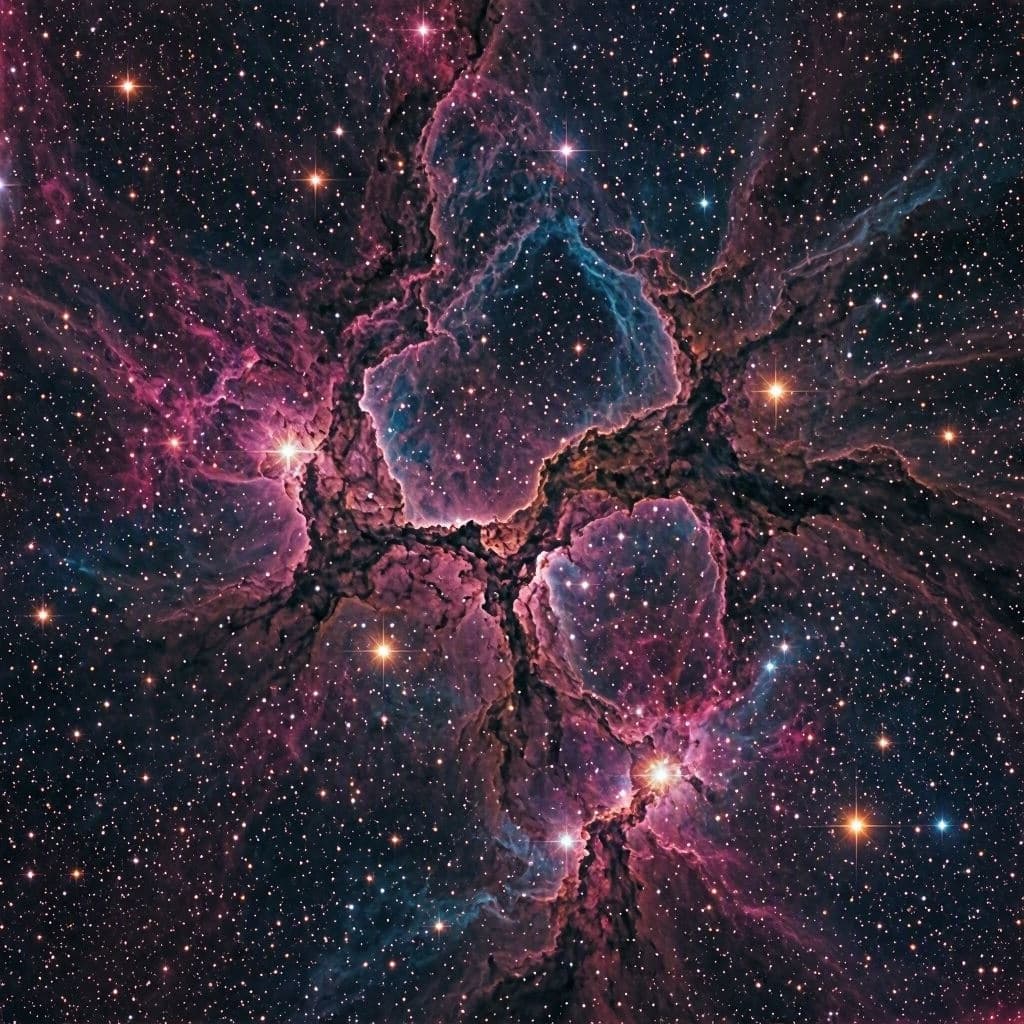
The image captured by Webb is not just scientifically significant but also visually stunning. It reveals intricate structures of gas and dust, illuminated by the young stars within. The contrast between the dark void of the globule and the bright points of light creates a dramatic composition, reminding us of the beauty inherent in scientific discovery. It is a testament to the engineering marvel that is the James Webb Space Telescope.
For astronomers, this discovery adds a piece to the puzzle of stellar demographics. Understanding the frequency and properties of rare stars helps refine models of galaxy formation. It also provides context for the life cycles of stars, from their birth in dense clouds to their eventual demise as supernovae. Each observation contributes to a more complete picture of our cosmic home.
The "Treasure Chest" moniker is fitting, as the nebula indeed holds valuable scientific insights. Just as pirates sought gold, astronomers seek knowledge, and in this case, the reward is a deeper understanding of the universe’s building blocks. The public response to the image has been overwhelmingly positive, sparking interest in astronomy and space exploration.
As Webb continues its mission, more such discoveries are expected. Each new image brings with it the potential for groundbreaking science. The search for rare stars and hidden structures continues, driven by curiosity and the desire to understand our place in the cosmos.
The James Webb Space Telescope’s discovery of a rare star in the "Treasure Chest" globule highlights the capabilities of infrared astronomy. This finding not only advances our knowledge of star formation but also captivates the public with the breathtaking beauty of the unseen universe.
AI Image Disclaimer: Visual representations of this space discovery are generated by artificial intelligence for editorial context.
Sources: NASA European Space Agency (ESA) Space.com
Published by Banx Network. This article is part of the Banx decentralized media programme, powered by the BXE token on the XRP Ledger.