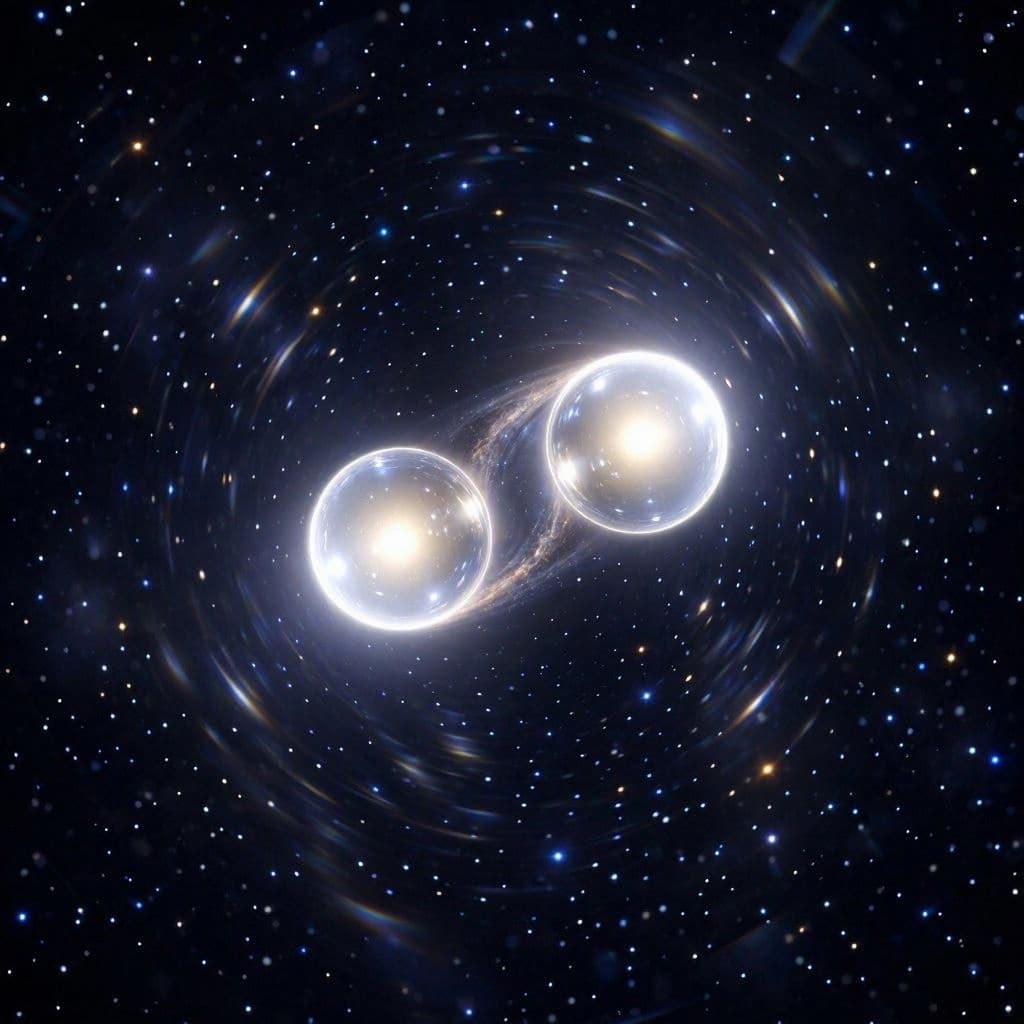
In the silent vacuum of space, a cosmic dance of extraordinary speed is taking place. Two white dwarfs, the dense remnants of dead stars, are locked in a tight embrace, orbiting each other every six minutes. This binary system, known as ZTF J1539+5027, is one of the fastest-spinning pairs ever discovered. While currently invisible to the naked eye, their rapid motion generates ripples in spacetime known as gravitational waves, which future observatories may one day detect.
White dwarfs are incredibly dense, packing the mass of the Sun into a volume roughly the size of Earth. When two such objects orbit closely, their gravitational pull is immense. In this system, the stars are so close that they are nearly touching, separated by only a few hundred thousand kilometers. Their orbital period of just six minutes is a testament to the intense forces at play, defying the slower rhythms of most celestial bodies.
The discovery of this system was made possible by the Zwicky Transient Facility, a robotic survey that scans the sky for changing objects. Astronomers noticed the periodic dimming of light as one star passed in front of the other, revealing their rapid orbit. Follow-up observations confirmed the nature of the stars and their precarious relationship, highlighting the dynamic and often violent end stages of stellar evolution.
As these white dwarfs circle each other, they lose energy through the emission of gravitational waves. This loss causes their orbit to shrink gradually, bringing them closer together over time. Eventually, they may merge, potentially triggering a supernova explosion or forming a single, more massive white dwarf. This process is a key area of study for understanding the lifecycle of stars and the origin of heavy elements.
The prospect of observing this system with gravitational wave detectors like LISA (Laser Interferometer Space Antenna) is exciting. LISA, scheduled for launch in the coming decade, is designed to detect low-frequency gravitational waves from sources like this binary pair. Such observations would provide direct evidence of Einstein’s theory of general relativity and offer new insights into the behavior of compact objects.
For now, the system remains a subject of theoretical interest and optical observation. Astronomers continue to monitor its behavior, tracking changes in its orbit and brightness. Each measurement adds to our understanding of how these systems evolve and what fate awaits them. It is a reminder that the universe is full of hidden phenomena waiting to be uncovered.
The study of such binaries also helps calibrate gravitational wave detectors. By knowing the properties of these sources, scientists can test the sensitivity and accuracy of their instruments. It is a collaborative effort between observers and theorists, working together to decode the signals from the cosmos.
The six-minute orbit of the white dwarf pair ZTF J1539+5027 offers a rare glimpse into the dynamic nature of stellar remnants. As future gravitational wave observatories come online, this system may become a key source of data, helping us understand the fundamental forces of the universe.
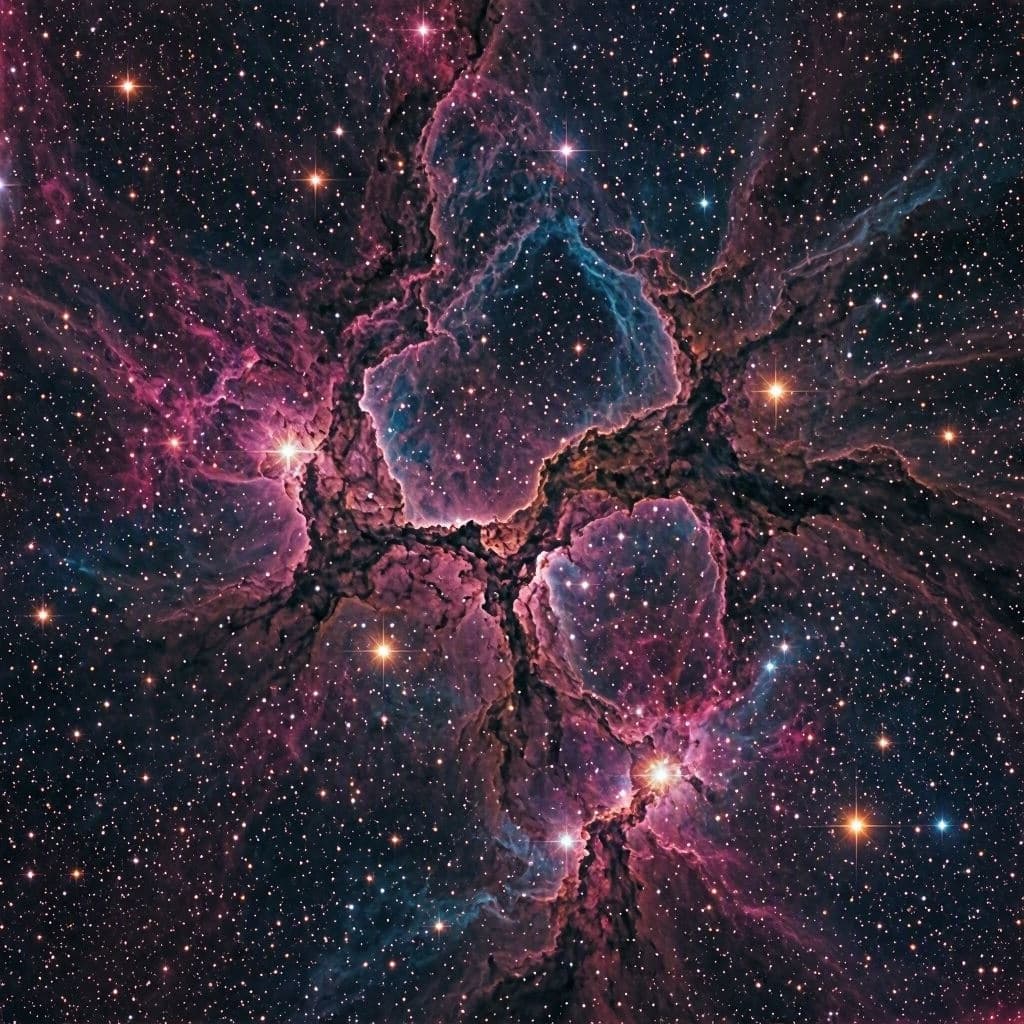
AI Image Disclaimer: Visual representations of this astronomical phenomenon are generated by artificial intelligence for editorial context.
Sources: The Astrophysical Journal NASA Caltech
Published by Banx Network. This article is part of the Banx decentralized media programme, powered by the BXE token on the XRP Ledger.