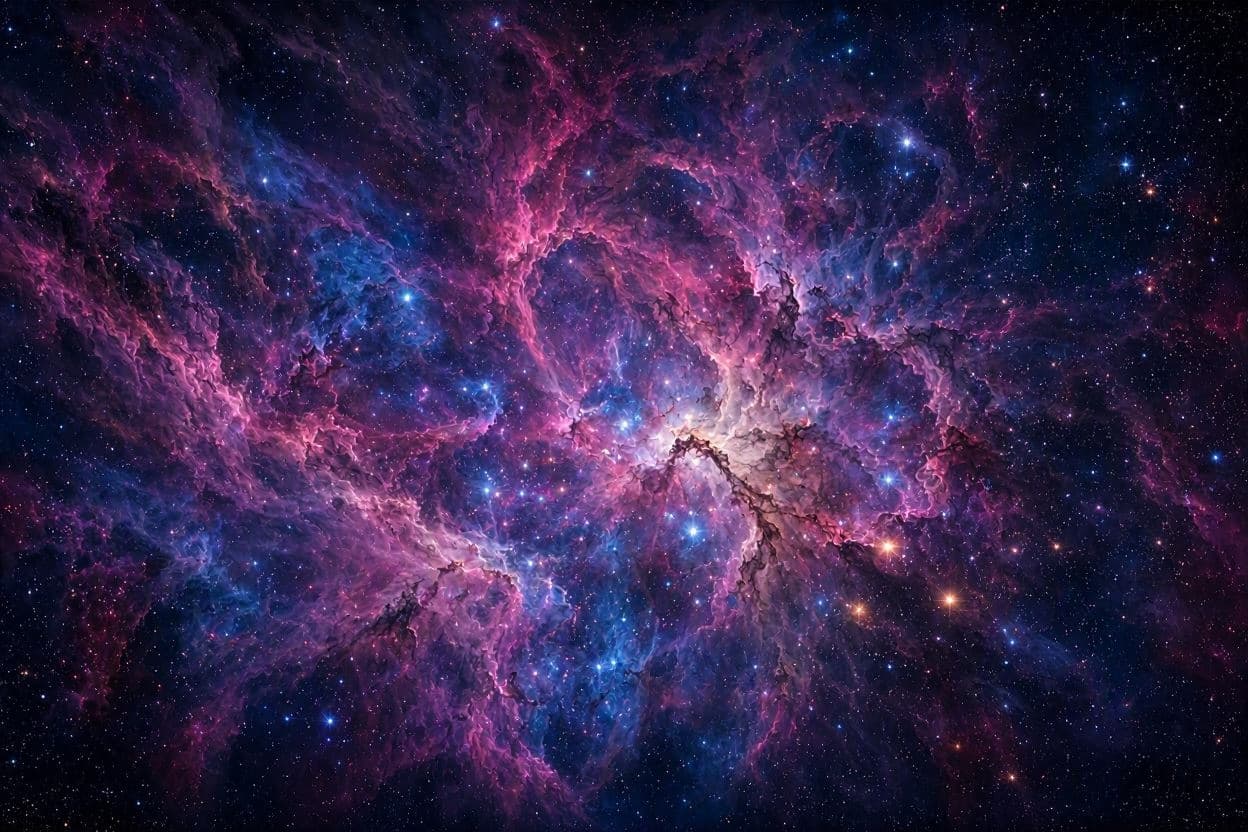
In the vast, silent theater of the cosmos, there are moments when the veil is lifted just enough to reveal the grandeur of creation. The James Webb Space Telescope, humanity’s most powerful eye on the universe, has once again delivered a vision that defies simple description. On September 16, 2026, a new image was released, showcasing a colossal cosmic cloud that stretches across the darkness like a celestial brushstroke. This breathtaking view invites us to pause and reflect on our place within the infinite expanse of space.
The cloud, a complex structure of gas and dust, serves as a nursery for new stars, where gravity pulls together matter until it ignites into light. Webb’s infrared capabilities allow it to peer through the dense dust that obscures these regions from visible-light telescopes, revealing the intricate details of stellar birth. The image captures not just the beauty of the cloud but also the dynamic processes that shape galaxies over billions of years. It is a snapshot of creation in progress, frozen in time for our observation.
For astronomers, such images are more than just aesthetic pleasures; they are rich sources of data. By analyzing the composition and structure of the cloud, scientists can learn about the chemical elements present in the early universe and how they have evolved. The presence of specific molecules can indicate the potential for planet formation, offering clues about the likelihood of life elsewhere in the cosmos. Each pixel in the image holds a story waiting to be decoded by careful study.
The scale of the cloud is difficult to comprehend, spanning hundreds of light-years across. To put this in perspective, if our solar system were a grain of sand, this cloud would be the size of a large city. Yet, despite its immense size, it is just one small part of a much larger galaxy, which itself is one of billions in the observable universe. This perspective humbles us, reminding us of the vastness that lies beyond our everyday experience.
Webb’s ability to capture such detailed images is a testament to human ingenuity and international collaboration. The telescope, a joint project of NASA, ESA, and CSA, represents decades of planning, engineering, and scientific vision. Its success has transformed our understanding of the universe, providing insights that were once the realm of speculation. This latest image is another milestone in that ongoing journey of discovery.
For the public, the release of such images serves as a reminder of the wonder that science can inspire. In a world often focused on immediate concerns, looking up at the stars offers a sense of perspective and hope. It connects us to something greater than ourselves, fostering a shared sense of curiosity and awe. These moments of collective wonder are valuable, bridging divides and uniting people in appreciation of the natural world.
As we gaze upon this colossal cloud, we are invited to imagine the forces at work within it. The turbulence of gas, the heat of forming stars, and the cold void of space all interact in a delicate balance. It is a dance of physics and chemistry that has been playing out since the beginning of time. By witnessing it, we participate in the long tradition of humans seeking to understand their origins.
The image from September 16, 2026, will undoubtedly join the ranks of other iconic space photographs that have captured the public imagination. It stands as a beacon of knowledge and beauty, encouraging future generations to look up and wonder. In the silence of space, the cloud speaks volumes about the majesty of the universe.
AI Image Disclaimer: The visual representations included here are AI-generated illustrations inspired by the Webb image and are not the actual raw data or processed photograph from the telescope.
Sources: Space.com NASA Yahoo Science
Published by Banx Network. This article is part of the Banx decentralized media programme, powered by the BXE token on the XRP Ledger.