Key Highlights
- Discovery:Comet 3I/ATLAS formed 10-12 billion years ago.
- Unique Composition:High levels of deuterium found in its water.
- Cosmic Significance:Insights into the early universe and solar system formation.
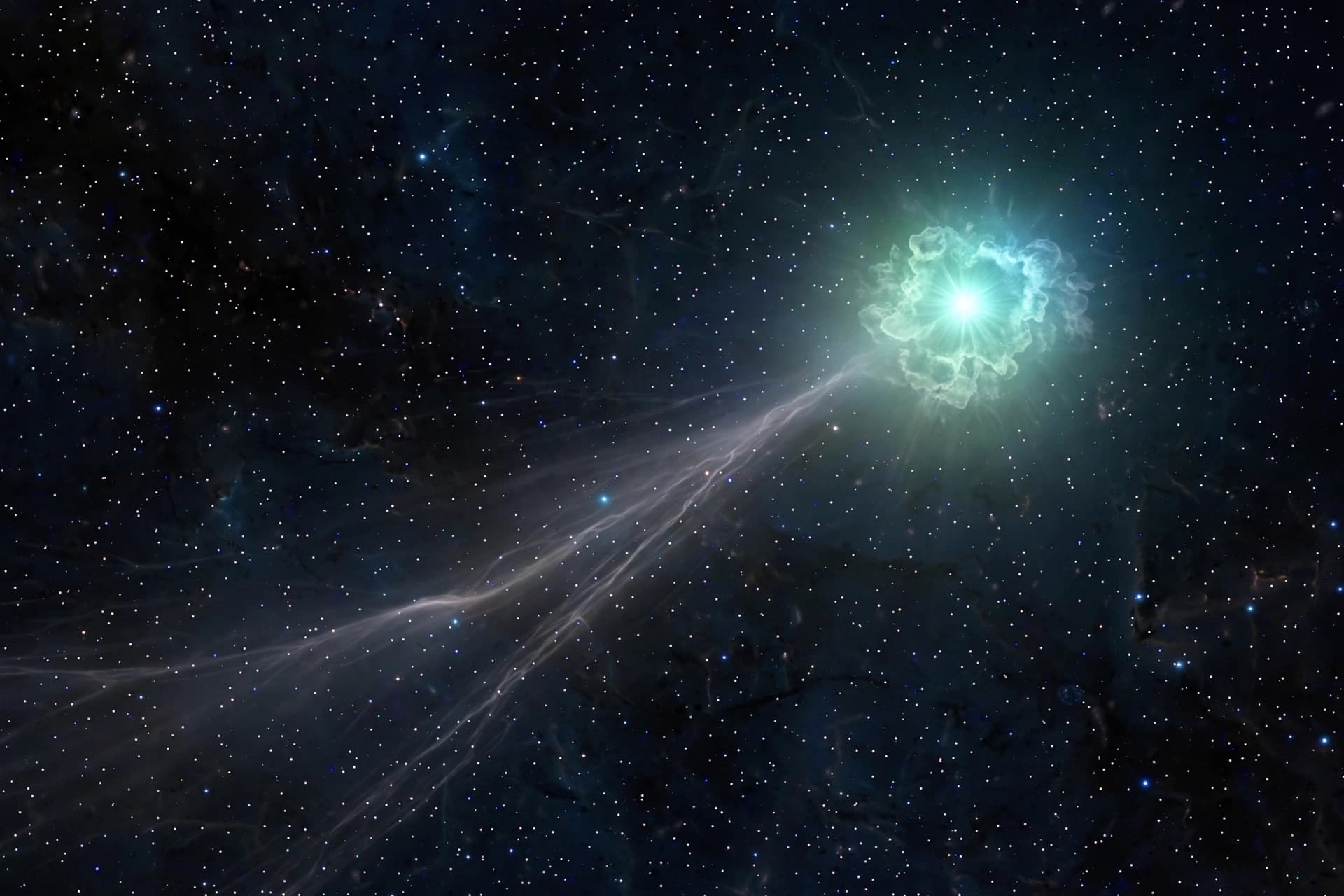
The James Webb Space Telescope has unveiled remarkable findings about comet 3I/ATLAS, the third confirmed interstellar object to visit our solar system. Observations made during its journey away from the Sun in December 2025 have revealed that this ancient comet formed between 10 to 12 billion years ago, during a period known as the universe's "cosmic noon." This era was characterized by peak star formation, suggesting that 3I/ATLAS originated from a cold, dense cloud of gas and dust, preserving its chemical makeup for billions of years.
Published in June 2026 in the journal Nature, the study highlights the unique chemical signatures of 3I/ATLAS, which differ significantly from those of comets formed within our solar system. Using Webb's Near-Infrared Spectrograph, researchers detected exceptionally high levels of deuterium, or heavy hydrogen, in the comet's water—approximately thirty times more than what is typically found in solar system comets. Additionally, the ratio of carbon isotopes, with only traces of carbon-13 compared to carbon-12, indicates that 3I/ATLAS formed in an environment that predates the enrichment of the cosmos by heavier isotopes from stellar processes.
The implications of these findings are profound. Martin Cordiner, the lead author from NASA's Goddard Space Flight Center, emphasized the significance of studying such an ancient object. He stated, "This was a unique opportunity to study an ancient object from the distant galaxy, probably pre-dating our Sun and solar system." The chemical composition of 3I/ATLAS raises intriguing questions about the uniqueness of our solar system and the conditions that led to the formation of our Sun and planets.
In conjunction with Webb's findings, a separate study conducted using the European Southern Observatory's Very Large Telescope analyzed the comet's carbon and nitrogen isotopes, particularly in the form of cyanide. This complementary research further supports the notion that 3I/ATLAS formed in a colder, less processed environment compared to our solar system. Stefanie Milam, a co-author of the study, remarked on the broader implications of these findings for understanding prebiotic chemistry in the universe. She noted, "So far, we know of only one place in the vast cosmos where chemical ingredients led to life—our Solar System, our Earth. Analysis of these interstellar objects is a major step towards learning how common, or uncommon, the conditions for the evolution of life are in the Universe."
As comet 3I/ATLAS continues its journey through the Milky Way, it leaves behind a wealth of data that will inform our understanding of cosmic history. This ancient visitor serves as a reminder of the vastness and complexity of the universe, challenging our perceptions of what is typical in the formation of planetary systems. The insights gained from this comet not only enhance our knowledge of our own solar system but also open new avenues for exploring the potential for life elsewhere in the cosmos.
The comet has now passed beyond our reach, but the data captured by the James Webb Space Telescope will remain a testament to human curiosity and the quest for knowledge about our place in the universe. As we continue to study these interstellar visitors, we may uncover more about the origins of our solar system and the conditions that foster life across the galaxy.
Published by Banx Network. This article is part of the Banx decentralized media programme, powered by the BXE token on the XRP Ledger.