Some moments in the night sky arrive without urgency. They do not demand attention with brilliance or rarity, but instead invite a quieter kind of looking. As daylight fades and the Moon rises, there are evenings when familiar celestial neighbors drift close enough to feel conversational, as if the sky itself is offering a brief pause for reflection.
This week, the Moon glides near Antares, the deep red heart of the constellation Scorpius. Antares has long been known as a rival to Mars in color and presence, glowing low in the southern sky with a steady, ember-like light. Its reddish hue comes not from proximity, but from scale — a massive supergiant star nearing the later chapters of its life, shining hundreds of times brighter than the Sun despite its vast distance.
As the Moon approaches, the contrast becomes the story. The Moon reflects borrowed sunlight, familiar and close, its craters and maria shaped by ancient impacts. Antares, by comparison, is remote and untouchable, its light beginning its journey long before recorded history. Seeing them together compresses distance and time into a single frame, a reminder of how the sky quietly blends the near and the far.
Observers need little equipment to take part. With the unaided eye, the pairing is easy to spot after sunset, especially from darker locations where Scorpius rises clearly above the horizon. Binoculars reveal subtle color differences, while small telescopes place the Moon’s sharp surface against the soft glow of the star. The scene shifts hour by hour as the Moon continues its steady orbit eastward.
Dave Eicher notes that moments like this serve as gentle markers in the celestial calendar. They are not rare events, but recurring meetings that reward attention rather than anticipation. Each pass is slightly different, shaped by viewing angle, atmospheric conditions, and the observer’s own sense of scale.
By week’s end, the Moon will move on, leaving Antares once again to hold its place alone in the summer sky. For now, the encounter offers a simple invitation: step outside, look up, and notice how familiar objects still find new ways to meet.
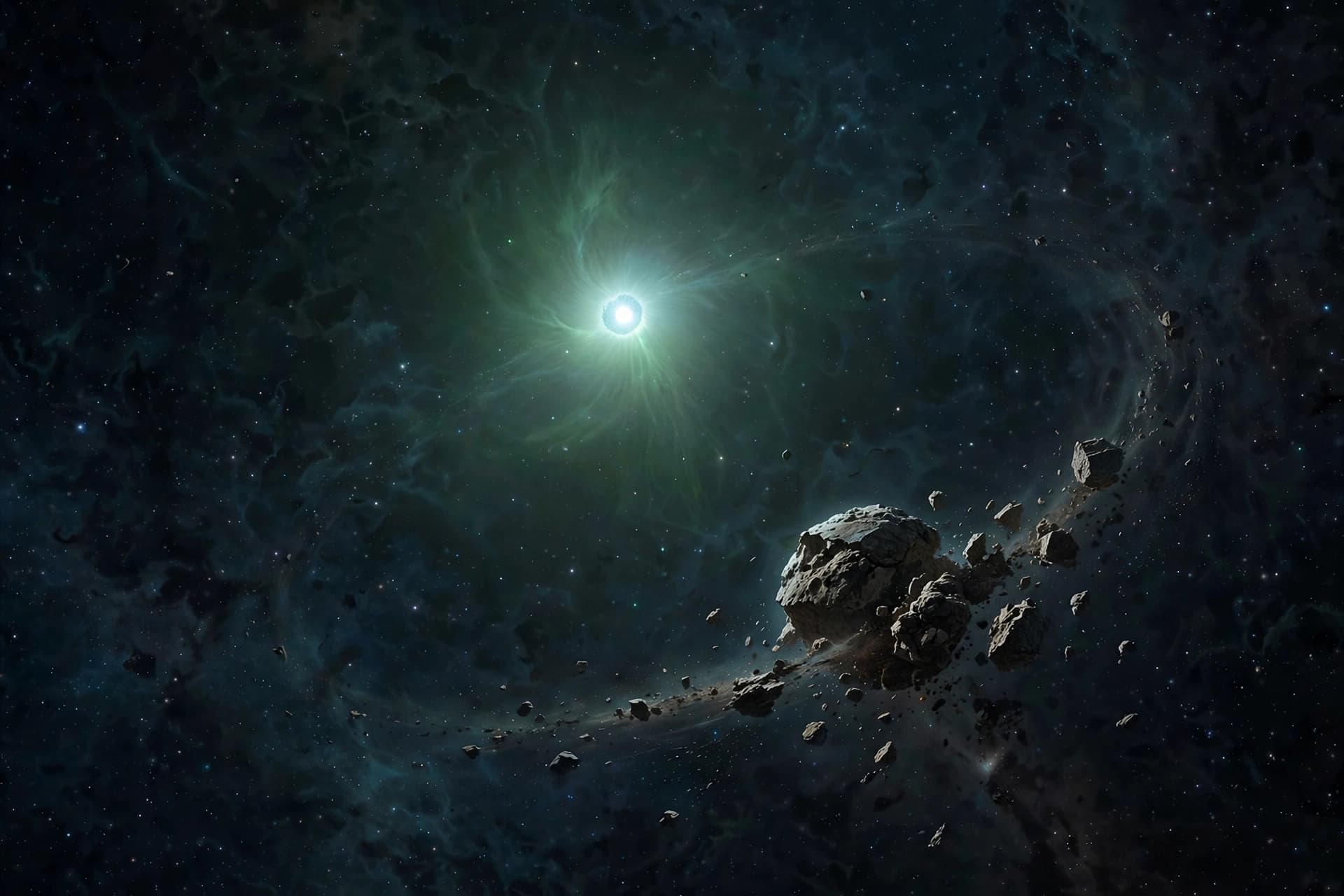
AI Image Disclaimer “Images accompanying this article are AI-generated illustrations intended to represent the scene, not real astronomical photographs.”
Sources Astronomy Magazine Space.com Sky & Telescope NASA EarthSky
Published by Banx Network. This article is part of the Banx decentralized media programme, powered by the BXE token on the XRP Ledger.