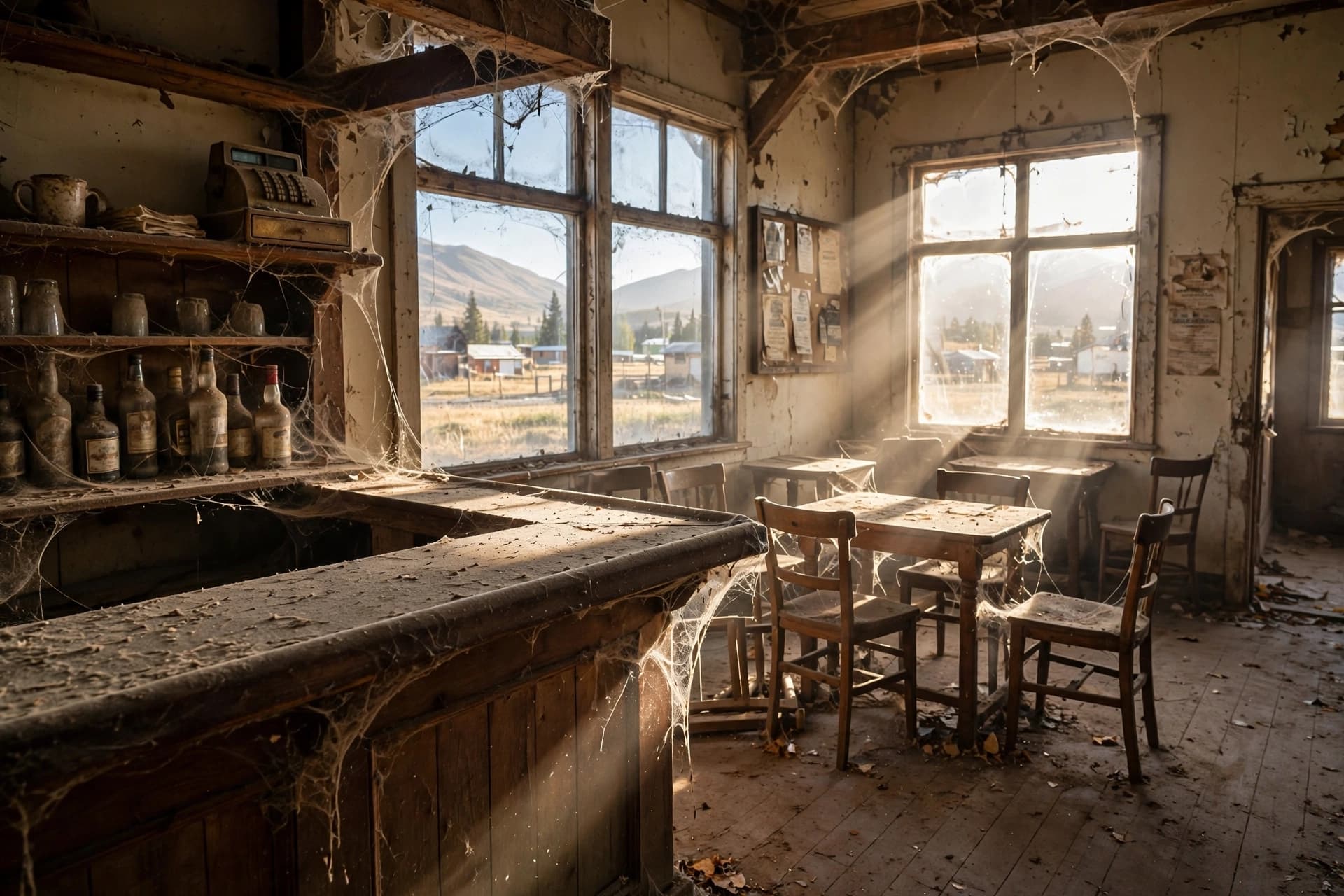
There is a particular frustration that settles over a community that has built something for itself only to be told it cannot use it—a frustration made heavier by the knowledge that the thing being withheld is not a luxury but a place to gather, a place to eat, a place to socialize in a setting that is controlled rather than chaotic. In Wadeye, the Northern Territory's second-largest remote community, that frustration has a name and a price tag. A $4 million social club, built with the community's own money, sits unopened, its rooms strung with cobwebs, while the NT Police and government withhold final approval .
The arguments for opening the club are straightforward. Wadeye has been without a licensed drinking venue for three decades. Alcohol sales are restricted to six mid-strength beers or six pre-mixed cans per person, four days a week, and people can only legally drink at home under permits issued by police. Black market liquor—bottles of rum that can cost up to $500 each—flows in by road, fueling violence between rival clans that regularly erupts into armed street fighting . Proponents argue that a controlled, licensed venue would give people a safer place to drink, reduce the market for grog-runners, and provide a social amenity that a community of 2,500 people currently lacks.
The arguments against are equally serious. NT Police originally supported the liquor licence but now fear that allowing more people to drink legally could exacerbate the violence. Superintendent Virginia Read has said that if a trial went ahead, it would need to run for a significant period and be accompanied by an independent evaluation . Some residents, particularly women and youth workers, oppose the club. Loretta Mills, who runs the Thamarrurr Youth Centre, said the people she serves are asking why a club should be built when a black market already operates. "It will be sad seeing kids, if it does open, outside the club asking for money, hungry," she said .
The history of alcohol in Wadeye is turbulent. The community's last social club closed in 1995 after years of unrest, including an incident in 1988 when a group of non-drinkers wielding axes and star-pickets smashed the club and its bottles. The Liquor Commission's decision granting the new club its licence last December acknowledged the "inescapable tension" between moderating consumption and generating revenue by selling alcohol, and noted that licensed clubs in remote communities have "generally—although not universally—failed" to achieve their goals .
For Margaret Perdjert, a senior traditional owner and non-drinker who chairs the club's board, the calculus is different. She wants people to drink "more quiet, like drinking in moderation instead of spending a lot of money on the black market." Too many people are getting drunk on black market spirits, she says, and "the women are really scared, kids don't get much sleep, kids don't go to school" . The club's supporters are asking for a trial of six weeks to six months, with independent evaluation looking at police data, health clinic records, women's safe house reports, and school attendance . "Let us show them we can do it," said Jake Clark of the Murinbata Tribal Development Corporation. "Let's see if we can make a difference here" . The building is ready. The debate continues.
AI Image Disclaimer: The images accompanying this article were generated by artificial intelligence and are for illustrative purposes only.
Sources: ABC News, NT Liquor Commission
Published by Banx Network. This article is part of the Banx decentralized media programme, powered by the BXE token on the XRP Ledger.