There is a particular kind of trust that voters extend when they approve borrowing—a willingness to commit future resources to present needs, to believe that the pools and bridges and parks they approve today will still matter to the people who inherit the debt tomorrow. In Vancouver, that trust was extended overwhelmingly, and the city now has the green light to build.
Vancouver voters have strongly supported all three capital borrowing plebiscite questions in the 2026 civic election, with preliminary results showing roughly four in five votes cast on each question were in favor . The approvals give the city the legal authority to borrow $790 million to help fund a portion of its $3.5-billion capital plan between 2027 and 2030, covering community facilities, transportation infrastructure, and parks .
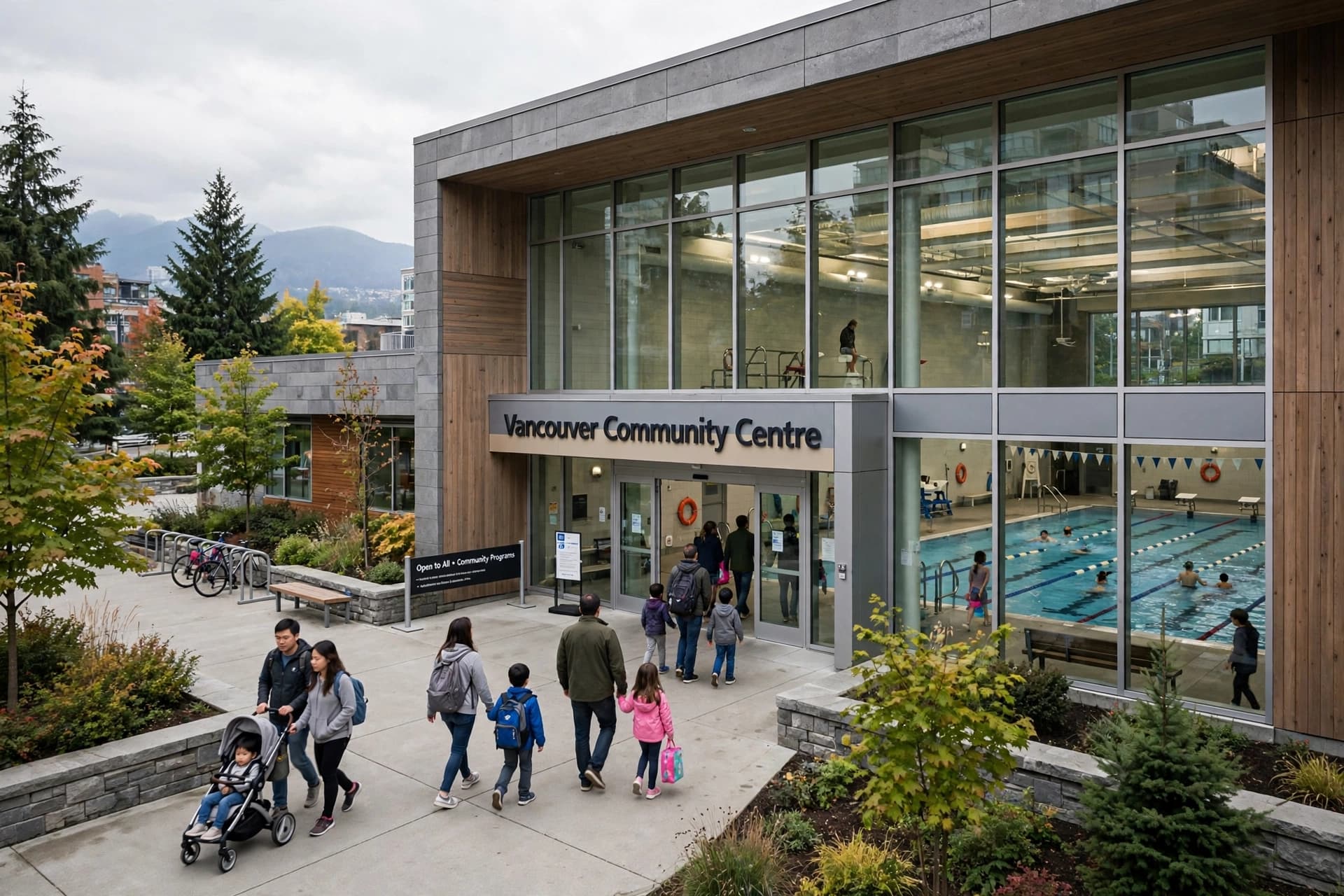
The largest borrowing request—$438 million for community-serving and essential civic infrastructure—received 149,938 votes in favor and 38,802 against, or 79 percent support. Of that, $338 million is earmarked for renewing or replacing community centres, pools, rinks, libraries, childcare spaces, and social facilities. Another $100 million would support fire halls, service yards, and cultural venues including Vancouver Civic Theatres .
Voters also backed $292 million for transportation and street infrastructure, with 147,171 voting yes and 41,572 voting no—78 percent in favor. That borrowing includes $154 million for bridges and other structures, including repairs to the Granville Street and Cambie Street bridges, along with $92 million for roads and sidewalks and $46 million for traffic signals and street lighting . The $60-million borrowing request for parks and open public spaces drew the strongest support at 81 percent, with funds directed toward the seawall, pathways, playgrounds, sports fields, and courts .
The three borrowing requests account for 23 percent of the $3.5-billion capital plan. Mayor Ken Sim's outgoing ABC Vancouver-led council approved the components of the plan in July, with borrowing for these categories requiring voter approval under the Vancouver Charter . The plebiscites are a routine feature of civic elections in Vancouver, and they are typically approved—but the margins this year suggest a public that is not merely acquiescing but actively endorsing the investments.
What the percentages do not capture is the texture of the city's needs. The community facilities that will be renewed or replaced are the places where children learn to swim, where seniors gather for coffee, where families spend Saturday afternoons. The bridges that will be repaired carry commuters and commerce. The parks that will be upgraded are the breathing spaces of a dense city. The borrowing is not an abstraction; it is a bet on the continuation of ordinary life.
The final results will be confirmed in the days ahead. The projects will proceed on the timelines set by the capital plan. And the debt will be carried by a city that has decided, by a wide margin, that the investments are worth the cost.
AI Image Disclaimer: This article includes AI-generated imagery created for illustrative purposes only.
Sources: Daily Hive Vancouver, Business in Vancouver, Vansky
Published by Banx Network. This article is part of the Banx decentralized media programme, powered by the BXE token on the XRP Ledger.