Key Highlights
- Date of Incident:October 4, 2026, marked by a catastrophic wildfire.
- Casualties:At least 15 residents confirmed dead, with hundreds of homes destroyed.
- Emergency Response:Local services overwhelmed, prompting military intervention.
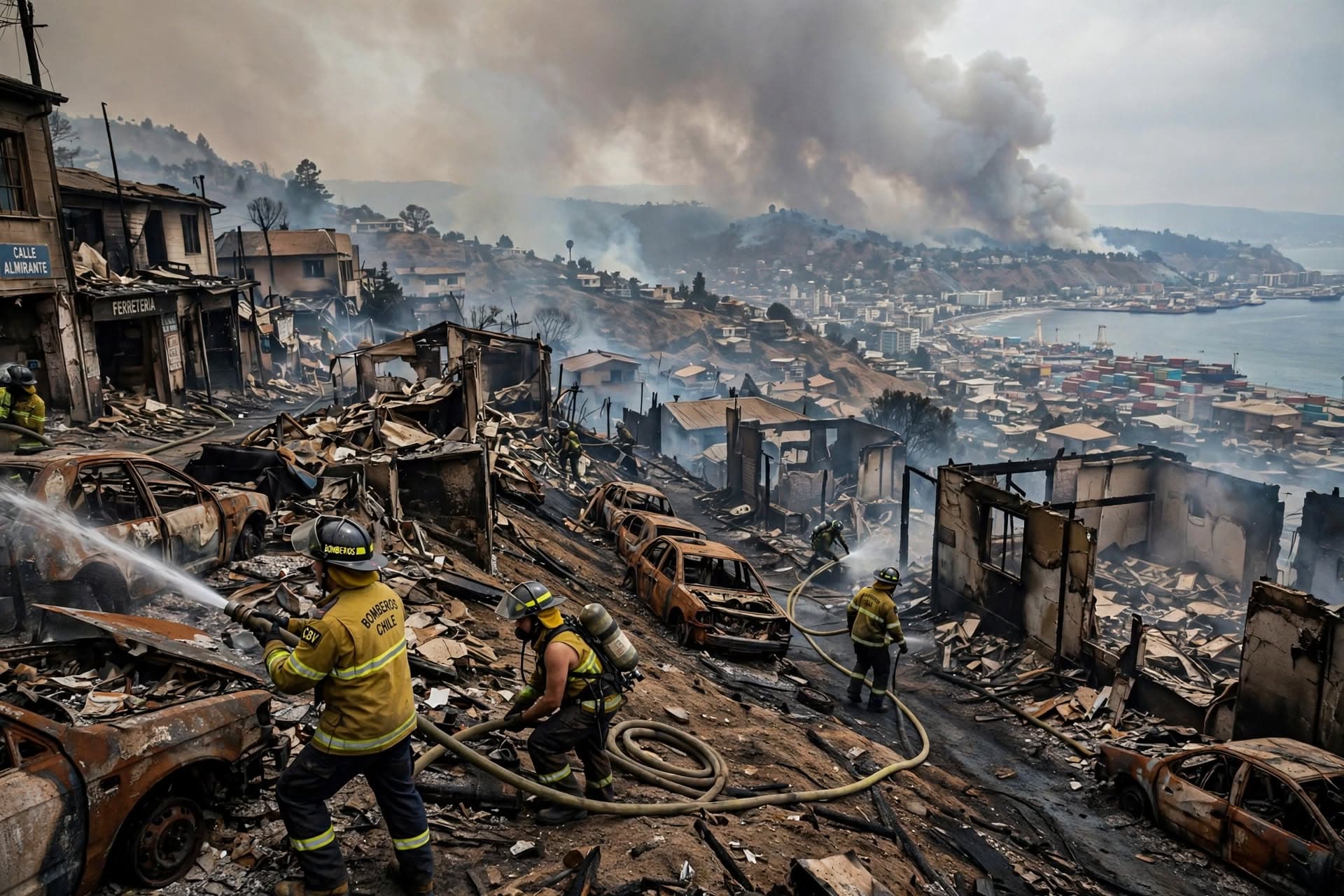
On October 4, 2026, a catastrophic wildfire swept through the hills of Valparaíso, Chile, resulting in the tragic loss of at least 15 lives and the destruction of hundreds of homes. The blaze, fueled by high winds and extreme dryness, rapidly advanced through the densely populated areas, trapping families in their homes before emergency sirens could alert them to the danger. The speed and intensity of the fire caught local emergency services off guard, leading to a chaotic response as they struggled to contain the flames.
By mid-afternoon, thick black smoke enveloped the bay area, with embers carried by coastal gales crossing containment lines established by forestry workers. The fire's rapid spread overwhelmed local emergency management infrastructure, cutting off primary escape routes and causing water pressure to plummet in several hill districts. Firefighters faced significant challenges as they attempted to combat the flames on steep inclines where heavy equipment could not operate effectively. Ground crews worked tirelessly to create makeshift firebreaks, while aerial support struggled to maintain accuracy due to high thermal currents.
As hospitals across the region activated mass-casualty protocols, they prepared to treat severe burn victims and those suffering from respiratory issues caused by smoke inhalation. Field clinics set up in municipal gymnasiums were inundated with individuals seeking shelter and medical assistance. Meanwhile, municipal morgues dispatched mobile refrigeration units to manage the increasing number of fatalities recovered from the charred remains of homes.
In the aftermath of the fire, structural engineers and urban planners highlighted the lack of basic firebreaks and emergency access routes in informal hillside settlements. Years of unregulated housing expansion into forested areas had created a predictable path for the fire's spread. Forestry officials reported that ground temperatures within the burn zone exceeded historical averages, exacerbating the situation.
In response to the disaster, the regional governor declared a state of catastrophe, transferring command of public safety operations to military authorities. Soldiers established checkpoints to prevent looting and facilitate the movement of water tankers into affected areas. As night fell, curfews were enforced to maintain order amidst the ongoing crisis.
Forensic units began their work in the cooler sectors of the fire zone, searching through the debris for victims and evidence. Identification efforts were hampered by the extreme heat damage to residential structures, leaving families anxiously awaiting news of their loved ones. Municipal sanitation crews initiated the process of clearing burnt debris from main roads to allow heavy rescue equipment access to isolated areas.
Public prosecutors launched an immediate investigation into the fire's ignition points along the urban-forest border. Forestry service inspectors collected soil samples and weather data to analyze the fire's initial acceleration patterns. Authorities have stated that no potential cause has been ruled out as investigation teams continue to assess the perimeter of the affected areas.
Published by Banx Network. This article is part of the Banx decentralized media programme, powered by the BXE token on the XRP Ledger.