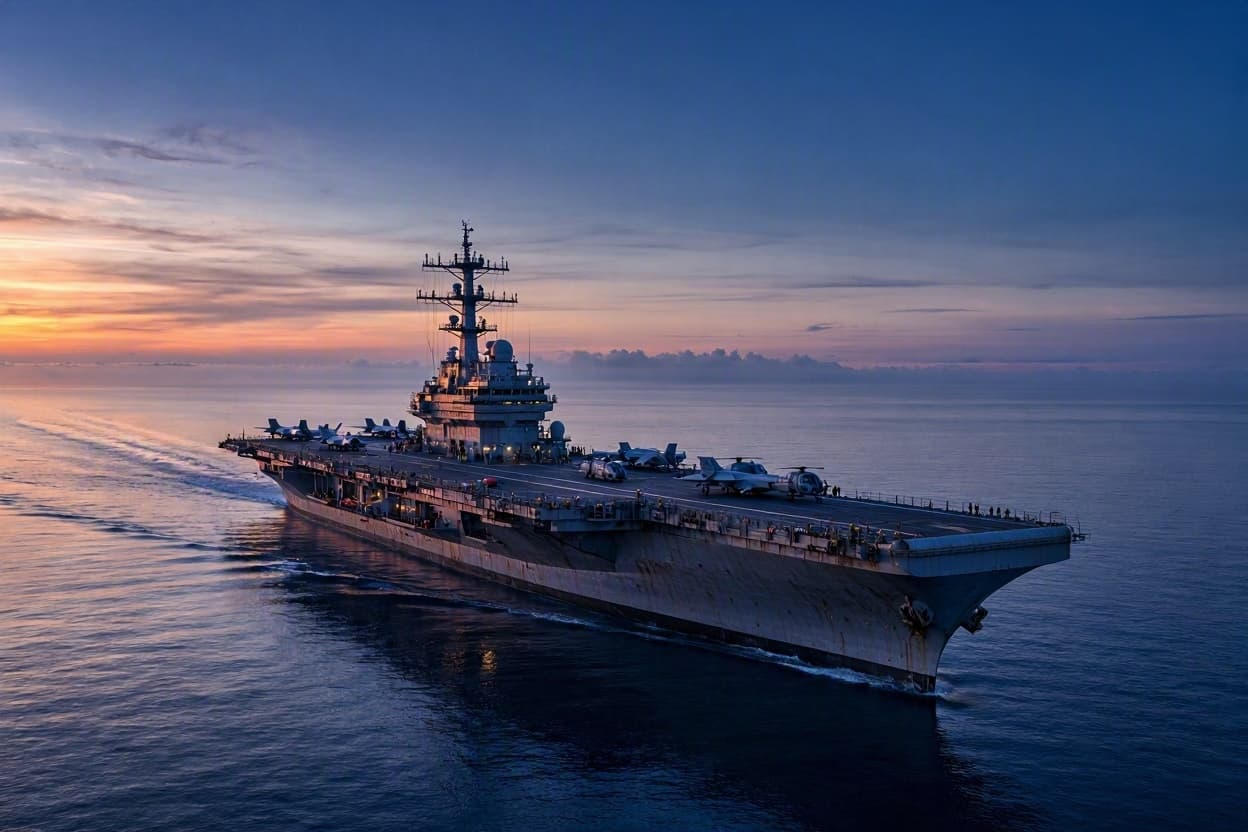
The vast expanse of the Persian Gulf has long been a theater of strategic maneuvering, where the presence of a single aircraft carrier can signal resolve or deter aggression. Yet, the recent ordeal of the USS Abraham Lincoln reveals a more complex reality. After spending a record-breaking 250 consecutive days at sea supporting operations linked to the conflict with Iran, the carrier and its crew have faced significant challenges, from supply shortages to mounting fatigue. This unprecedented deployment has sparked a sobering conversation among military experts about the limits of American naval power in a prolonged, asymmetric war.
The Lincoln’s extended stay was not merely a test of endurance but a stress test for the entire logistical framework of the U.S. Navy. Reports emerging from the ship describe conditions that strain the resilience of even the most disciplined sailors. Food shortages, limited access to fresh provisions, and the psychological toll of constant alertness have taken a visible toll. For families waiting ashore, the silence from the deep is often filled with anxiety, as the human cost of such sustained operations becomes increasingly apparent.
Experts point to the asymmetry of the conflict as a key factor. While the Lincoln represents a multi-billion-dollar investment in technological superiority, it faces threats from relatively low-cost drones and missile boats. This dynamic forces the Navy to expend significant resources on defense, stretching its capabilities thin. The ability of a $20,000 drone to disrupt the operations of a nuclear-powered supercarrier highlights the evolving nature of modern warfare, where agility often outweighs sheer mass.
The decision to keep the Lincoln deployed for so long was driven by the need to maintain pressure on Iran during a critical phase of the conflict. However, this strategy has exposed vulnerabilities in the Navy’s rotation schedules and maintenance cycles. With fewer carriers available due to ongoing repairs and modernization, the burden on individual ships has increased. The result is a force that is highly capable but increasingly fragile, operating near the edge of its sustainable capacity.
Veterans and health professionals have expressed concern over the long-term impacts on the crew. Mental health issues, including PTSD and burnout, are rising among sailors who have spent months without the restorative break of port visits. The Navy’s traditional model of deployment and recovery is being challenged by the demands of a conflict that shows no sign of immediate resolution. Adapting to this new reality requires not just more ships, but a fundamental rethinking of how personnel are supported.
Politically, the situation has drawn mixed reactions. While some argue that the Lincoln’s presence has successfully deterred larger escalations, others question the sustainability of such a posture. The Trump administration has downplayed concerns, emphasizing the strategic necessity of the mission. Yet, the visible strain on the crew serves as a reminder that military power is ultimately dependent on the well-being of those who wield it.
As the USS George Washington moves to relieve the Lincoln, the focus shifts to recovery and repair. The incoming carrier will face similar pressures, highlighting the cyclical nature of the challenge. For the Navy, the lesson is clear: maintaining dominance in the Middle East requires not just hardware, but a holistic approach to logistics, personnel welfare, and strategic pacing.
In the end, the story of the USS Lincoln is one of dedication and limitation. It underscores the high price of prolonged engagement in a region where tensions run deep. As experts analyze the implications, the hope is that future strategies will balance operational needs with the human element, ensuring that the strength of the Navy remains rooted in the resilience of its people.
AI Image Disclaimer: The visual elements in this article are AI-generated illustrations depicting naval vessels at sea and abstract representations of logistical challenges, designed to reflect the themes of maritime operations without showing real proprietary footage or specific individuals.
Sources: Al Jazeera, NPR, The Guardian, AP News
Published by Banx Network. This article is part of the Banx decentralized media programme, powered by the BXE token on the XRP Ledger.