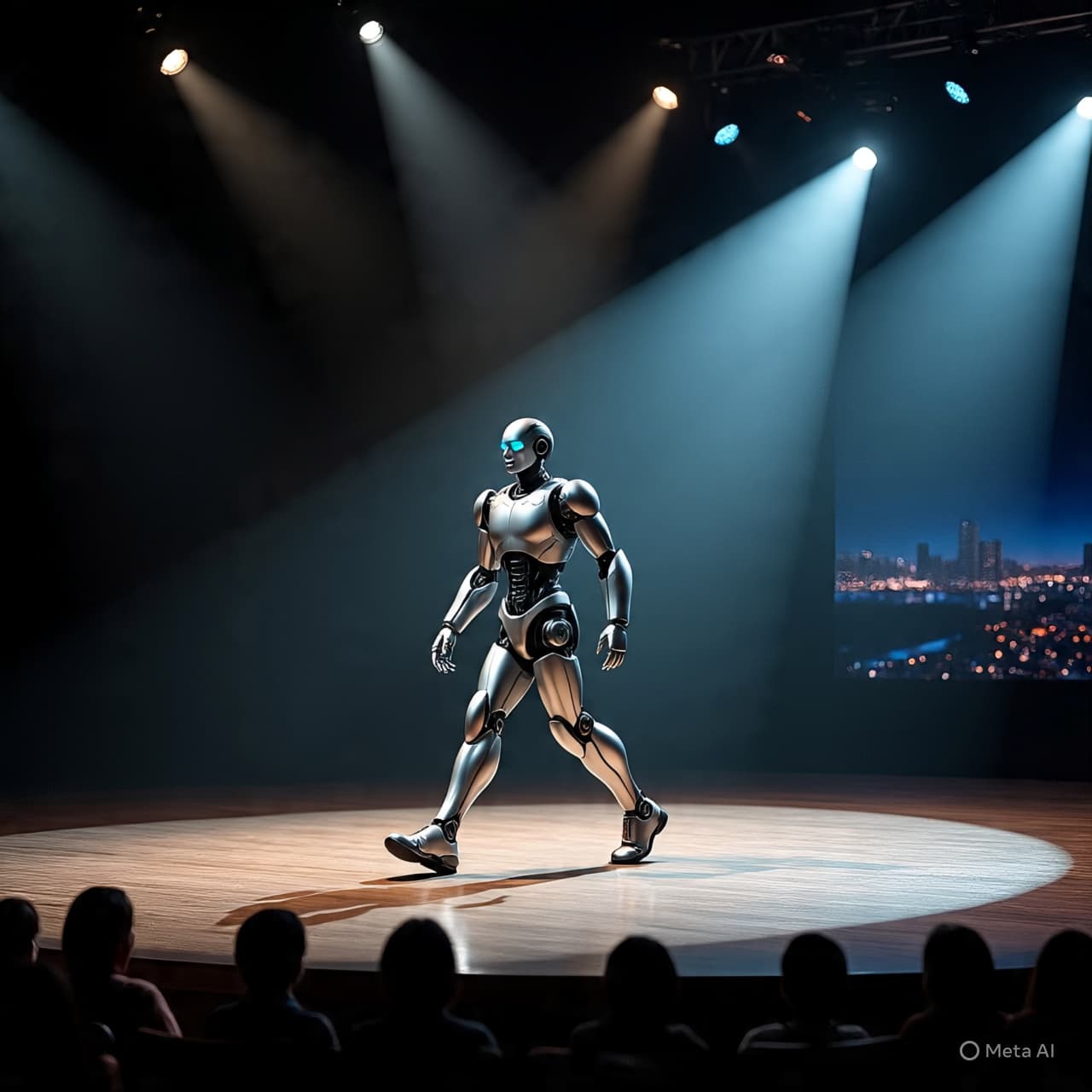
The robot IRON was introduced by Chinese electric-vehicle maker Xpeng during its AI Day on November 5, 2025, in Guangzhou. The company’s CEO, He Xiaopeng, noted that the robot’s gestures and gait were so natural that people online speculated it was a human inside a suit. To resolve doubt, the robotics team performed an on-stage reveal: IRON’s synthetic skin was cut open, revealing its internal frame and mechanical workings.
What makes IRON stand out are several key technical claims: it is equipped with 82 degrees of freedom (including 22 in each hand) and is powered by three custom AI chips yielding 2,250 TOPS (Trillions of Operations Per Second) of computing power. The design is based on a “born from within” philosophy: the robot features an internal endoskeleton, bionic muscle structure, and full‐coverage synthetic skin intended to mimic human proportions and movements.
The scene served as both spectacle and statement. On one hand, it shows the evolution of humanoid robotics from jerky limbs and stiff poses toward fluid, human-like motion. On the other hand, the dramatic cut-open moment signals the company’s awareness of public scepticism: when a robot walks like a person, the audience asks if the person is inside the robot instead of the other way around. By showing its insides, Xpeng sought to erase that doubt. The reveal also raises deeper questions about how we’ll distinguish between machine and human, not just in appearance or movement, but in intention and interaction. Moreover, Xpeng stated that IRON is not aimed immediately at consumer households but intends initial deployment in commercial settings such as stores, offices, showrooms — with broader ambitions ahead.
Of course, the unveiling does not mean the robot is ready to serve in everyday life. Many issues remain: ensuring safety when robots operate alongside humans, reliability of hardware and software in uncontrolled environments, cost scaling, and public acceptance. The on-stage demonstration was polished; real-world complexity is greater. Nonetheless, the moment represents a symbolic step: not just a robot that looks human, but one that moves convincingly and is shown to be machine.
AI Image Disclaimer “Visuals are created with AI tools and are not real photographs.”
Sources Live Science South China Morning Post NotebookCheck People’s Daily Online Yahoo/Tech
Published by Banx Network. This article is part of the Banx decentralized media programme, powered by the BXE token on the XRP Ledger.