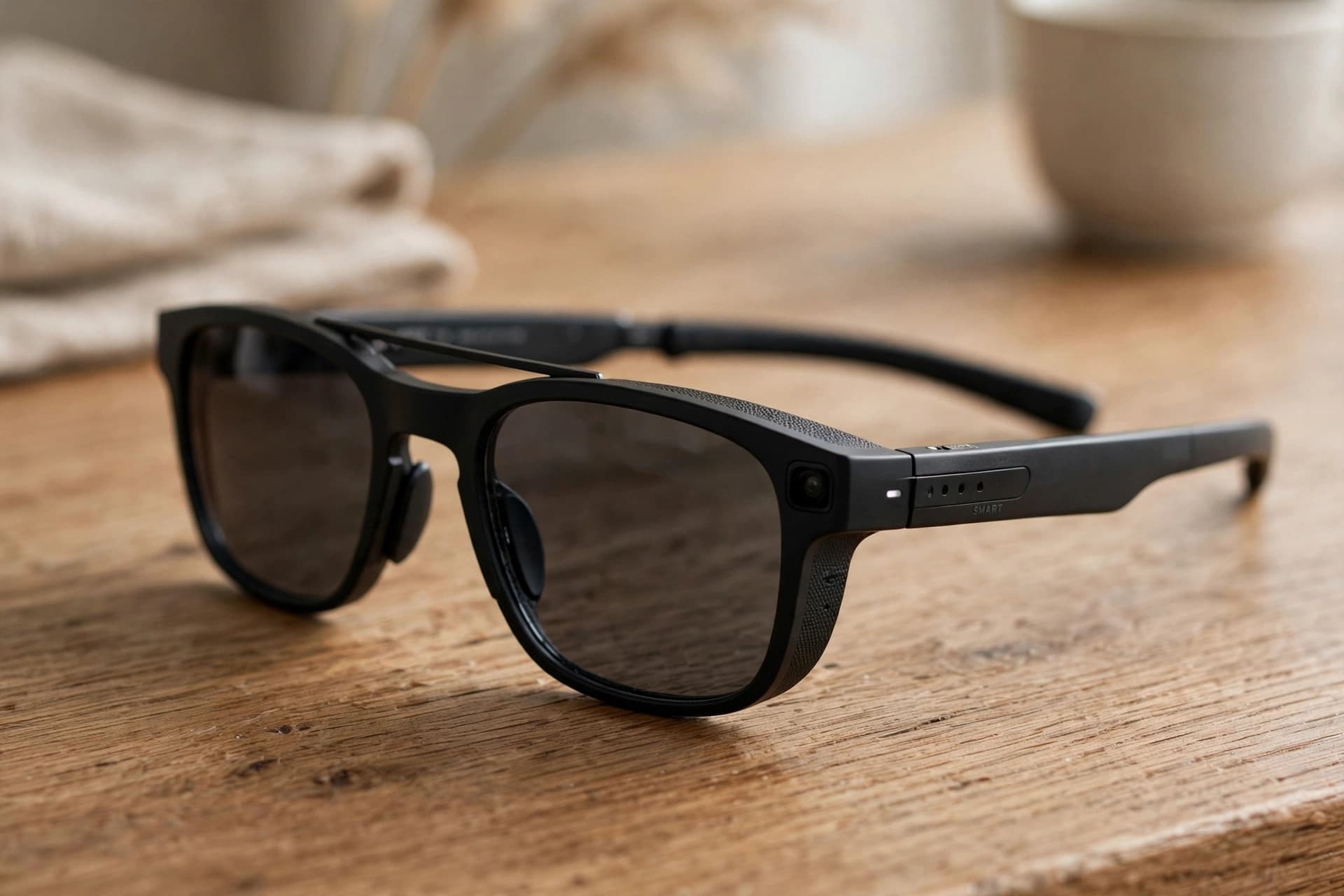
There is a quiet unease that settles over a society when the tools of seeing become tools of watching. A pair of glasses, after all, is meant to help you see the world—not to record it without the knowledge of those around you. This week, Australia's privacy watchdog took a step toward addressing that unease, announcing a formal investigation into a Chinese company whose app powers some of the country's most affordable smart glasses.
The Office of the Australian Information Commissioner (OAIC) has launched an investigation into Shenzhen Qingcheng, the maker of the HeyCyan app used in Anko smart glasses sold for as little as AU$89 at Kmart and other retailers . The investigation follows the company's failure to respond to preliminary inquiries sent last month to several companies, including Meta, Kmart, Google, and Shenzhen Qingcheng .
Privacy Commissioner Carly Kind did not mince words. "In the absence of any response from Shenzhen Qingcheng to the OAIC's preliminary inquiries, I have no assurance that it is protecting personal data of Australians as required by the Privacy Act," she said . She added that the failure "raises concerns about the entity's practices, procedures and systems to protect the personal information it holds" .
The concern is not abstract. Smart glasses are capable of taking photos, filming videos, and interacting with AI assistants—often discreetly. The OAIC has been monitoring the rollout of these devices since early 2026, and in August received correspondence from the Attorney-General requesting an examination of their privacy implications . The Commissioner has also published a blog warning that surveillance wearables could "fundamentally alter our experience of interpersonal interactions" and undermine the ability to control when and how one is recorded .
Kind urged retailers to reconsider whether they should continue stocking the devices. "Given the particular risks the OAIC has identified with the HeyCyan app, I would urge responsible retailers to consider whether it is appropriate to continue making these devices available," she said .
The investigation will use the full range of the OAIC's powers, including compulsory information gathering notices . For now, the question of how and where Australians' personal data is collected and stored—by a company that has thus far declined to answer—remains unresolved.
AI Image Disclaimer: The images accompanying this article are generated by artificial intelligence and are intended for illustrative purposes only.
Sources: Daily Mail, France 24, Office of the Australian Information Commissioner, LinkedIn
Published by Banx Network. This article is part of the Banx decentralized media programme, powered by the BXE token on the XRP Ledger.