
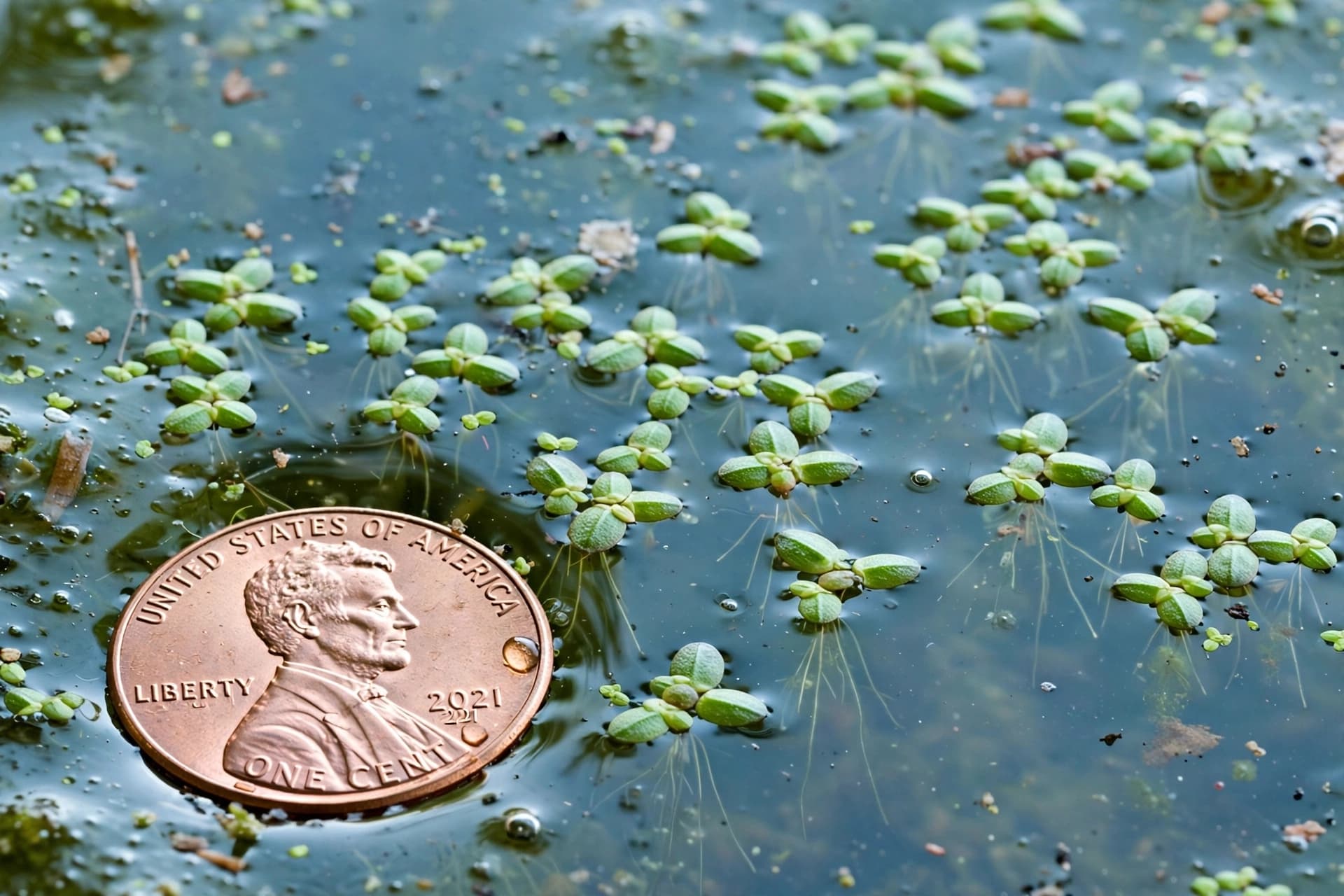
There is something almost paradoxical about the world's smallest flowering plant—a plant so tiny that it is essentially a floating sphere, no larger than a pinhead, rootless and leafless, yet containing everything it needs to grow, reproduce, and nourish. Duckweeds, and particularly the species Wolffia, measure just a few millimeters across. They drift on the surfaces of ponds and lakes, silent and unassuming. But researchers at the University of Nottingham have found that their genetic blueprint is not a stripped-down version of a larger plant. It is a complete plant, compressed and fused into miniature form .
The study, published in Current Biology, used gene expression analysis and advanced microscopy to examine how duckweeds achieve their extreme miniaturization. Study leader Anthony Bishopp explained that while miniaturization in animals is often associated with the loss of organs or body structures, duckweeds have taken a different route. "The basic organization of the shoot was still there," he said. "Rather than throwing away parts of the blueprint, duckweed appears to have compressed and fused its components into an incredibly compact plant" .
This matters for reasons that extend far beyond botany. Duckweed is a nutritional powerhouse. It produces substantial amounts of oxygen through photosynthesis, contains 21 to 25 percent protein—higher than soybeans—and can double its biomass in one to two days under optimal conditions . Every part of the plant is edible; there is no inedible biomass. For space agencies planning long-duration missions to the Moon or Mars, these are precisely the qualities that make a crop viable .
The European Space Agency has taken notice. Researchers from Mahidol University in Thailand have tested watermeal, a type of duckweed even smaller than the more familiar varieties, aboard the ESA's Large Diameter Centrifuge, subjecting the plants to twenty times normal Earth gravity . Team leader Tatpong Tulyananda explained the appeal: watermeal has no roots, stems, or leaves, so researchers can focus directly on how gravity shifts affect its growth. It is also a plant that has been consumed in Thailand for generations, used in soups and salads .
The results so far have been encouraging. Under simulated microgravity, watermeal showed little to no difference in growth compared to normal conditions. Under hypergravity, some clones maintained their protein content and even grew faster. The researchers found a strong inverse relationship between growth rate and plant size—the smaller the plant, the faster it grows, an adaptive trait useful in confined spacecraft environments . The key caveat is clonal variability: some strains perform better under space conditions than others, which means selection will matter .
For astronauts on a journey to Mars, the ability to grow food that is nutritious, fast-growing, and requires minimal space is not a luxury but a necessity. Resupply from Earth is impossible for missions lasting years. A plant that fits in the palm of a hand but produces oxygen, protein, and biomass could be the difference between a sustainable mission and an unsustainable one. The world's tiniest flowering plant may have a role to play in the largest of human endeavors.
AI Image Disclaimer: The imagery in this article is AI-generated and serves an illustrative purpose only.
Sources:
· Current Biology · University of Nottingham · European Space Agency · Sacramento Bee
Published by Banx Network. This article is part of the Banx decentralized media programme, powered by the BXE token on the XRP Ledger.



