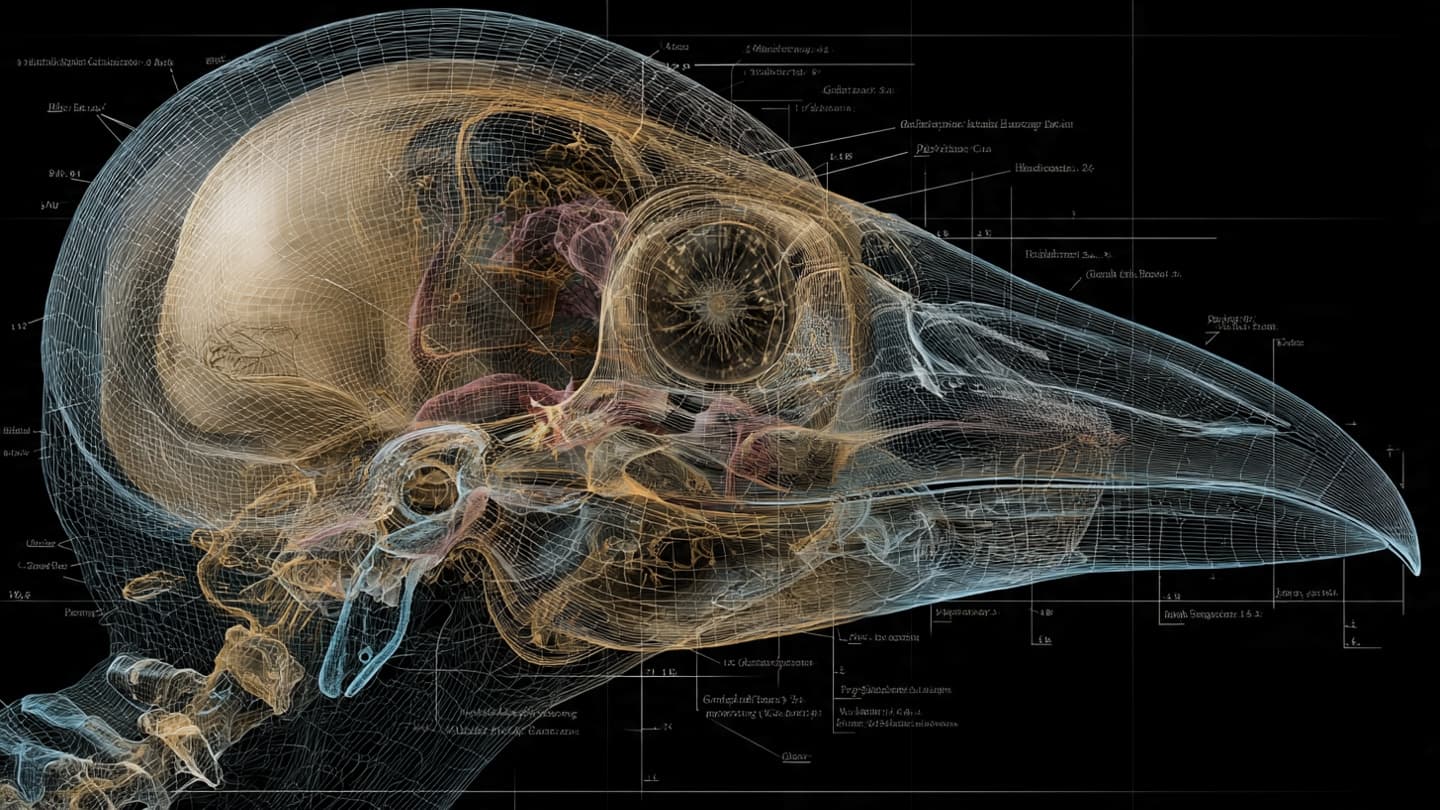
The dodo is often remembered as a symbol of clumsiness and extinction, a bird that supposedly walked blindly into its own demise. But recent scientific discoveries are rewriting this narrative, revealing a creature with a rich and complex sensory world. By digitally reconstructing the brain cavity of one of the world’s only two complete dodo skulls, researchers have uncovered evidence that the dodo possessed a keen sense of smell and possibly owl-like night vision. It is a revelation that restores dignity to a misunderstood species, showing that the dodo was not a fool of nature but a specialized adapter to its island home.
The study, published in the Zoological Journal of the Linnean Society, used CT scans to create an endocast of the dodo’s brain. This virtual model allowed scientists to analyze the size and structure of different brain regions, particularly those associated with sensory processing. The results showed that the olfactory bulbs, responsible for smell, were larger than previously thought, suggesting that scent played a crucial role in the dodo’s life. This finding challenges the old assumption that the bird relied solely on sight.
Additionally, the structure of the optic lobes indicates that the dodo may have had enhanced low-light vision, similar to that of nocturnal birds like owls. This adaptation would have been advantageous in the dense forests of Mauritius, where the dodo lived. It suggests that the bird was active during dawn and dusk, navigating its environment with a combination of smell and sight that was finely tuned to its surroundings.
These insights provide a more nuanced understanding of the dodo’s behavior and ecology. Rather than being a slow and stupid bird, it was likely a cautious and perceptive animal, well-suited to its niche. The misconception of its stupidity arose largely from early accounts by sailors who encountered a bird that had no fear of humans, having evolved in the absence of predators.
The discovery also highlights the importance of preserving historical specimens. The skull used in the study is a rare treasure, housed in a museum in Oxford. Its careful analysis has yielded information that was inaccessible for centuries, demonstrating the value of modern technology in unlocking the secrets of the past. Each specimen holds potential stories waiting to be told.
For conservationists, the story of the dodo serves as a poignant reminder of what is lost when species go extinct. Understanding the complexity of these animals fosters a deeper appreciation for biodiversity and the urgent need to protect endangered species today. The dodo’s legacy is no longer just one of failure, but of unique adaptation.
The rediscovery of the dodo’s sensory world is a triumph of science and curiosity. It corrects a long-standing mischaracterization and offers a more respectful view of this extinct bird. As we learn more about the dodo, we gain a better understanding of the intricate web of life that once thrived on Mauritius.
AI Image Disclaimer: Visuals associated with this article are AI-generated to illustrate the themes of paleontology and scientific discovery.
Sources: Phys.org Sci.News
Published by Banx Network. This article is part of the Banx decentralized media programme, powered by the BXE token on the XRP Ledger.