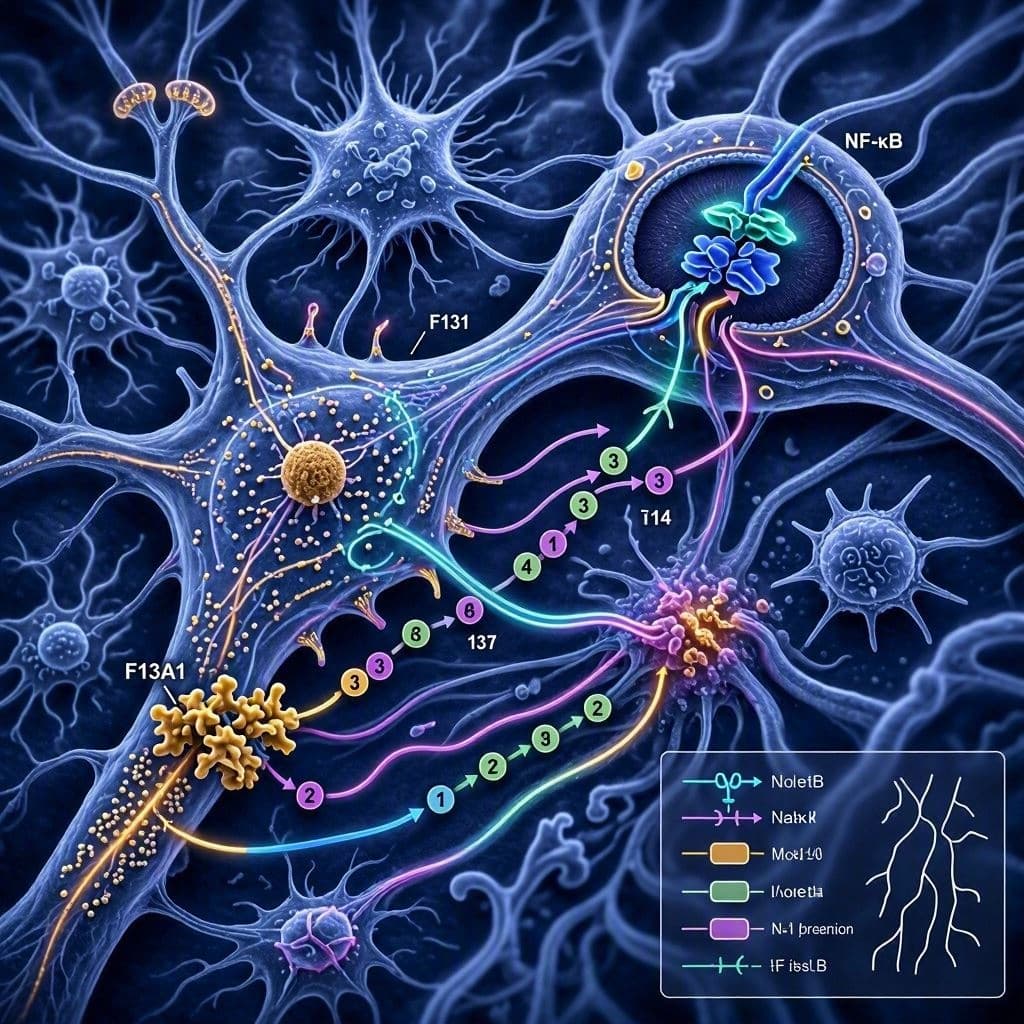
Glioblastoma remains one of the most formidable challenges in oncology, a aggressive brain tumor that often resists standard treatments. Temozolomide, a chemotherapy drug, is a cornerstone of therapy, yet many patients develop resistance, leading to recurrence and poor outcomes. Recent research has identified a specific molecular culprit in this process: the protein F13A1. Studies show that F13A1 enhances resistance to temozolomide by activating the NF-κB signaling pathway, offering new insights into the mechanisms of drug failure.
The NF-κB pathway is a critical regulator of cell survival, inflammation, and immune response. When activated, it can protect cancer cells from apoptosis, or programmed cell death, which is the intended effect of chemotherapy. In glioblastoma cells, the overexpression of F13A1 appears to trigger this protective mechanism, allowing the tumor to withstand the toxic effects of temozolomide. This discovery sheds light on why some tumors remain stubbornly resilient despite aggressive treatment.
Understanding the role of F13A1 opens new avenues for therapeutic intervention. If this protein is key to resistance, then targeting it could restore the effectiveness of temozolomide. Researchers are exploring inhibitors that can block F13A1 activity or disrupt its interaction with the NF-κB pathway. Such combination therapies could potentially overcome resistance and improve survival rates for patients with this devastating disease.
The identification of F13A1 also highlights the importance of personalized medicine. Not all glioblastomas express this protein at high levels, suggesting that patients could be screened for F13A1 expression to predict their likelihood of responding to temozolomide. Those with high levels might benefit from alternative or adjunctive treatments, while those with low levels could proceed with standard care. This stratification could optimize treatment plans and reduce unnecessary toxicity.
Clinical trials are necessary to validate these findings in human subjects. Preclinical studies in cell cultures and animal models have shown promising results, but translating these successes to the clinic requires careful testing. Safety and efficacy must be established before any new drug combinations can be approved for widespread use. Nevertheless, the potential for improving outcomes is significant.
For patients and families, this research offers a glimmer of hope. Glioblastoma diagnoses are often accompanied by a sense of urgency and despair, given the limited treatment options. Identifying specific molecular targets like F13A1 provides a concrete direction for future therapies, moving beyond trial-and-error approaches to more precise and effective interventions.
The scientific community continues to unravel the complexities of brain tumors. Each discovery, no matter how small, contributes to a larger puzzle. The role of F13A1 in temozolomide resistance is a piece of that puzzle, bringing us closer to understanding how to defeat this aggressive cancer.
The discovery that F13A1 enhances temozolomide resistance in glioblastoma via the NF-κB pathway marks a significant step forward in cancer research. By targeting this mechanism, scientists hope to develop new strategies to overcome drug resistance and improve outcomes for patients facing this challenging diagnosis.
AI Image Disclaimer: Visual representations associated with this medical research are generated by artificial intelligence for editorial context.
Sources: Nature Communications Journal of Neuro-Oncology American Association for Cancer Research
Published by Banx Network. This article is part of the Banx decentralized media programme, powered by the BXE token on the XRP Ledger.