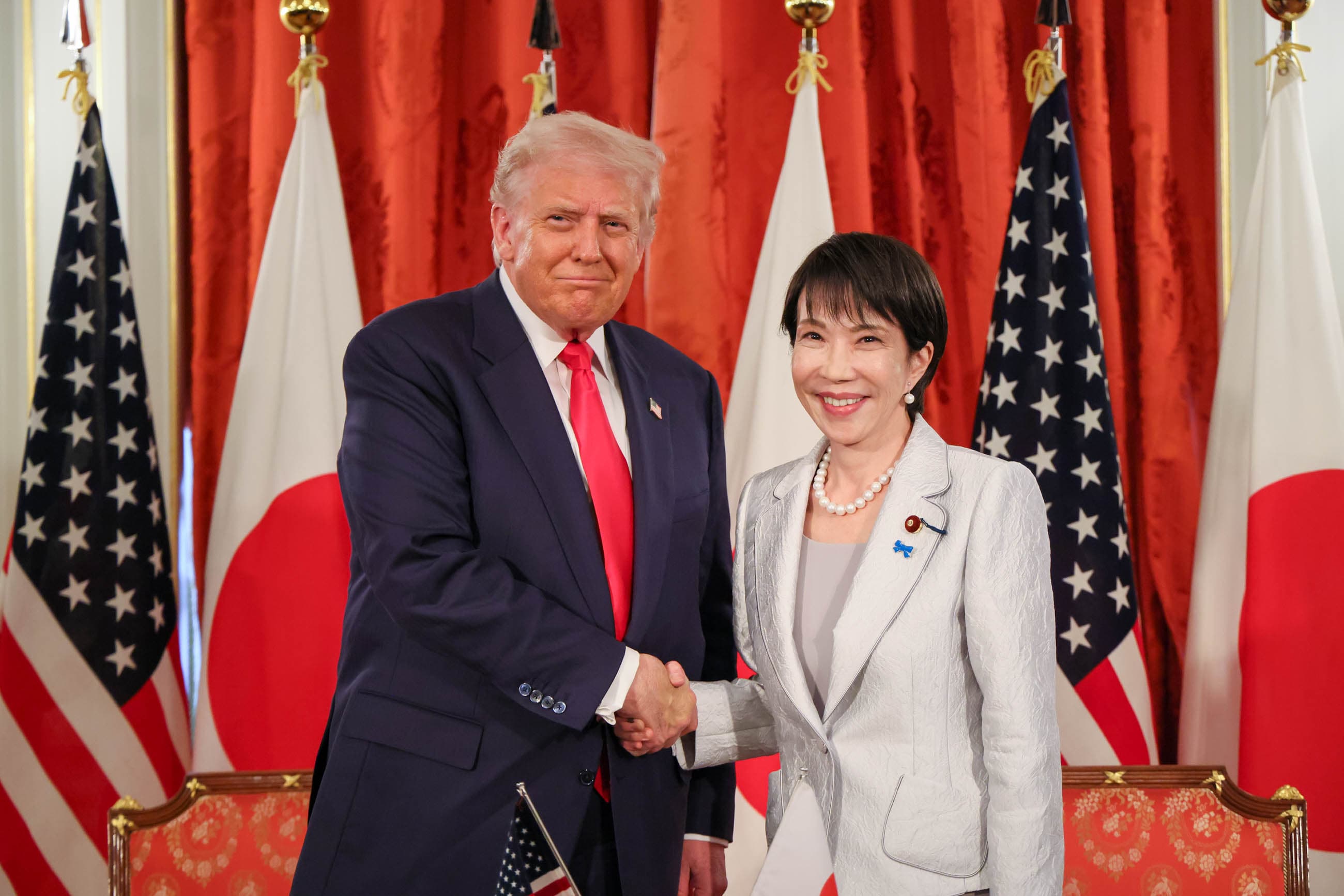
Executive Overview
The $550 billion package is expected to unfold over multiple years and spans:
Advanced semiconductor manufacturing
Artificial intelligence and next-generation computing
Energy security and LNG cooperation
Critical minerals supply chains
Strategic infrastructure development
The agreement reflects a broader shift toward economic security as national security, a doctrine increasingly central to Washington and Tokyo alike.
Strategic Industrial Realignment 1. Semiconductor Sovereignty
Japan’s leading industrial conglomerates are expected to expand fabrication capacity within the United States, reinforcing domestic chip production amid global supply chain vulnerabilities.
This comes amid intensified global competition in advanced-node manufacturing and export control regimes targeting strategic technologies.
2. AI, Quantum & Frontier Technologies
The framework includes coordinated R&D initiatives, cross-border capital deployment, and industrial partnerships in:
Artificial intelligence
Quantum computing
Advanced robotics
Defense-adjacent dual-use technologies
The objective is clear: establish a resilient trans-Pacific innovation corridor.
Energy & Resource Security
Energy cooperation forms a core pillar of the agreement:
Expanded long-term LNG contracts
Joint investment in next-generation nuclear reactors
Development of clean hydrogen ecosystems
Securing rare earth and critical mineral supply chains
For Japan, energy diversification remains existential. For the United States, long-term offtake agreements reinforce its position as a global energy exporter.
Geopolitical Significance
While not explicitly framed as such, the accord is widely interpreted as part of a broader Indo-Pacific strategic architecture.
By deepening economic interdependence, Washington and Tokyo are:
Reducing exposure to geopolitical disruptions
Strengthening allied industrial ecosystems
Signaling long-term policy alignment
In the context of rising systemic competition with China, the agreement reinforces the durability of the U.S.–Japan alliance.
Macroeconomic Implications
Economists anticipate several second-order effects:
Manufacturing job creation across multiple U.S. states
Increased Japanese FDI inflows
Strengthening of high-value industrial clusters
Potential upward pressure on advanced manufacturing equities
Capital markets are likely to interpret the agreement as structurally supportive of industrial, defense, energy, and semiconductor sectors.
Structural Shift in Global Trade Architecture
This $550 billion framework signals a deeper transformation: the gradual transition from hyper-globalized efficiency to strategic bloc-based resilience.
The United States and Japan are not merely expanding trade — they are architecting a coordinated industrial ecosystem designed to withstand systemic shocks.
Conclusion
The United States–Japan $550 billion accord stands as a defining economic development of 2026.
It reflects a world in which capital flows, supply chains, and technological leadership are increasingly shaped by geopolitical alignment rather than pure market efficiency.
For policymakers, investors, and multinational corporations alike, this agreement marks the consolidation of a powerful trans-Pacific economic axis — one likely to shape global markets for years to come.
Published by Banx Network. This article is part of the Banx decentralized media programme, powered by the BXE token on the XRP Ledger.