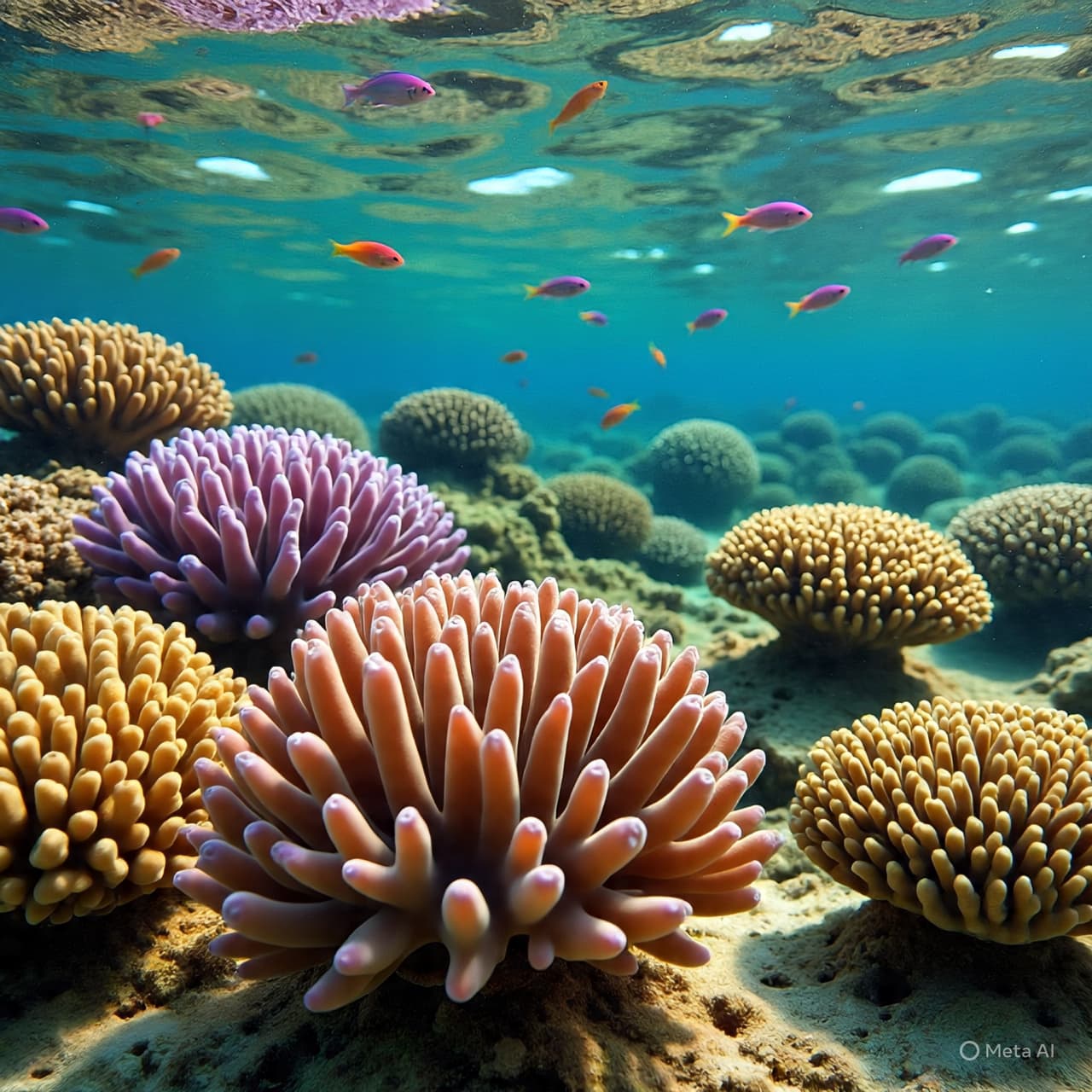
In the gentle hush of the ocean’s embrace, where light and shadow play upon swaying corals, one might imagine reefs as whimsical sculptures of nature. Yet look closer, and something more profound appears — an ancient design, a choreography of curves and crevices that has been perfected over eons. Like the arches of a grand cathedral rising toward an unseen sky, reefs are not mere splashes of color under water; they are crafted structures shaped by survival itself.
Beneath the waves, from tropical coral gardens to oyster beds in temperate waters, researchers have begun to see reefs as ecosystems with architectural intent. They are built not by chance but by rules — geometric principles that define not only how they grow, but how they endure. In a recent study, scientists mapped reef shapes in three dimensions with remarkable precision and found that reefs achieve a particular balance of height and surface complexity that maximizes the survival of their inhabitants. Simple shapes offered too little refuge, leaving young oysters and coral recruits vulnerable to predators, while overly ornate forms provided diminishing returns. Somewhere in between lies an optimal geometry — nature’s own blueprint for resilience.
These findings remind us that reefs are far more than collections of shells and skeletons. They are finely tuned landscapes where every ridge and hollow plays a role. Their complex, fractal‑like surfaces create safe harbors for tiny creatures and whisper spaces for coral larvae to settle and grow. In this sense, reefs function like ancient cities beneath the sea, with narrow alleyways for protection, broad boulevards for currents to flow, and meeting halls where countless species find shelter.
Scientists are now turning this insight into practice. By applying the same geometric principles found in thriving reefs, conservation efforts are designing artificial modules that mimic nature’s architecture. These structures aim to accelerate reef recovery, attracting coral larvae and shielding young organisms from danger. Early experimental work shows that carefully engineered recesses and shapes can enhance coral settlement by orders of magnitude compared to flat or unstructured surfaces. It’s as though, by reading the reef’s own secret language of form, we might help reignite its pulse.
At the heart of this architectural expertise lies adaptation — the deep interplay between living organisms and their environment. Coral polyps themselves are tiny builders, secreting calcium carbonate and laying the foundation for the vast structures that teem with life. Over generations, this communal construction process creates not only habitat, but a fragile yet wondrous harmony of shape, function, and survival.
And in these shapes we see a lesson: life, when given the space to craft and be crafted, can invent complexity that serves both beauty and survival. Whether in the twist of a coral branch, the depth of a groove carved by currents, or the elegant spirals that shelter juvenile life, the reef’s architecture speaks of a deep, quiet ingenuity.
In recent research, scientists described how the geometric complexity of reef structures influences the fate of those who make their home there. These patterns are not arbitrary; they affect everything from predator protection to how quickly a reef can grow. Understanding and preserving these forms — and even using them as guides in restoration projects — is becoming an important part of efforts to sustain the rich biodiversity that depends on coral reefs around the world.
AI Image Disclaimer Illustrations were produced with AI and serve as conceptual depictions.
Source Check — credible sources found:
University of Hawaiʻi System News Mirage News Nature (Scientific journal) ScienceDirect (peer‑reviewed research) ScienceInsights / other reef structure science
Published by Banx Network. This article is part of the Banx decentralized media programme, powered by the BXE token on the XRP Ledger.