Under the quiet sweep of night, when Earth’s shadow stretches across the cosmos, the Moon can take on a new guise — a quiet dance of light and shadow that has inspired wonder for centuries. By the early morning of March 3, 2026, observers around much of the world are poised to witness one such celestial choreography: a total lunar eclipse, an event where Earth itself stands between the Sun and the Moon, casting a dark veil that slowly envelops the lunar face. This phenomenon, often called a “blood moon” for the coppery glow that lingers during totality, is at once a scientific spectacle and a gentle reminder of our planet’s place in the cosmic dance.
For observers under clear skies, the eclipse will unfold gradually, beginning in the early predawn hours as the Moon drifts into Earth’s penumbra and then into the deeper umbral shadow. Because a lunar eclipse depends on Earth’s shadow rather than the precise alignment of a solar eclipse, this event is visible from far wider expanses of the globe, allowing stargazers from eastern Asia to Australia and much of the Americas to see at least part of the show.
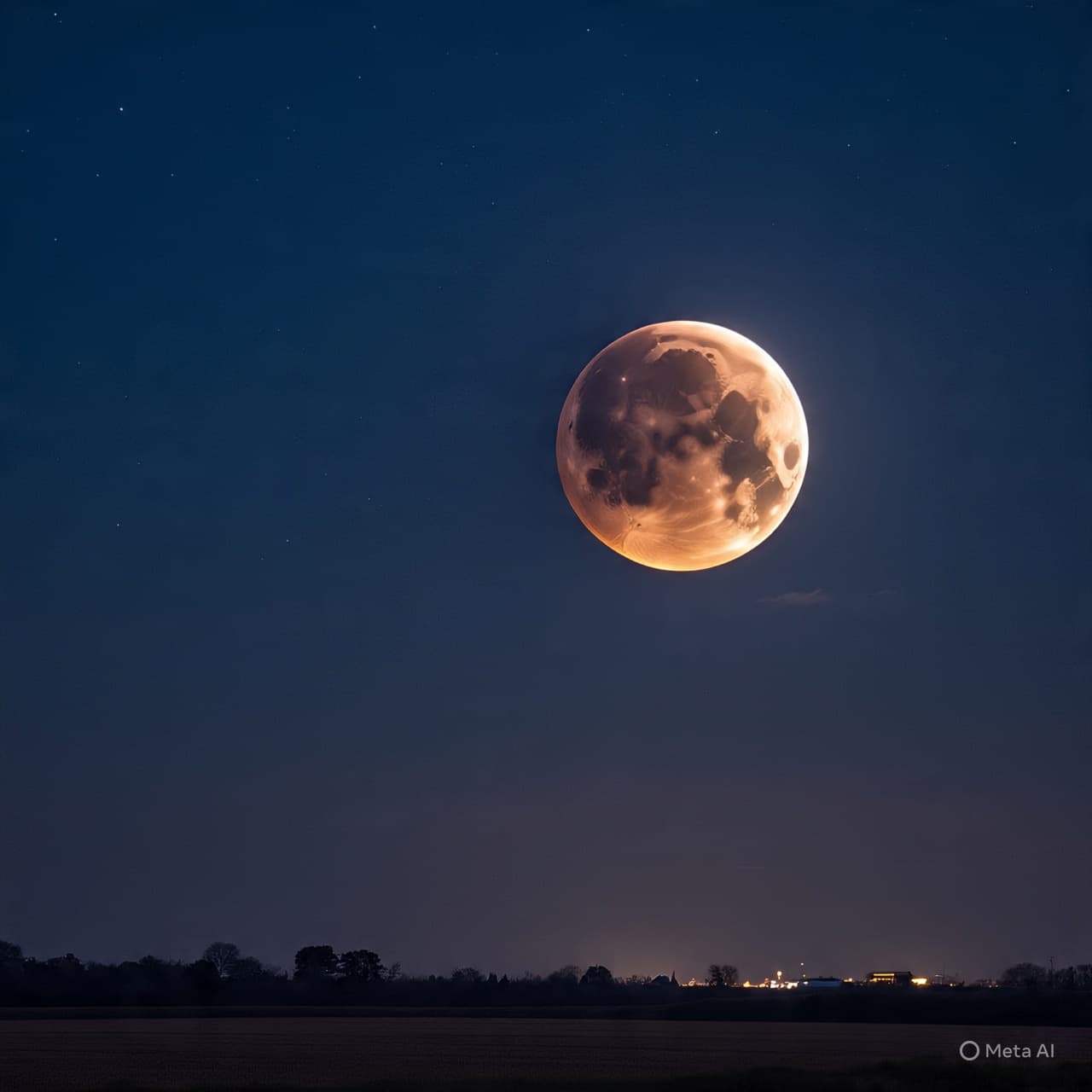
A total lunar eclipse occurs when the Moon passes entirely into Earth’s umbra, the darkest portion of its shadow, causing direct sunlight to be blocked. What light does reach the Moon first passes through Earth’s atmosphere, which scatters shorter wavelengths and leaves longer, reddish hues to bathe the lunar surface — hence the term “blood moon.” No special filters or eye protection are needed to watch a lunar eclipse; simply looking skyward is enough to enjoy the event in all its copper‑toned phases.
The March 3 eclipse will coincide with the Worm Moon, the full Moon of late winter named in traditional lunar folklore for the emergence of earthworms signaling spring’s approach. During this eclipse, totality — the period when the Moon is wholly within Earth’s shadow — will last just under an hour, forming a striking centerpiece to the broader five‑plus‑hour eclipse sequence of penumbral and partial phases.
Observers in eastern Asia and Australia will see the eclipse rising into view, while in the central and western Pacific and across much of North America, the eclipse will unfold through the early morning hours. In parts of central Asia and South America, only partial eclipses will be visible, whereas in Europe and Africa, the eclipse will be largely inaccessible due to the Moon’s position below the horizon at key phases.
The event carries additional cultural resonance in some regions. In Indonesia, for example, the eclipse will occur during Ramadan and can be seen as the Moon rises already immersed in Earth’s shadow, offering a vivid copper disc slowly rising above the eastern horizon at dusk.
Astronomers and skywatchers alike often relish total lunar eclipses not just for their visual impact, but for their educational value — inspiring curiosity about motion, shadow, and the mechanics of the solar system that connects all observers beneath one night sky. Whether viewed through a telescope or with the unaided eye, the eclipse invites moments of reflection and shared witnessing of a cosmic event.
The March 3, 2026 total lunar eclipse marks a significant celestial event visible from many regions worldwide, with totality lasting nearly an hour and the full eclipse spanning several hours as Earth’s shadow crosses the lunar surface. Depending on geographical location, observers may see rising or setting pencil‑thin crescents of shadow followed by the gradual reddening of the Moon during totality, without need for special viewing equipment. Skywatchers are encouraged to check local timings and weather conditions to make the most of this rare night‑sky phenomenon, the last total lunar eclipse until the end of 2028.
AI Image Disclaimer “Visuals are created with AI tools and are not real photographs.”
Sources NASA Scientific Visualization Studio, Time and Date eclipse details, Space.com eclipse guide, multiple international eclipse visibility reports.
Published by Banx Network. This article is part of the Banx decentralized media programme, powered by the BXE token on the XRP Ledger.