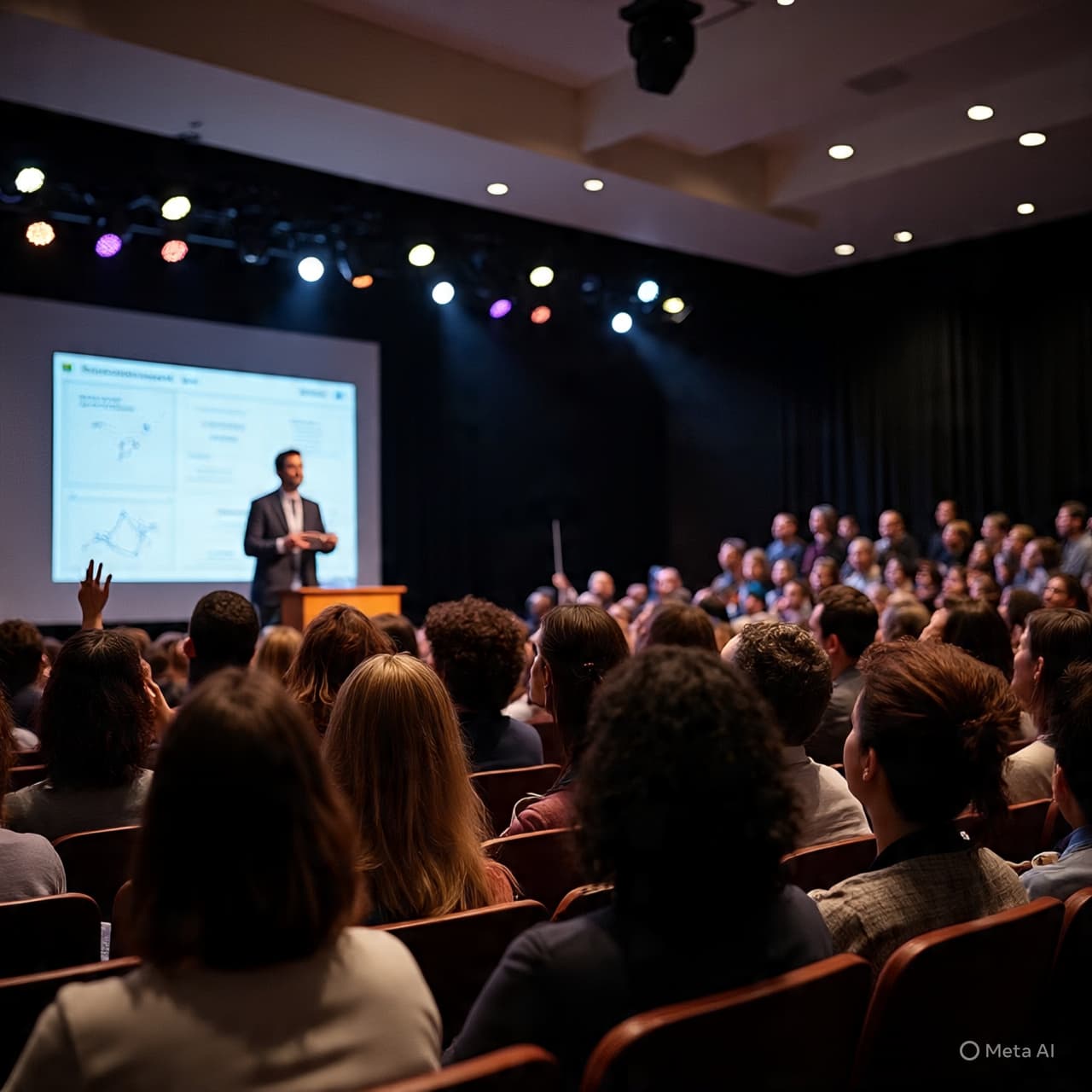
On a narrow stage in Cologne, beneath lights more often reserved for bands or stand-up comics, scientists step forward without lab coats or slides dense with equations. The audience leans in, not to be instructed, but to be entertained. Laughter arrives first, then curiosity, then something quieter and more durable: understanding. This is a Science Slam, where research leaves the controlled calm of institutions and enters the unpredictable energy of a crowd.
The format is simple and demanding. Each researcher has only minutes to explain their work, no jargon allowed, no safety net of footnotes or extended context. Complex subjects—neuroscience, climate systems, particle physics, social behavior—must be reshaped into stories that can survive applause, interruption, and the ticking clock. In Cologne, a city known for its openness and cultural playfulness, the exchange feels natural, almost inevitable.
What unfolds is not a dilution of science but a translation. A physicist turns uncertainty into a punchline. A biologist frames cell division as a neighborhood drama. A sociologist draws laughter from patterns of everyday behavior before revealing the data beneath them. The crowd responds instinctively, rewarding clarity and imagination rather than credentials. At the end of the night, it is the audience, not a panel of experts, that decides who wins.
Science Slams began as an experiment themselves, inspired by poetry slams and performance culture, and they have spread quietly across German cities. In Cologne, they have found a steady home, attracting students, families, and people who might never attend a formal lecture. The barrier between expert and observer thins, replaced by something closer to conversation.
For the researchers, the challenge cuts deeper than public speaking. To succeed, they must confront what their work truly means, stripped of protective language and technical shortcuts. The process forces reflection: what is essential, what is interesting, and what is worth sharing beyond the walls of academia.
As the evening closes and applause fades, no one leaves with full mastery of the subjects presented. That is not the point. What lingers instead is the sense that science is not distant or untouchable, but alive—capable of humor, vulnerability, and surprise. In moments like these, research does not merely inform. It performs, connects, and briefly steals the show.
I Image Disclaimer Illustrations were created using AI tools and are not real photographs.
Sources Science Slam Germany University of Cologne German Research Foundation European Science Communication Network
Published by Banx Network. This article is part of the Banx decentralized media programme, powered by the BXE token on the XRP Ledger.