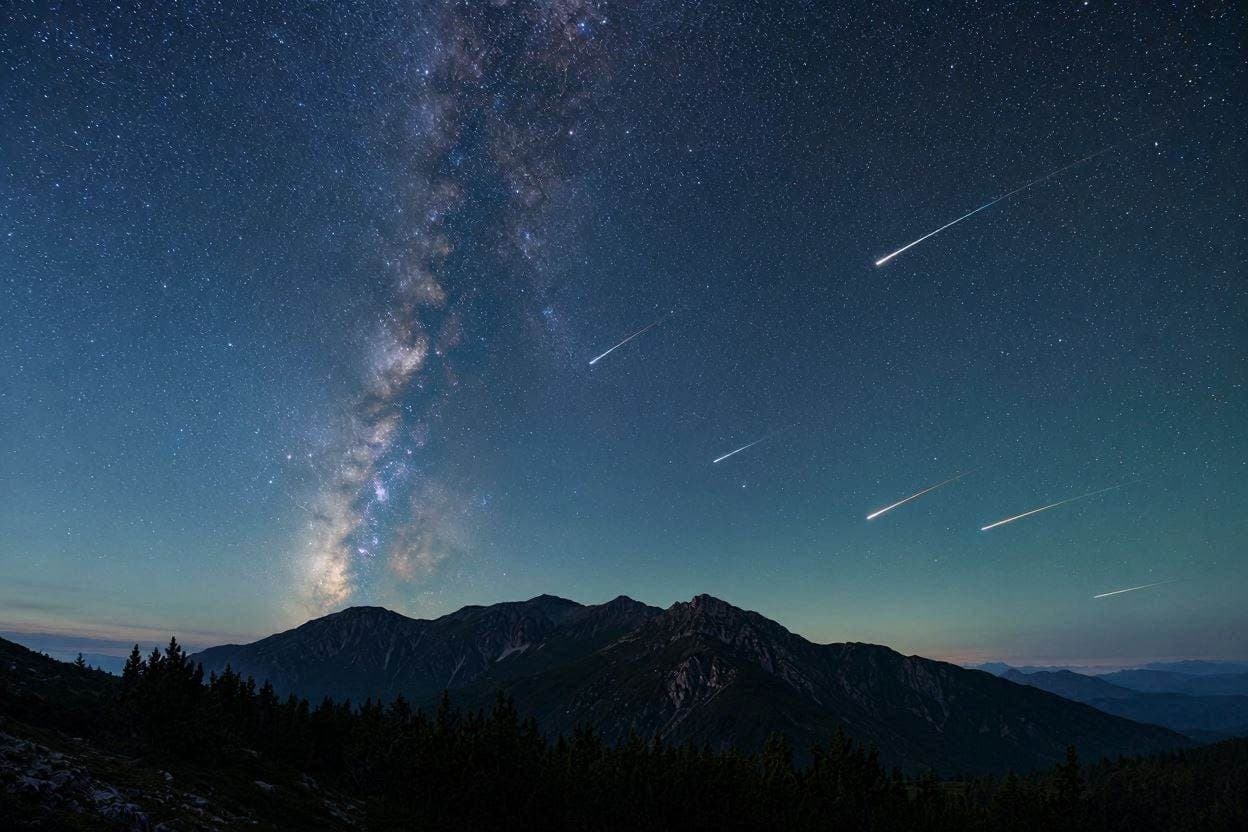
There is a certain magic in looking up at the night sky and seeing a streak of light tear through the darkness, a brief flash of brilliance that vanishes as quickly as it appears. This month, the Perseid meteor shower returns, offering one of the year’s most reliable and spectacular celestial shows. Famous for inspiring John Denver’s anthem "Rocky Mountain High," the Perseids promise up to 70 shooting stars per hour at their peak, inviting stargazers to reconnect with the cosmos.
The Perseids are caused by Earth passing through the trail of debris left behind by Comet Swift-Tuttle. As these tiny particles, no larger than grains of sand, enter Earth’s atmosphere at high speeds, they burn up, creating the bright trails we call meteors. The shower is named after the constellation Perseus, from which the meteors appear to radiate, though they can be seen across the entire sky.
Peak activity is expected in mid-August, when the density of the debris stream is highest. For optimal viewing, experts recommend finding a dark location away from city lights, lying back, and allowing your eyes to adjust to the darkness. Patience is key, as meteors can appear in bursts or with long pauses between them. The experience is less about counting and more about soaking in the rhythm of the universe.
The cultural connection to John Denver’s song adds a layer of nostalgia to the event. "Rocky Mountain High" captures the feeling of awe and transcendence that many people experience when witnessing the natural world’s grandeur. The line "he was born in the summer of his 27th year, coming home to a place he’d never been before" resonates with the sense of returning to something primal and universal when we gaze at the stars.
Weather conditions will play a crucial role in visibility this year. Clear skies are essential, so viewers should check local forecasts before heading out. Even if cloud cover obscures the view in some areas, the knowledge that the shower is happening can still bring a sense of connection to others who are watching elsewhere. It is a shared global experience, uniting people under the same canopy of stars.
For families and friends, the Perseids offer a perfect opportunity for outdoor bonding. Packing blankets, thermoses of hot chocolate, and a sense of wonder can turn a simple night into a memorable adventure. It is a chance to step away from screens and engage with the timeless beauty of the night sky, fostering a sense of perspective and peace.
As the Perseid meteor shower peaks, it invites us to pause and look up. Whether you see ten meteors or seventy, the experience is a reminder of our place in the vastness of space. Let the shooting stars inspire your own "rocky mountain high," a moment of clarity and joy found in the simple act of watching the heavens.
AI Image Disclaimer: The images provided are AI-generated to visually represent the atmospheric and emotional aspects of the meteor shower.
Sources: American Meteor Society NASA Rolling Stone
Published by Banx Network. This article is part of the Banx decentralized media programme, powered by the BXE token on the XRP Ledger.