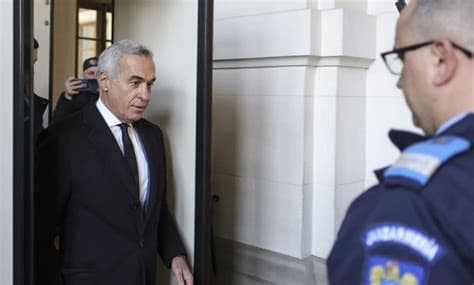
The architecture of a courtroom often mirrors the solemnity of the human conscience, its high ceilings catching the muted echoes of arguments that seek to define the boundaries of right and wrong. Within these walls, the air carries a distinct stillness, a quiet waiting that settles over the wooden benches and the heavy witness stands. It is here that the abstractions of governance and the raw realities of human interaction collide, demanding a reckoning that is rarely easy but always profound.
Outside, the world moves with its accustomed rhythm, oblivious to the meticulous parsing of intent and action taking place beneath the rotunda. Yet, a singular moment captured in the digital ether can collapse that distance, drawing the gaze of thousands into a small, fractured space of vulnerability. When actions committed under the color of authority are laid bare, they invite a collective pause, a hesitation in the stride of a community questioning the very pillars meant to sustain it.
The recent proceedings drew to a close with a finality that resonated far beyond the immediate gallery. A jury, tasked with the heavy burden of modern discernment, returned a verdict that spoke directly to the core of institutional trust. Two individuals, once clothed in the formal responsibility of public protection, found themselves defined instead by the term wilful oppression, a phrase heavy with historical and moral consequence.
To watch the mechanisms of justice turn upon those who customarily enforce it is to witness a delicate recalibration of the social contract. The evidence presented did not rely merely on memory or spoken testimony, but on the unyielding replication of a viral recording. Such modern artifacts leave little room for the softening edges of time, preserving the precise contours of an encounter that the public deemed unacceptable.
Throughout the trial, the atmosphere remained dense with the unspoken recognition of what was truly at stake. It was not merely a question of individual misdeeds, but an examination of the invisible boundaries that separate legitimate authority from the overreaching hand of power. When those boundaries are crossed, the resulting tremor shakes the quiet confidence that citizens place in the symbols of the state.
The deliberations of the jury offered a quiet testament to the enduring necessity of oversight, proving that even the most insular systems must eventually answer to the broader collective. The voices within the room remained measured, avoiding the sharp clamor of the streets, yet the conclusion reached was unequivocal in its commitment to the principle that no uniform grants immunity from basic human decency.
As the documents were signed and the gavels fell, a sense of exhaustion seemed to permeate the room, a reminder that legal victories rarely feel like celebrations. There is a inherent sadness in the confirmation of betrayal, a grief for the ideals that were compromised in the heat of a single, recorded afternoon. The law had functioned exactly as intended, yet the scar on the community fabric remained visible.
In the days that follow, the memory of the courtroom will fade into the bureaucratic ledger, joining countless other entries in the history of legal accountability. The city will continue its daily movements, its streets filled with the ordinary noise of commerce and conversation. However, the precedent set in the quiet hall remains a steady marker, a reminder that the eyes of the public are long-sighted and patient.
The transition from public outrage to judicial resolution marks a necessary phase in the preservation of civil order. Ultimately, the Supreme Court finalized the proceedings by entering the formal convictions into the record, ensuring that the two former officers face the prescribed legal consequences for their actions. The case concludes a significant chapter in the ongoing public discourse surrounding the limits of official authority and the rights of the individual.
Published by Banx Network. This article is part of the Banx decentralized media programme, powered by the BXE token on the XRP Ledger.