At Toronto Pearson, departure boards glow against the early morning hush, each destination a promise suspended in light. Travelers stand with passports half-tucked into jacket pockets, scrolling through updates that arrive quietly, almost politely, on their screens. Beyond the glass walls, aircraft taxi toward runways that lead outward—over oceans, over continents, toward places that now feel less certain than they did a week ago.
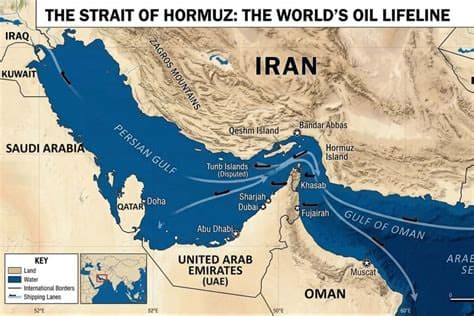
In Ottawa, officials have revised their guidance as conflict spreads across parts of the Middle East. Global Affairs Canada has urged citizens to avoid all travel to ten countries in the region, citing escalating hostilities, missile exchanges, airspace closures, and the risk of sudden security deterioration. The advisory reflects not a single event, but a widening arc of instability tied to ongoing fighting between Israel and armed groups in Gaza, cross-border strikes involving Iran, and spillover tensions affecting neighboring states.
Under Canada’s travel advisory system, the phrase “avoid all travel” is reserved for the most serious circumstances—war, civil unrest, or volatile security conditions that could endanger Canadians and limit the government’s ability to provide assistance. Officials note that airspace restrictions, rapidly changing border policies, and disruptions to commercial flights have compounded the uncertainty. In recent days, some regional airports have suspended operations temporarily, while international carriers have rerouted or canceled flights.
Among the countries named are Israel and the Palestinian territories, where active hostilities continue; Lebanon, amid exchanges along its southern border; and Iran, where regional strikes have heightened tensions. Advisories also extend to parts of Iraq, Syria, and Yemen, where long-running conflicts intersect with the current crisis. In certain cases, the guidance covers entire countries; in others, it applies to specific regions where security risks are acute.
For Canadians already in affected areas, Global Affairs Canada has encouraged registration with the Registration of Canadians Abroad service, allowing consular officials to share updates and coordinate assistance when possible. The department has also warned that evacuation efforts, should they become necessary, may be limited by local conditions and the availability of commercial transport. During past crises, such as evacuations from Lebanon in 2006 and Afghanistan in 2021, the complexity of extracting citizens underscored how swiftly logistics can tighten.
Airlines have become quiet indicators of risk. Flights that once stitched together cities from Montreal to Tel Aviv, or from Vancouver to Doha, now trace altered paths or pause altogether. Insurance costs rise; crew schedules shift; families reconsider long-planned visits. In diaspora communities across Canada, the advisories land with particular weight, touching on ties of heritage and kinship that span continents.
Canada’s position reflects a broader pattern among Western governments, many of which have issued similar warnings as hostilities intensify. The United Kingdom, Australia, and the United States have updated their own advisories in recent weeks, pointing to missile activity, the potential for regional escalation, and the unpredictability of retaliatory strikes.
Yet travel advisories are, by nature, both firm and provisional. They respond to intelligence assessments, diplomatic reporting, and real-time developments that can change by the hour. A reopened airport, a negotiated ceasefire, or a shift in military posture can recalibrate the map again. For now, however, officials emphasize caution.
Back at the airport, some travelers step aside from the check-in line, reconsidering itineraries. Others continue forward, aware of the risks yet drawn by obligation or urgency. Above them, the departure board updates with a soft electronic flicker.
In Ottawa, the advisory stands as a measured signal: a recognition that the currents of conflict have widened, and that distance offers no guarantee of stability. The Middle East’s skies, once crowded with routine crossings, now carry the weight of contingency. And for Canadians weighing departure gates against headlines, the decision to travel has become a quieter, more complicated calculation.
AI Image Disclaimer These images are AI-generated for illustrative purposes and do not depict real events.
Sources Global Affairs Canada Reuters BBC News The Canadian Press International Air Transport Association
Published by Banx Network. This article is part of the Banx decentralized media programme, powered by the BXE token on the XRP Ledger.