
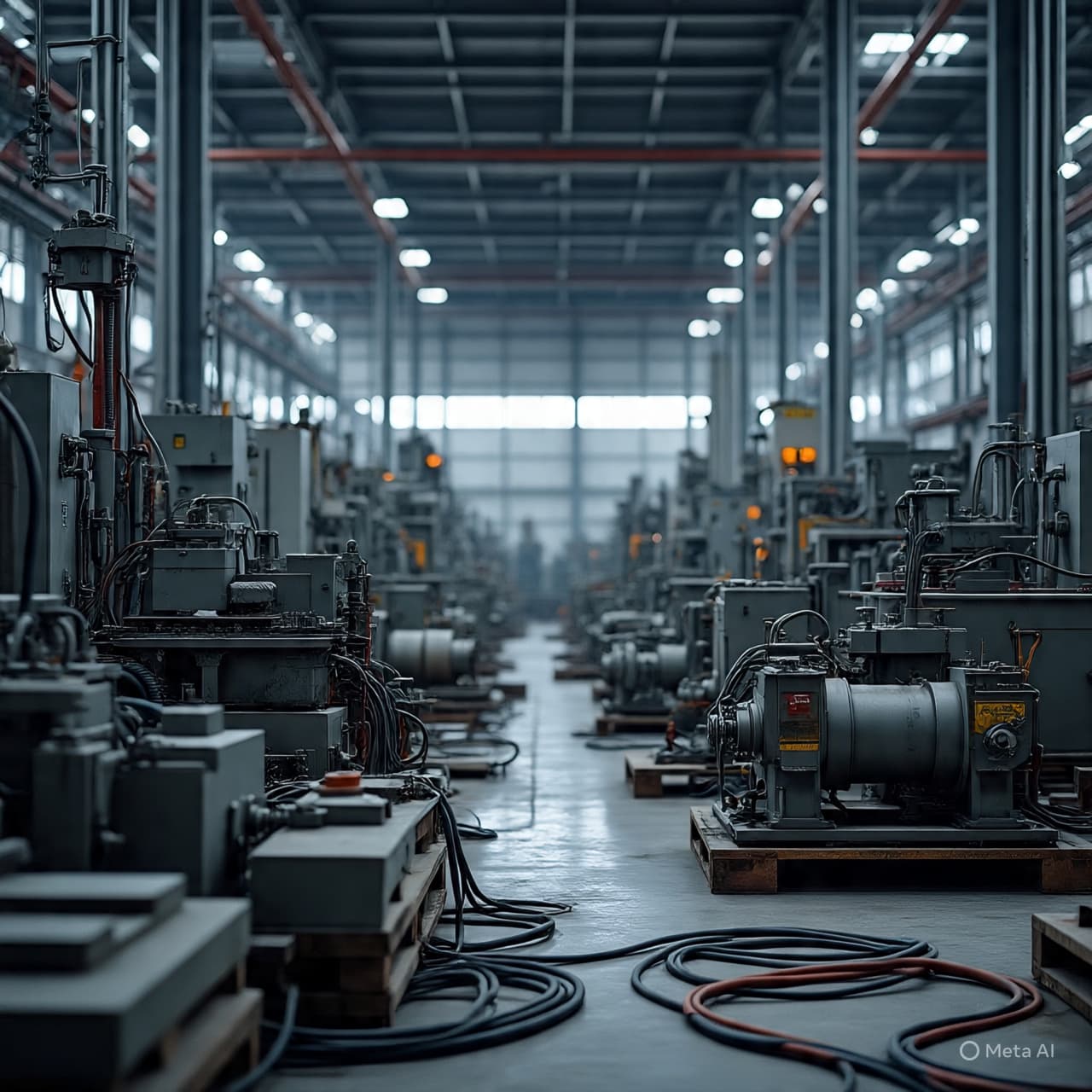
Economic change is often first sensed not in speeches or charts, but in motion — in cranes returning to skylines, in equipment arriving at empty plots, in plans moving from paper into soil. These shifts rarely announce themselves loudly. They accumulate, measured over quarters rather than days, until their weight becomes difficult to ignore.
Speaking recently about the state of the US economy, Treasury Secretary Scott Bessent said the country is experiencing a capital expenditure boom. The remark was delivered without theatrical emphasis, framed instead as an observation grounded in investment flows and corporate behavior. It suggested a period in which businesses are committing resources not merely to short-term returns, but to long-horizon capacity.
Capital expenditure, often shortened to capex, reflects spending on factories, machinery, infrastructure, and technology — investments that imply confidence in future demand. According to Bessent, this resurgence is visible across multiple sectors, shaped by a mix of private initiative and public policy. Manufacturing, energy, and advanced technology have all featured prominently in recent investment data.
The backdrop to this moment is complex. Higher interest rates have made borrowing more expensive, yet firms appear willing to proceed, absorbing costs in exchange for long-term positioning. Federal incentives tied to domestic manufacturing, clean energy, and semiconductor production have also altered calculations, encouraging companies to build and expand within US borders rather than abroad.
What distinguishes this period, economists note, is not only the volume of spending but its orientation. Investments are increasingly tied to supply chain resilience, automation, and strategic independence — themes that gained urgency after years of disruption. The emphasis is less on rapid expansion and more on durability, efficiency, and control.
Bessent’s comments come as policymakers continue to balance growth with inflation management. While increased investment can support productivity and employment, it also feeds into broader questions about capacity constraints and labor availability. For now, officials have framed the trend as constructive, pointing to its potential to strengthen the economy’s productive base rather than inflate short-term demand.
Markets have responded cautiously, absorbing the signals without dramatic reaction. Capex cycles tend to unfold slowly, and their impact is felt unevenly across regions and industries. Yet the acknowledgment from the Treasury underscores a sense that something structural may be taking shape beneath the surface of quarterly data.
In straightforward terms, the US Treasury secretary says businesses are significantly increasing long-term investment in the United States. If sustained, this capex boom could shape economic growth and industrial capacity for years to come.
AI Image Disclaimer Illustrations were created using AI tools and are not real photographs.
Sources (Media Names Only) Reuters Bloomberg The Wall Street Journal Financial Times Associated Press
Published by Banx Network. This article is part of the Banx decentralized media programme, powered by the BXE token on the XRP Ledger.


