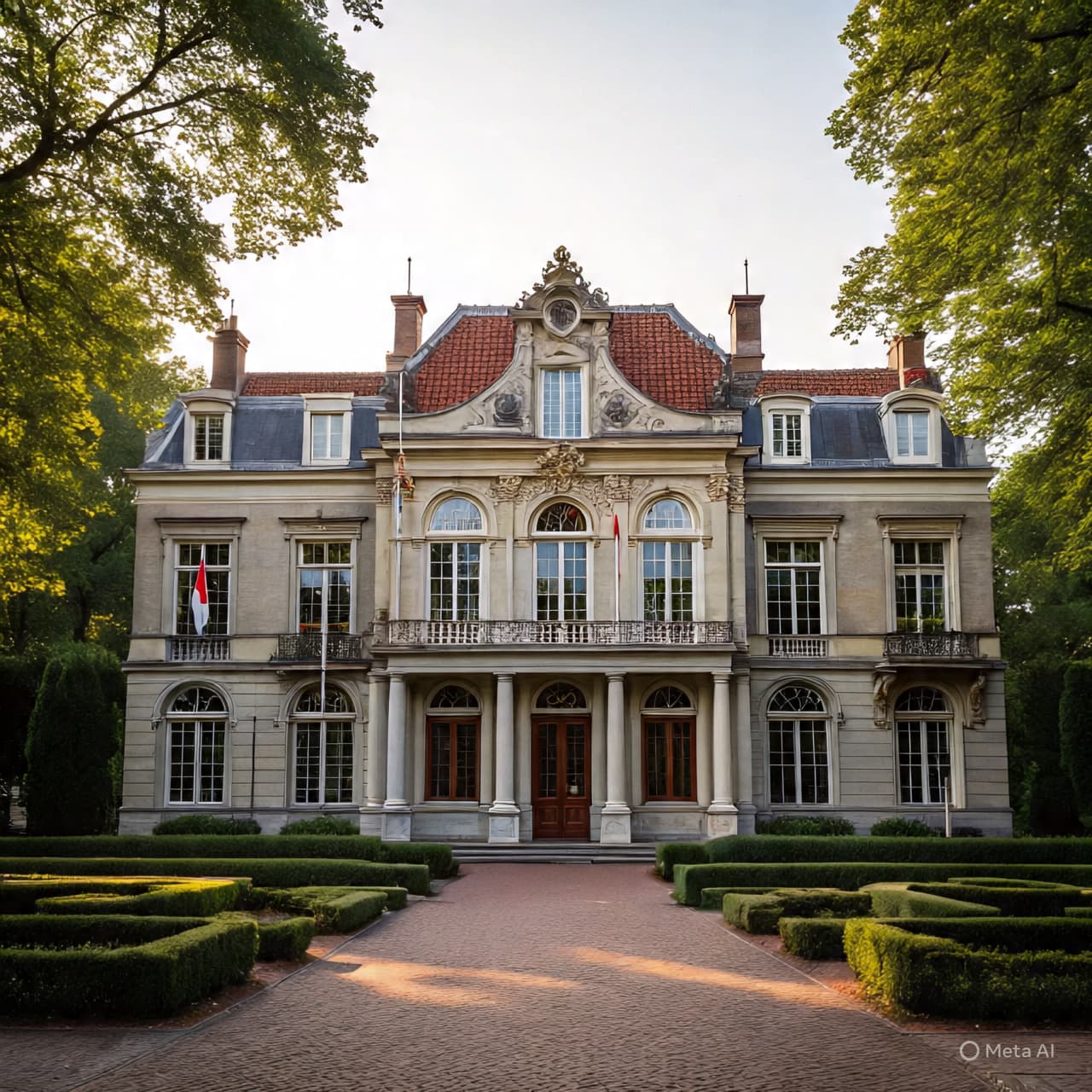
The morning light in The Hague settled softly across the cobblestones, the sky carrying that familiar Dutch gray — a hue between rain and reflection. Inside Huis ten Bosch Palace, the echo of ceremony lingered as Rob Jetten placed his hand upon the oath, marking a moment both ordinary in form and extraordinary in meaning. With calm grace, he became the Netherlands’ first openly gay prime minister, the youngest in its modern history, and a figure whose rise embodied the quiet evolution of a society long regarded as a bellwether of tolerance.
Beside him stood Nicolás Keenan, his fiancé — an Argentine-born Olympic field hockey player whose life, shaped by discipline and motion, now intersects with the still, ritual world of statecraft. Their presence together at the inauguration spoke not of spectacle but of continuity: the seamless folding of personal truth into the fabric of public service. In that quiet symmetry between athlete and statesman, many saw the reflection of a country whose openness lies not in declaration but in the ease of acceptance.
Jetten’s ascent follows a months-long process of negotiation after a closely contested election. At 38, he leads a centrist coalition anchored by Democrats 66, guiding a minority government through a fragmented political landscape. His tone, in first remarks after being sworn in, was measured — focused on rebuilding trust, advancing cooperation, and steering the Netherlands through the intricate questions of energy, migration, and Europe’s shared future. The words were deliberate, grounded not in celebration but in purpose.
For the Netherlands, this milestone carries a layered resonance. It has been more than two decades since the nation became the first in the world to legalize same-sex marriage, and yet even here, representation at the highest levels remains a quiet marker of progress rather than conclusion. Jetten, known for his work on climate and equality, now steps into an office defined as much by compromise as by conviction.
In cafés across Amsterdam and Rotterdam, the moment was greeted not with fanfare but with the characteristic calm of a people accustomed to measured change. Conversations flowed around the novelty of history made, but also around the ordinariness of it — a sign that equality had, in some quiet sense, arrived not as disruption but as rhythm.
By evening, as the city lights shimmered upon the canals, the image of Jetten and Keenan stood as both personal and symbolic. It was less about victory than about visibility — a reflection of how private love can coexist with public duty, how leadership can mirror the openness of a society still learning to balance tradition with transformation. In a small European nation where the windmills turn steadily and progress often moves without spectacle, the moment carried the soft certainty of change fulfilled.
AI Image Disclaimer Illustrations were created using AI tools and are not real photographs.
Sources (Media Names Only) Associated Press Reuters BBC News LGBTQ Nation The Guardian
Published by Banx Network. This article is part of the Banx decentralized media programme, powered by the BXE token on the XRP Ledger.