On a windswept plateau where the earth’s breath seems held in frost and rock, a woman who walked the Siberian steppe more than two millennia ago has resurfaced not as a skeleton in a museum drawer but as a tapestry of life traced in pigment and skin. Buried in the icy embrace of the Altai Mountains’ permafrost, her body was shielded from the usual ravages of time — and within that preservation lay something both intimate and extraordinary: tattoos so detailed that they challenge our understanding of ancient artistry and cultural expression.
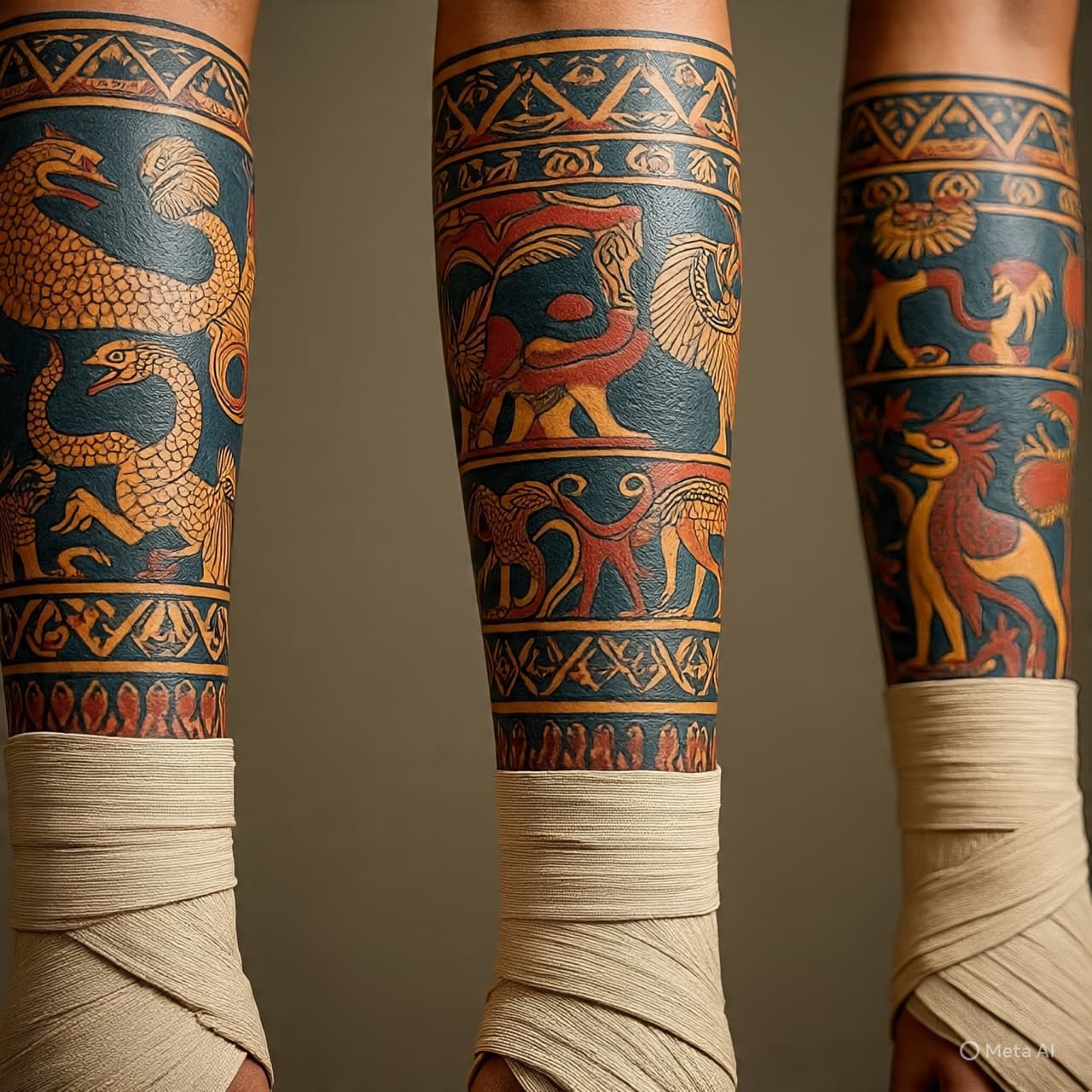
Researchers using infrared and near‑infrared imaging — technologies that coax hidden detail from desiccated skin — have revealed a remarkable array of designs etched onto her arms and hands. What once rested unseen beneath the surface now unfolds like a gallery of ancient symbols: simple floral and avian motifs on her hands, and on her forearms much more complex scenes of moose‑like figures, tigers, and mythical creatures intricately interlocked in hunts and battles. Each motif resonates with a narrative quality, a suggestion that these were not mere doodles but meaningful visual essays on identity, myth and perhaps even spiritual belief.
This tattooed woman was not an isolated oddity. She belonged to the Pazyryk culture, a group of Iron Age nomadic peoples whose burials in kurgans — timber tombs sunk in the frozen ground — have yielded several mummies with preserved skin and inked limbs. The permafrost of Siberia’s Altai region, uncannily cold and constant, acted as nature’s own embalmer, locking the artistry of these ancient tattoos in place for scholars to rediscover.
The precision and sophistication of the body art speak to skilled craftsmanship. Tattoo artist collaborators on the project have noted that the hand‑poked technique used by the Pazyryk artists would have required patience and dexterity, probably developed over many years of practice. Far from crude markings, these tattoos reflect a deep visual language — one that may have conveyed aspects of personal biography, social role, or connection to animal symbolism within the wider Scytho‑Siberian world.
Because skin typically decays long before bone, such elaborate ancient tattoos are rare finds. Only under unusual circumstances — frozen tombs, dry climates, or rapid burial — can pigment and design endure the millennia. In this case, the exposure of inked figures on a woman who lived and died about 2,000 to 2,500 years ago opens a vivid window into Iron Age life on the Eurasian steppe, where tattooing was not a marginal craft but a central part of cultural expression.
To see these images now, after centuries under ice, is to feel the space between then and now collapse, as if the long‑ago hands that drove needles into flesh reach through time into our own. These marks — weathered yet resilient — remind us that human beings have been inscribing their stories into their bodies for longer than most written records can attest, and that in the quiet depths of Siberian earth lie voices etched in ink, waiting to be read again.
AI Image Disclaimer
Visuals are AI-generated and serve as conceptual representations.
Sources (News Outlets Only)
Daily Galaxy Live Science Swissinfo BBC News
Published by Banx Network. This article is part of the Banx decentralized media programme, powered by the BXE token on the XRP Ledger.