There is a particular irony in hosting a summit meant to draw the world's attention to a region, only to find that much of the world has not come. In Fiji this week, the United Nations "pre-COP" climate gathering has begun in the city of Nadi, with Australia's Prime Minister Anthony Albanese and Climate Minister Chris Bowen presiding over what they hoped would be a pivotal moment for Pacific Island nations ahead of the COP31 summit in Turkey next month. But the guest list has been smaller than anticipated—and the absences speak to the difficulty of persuading global leaders to prioritize a region that is, by any measure, on the frontline of the climate crisis .
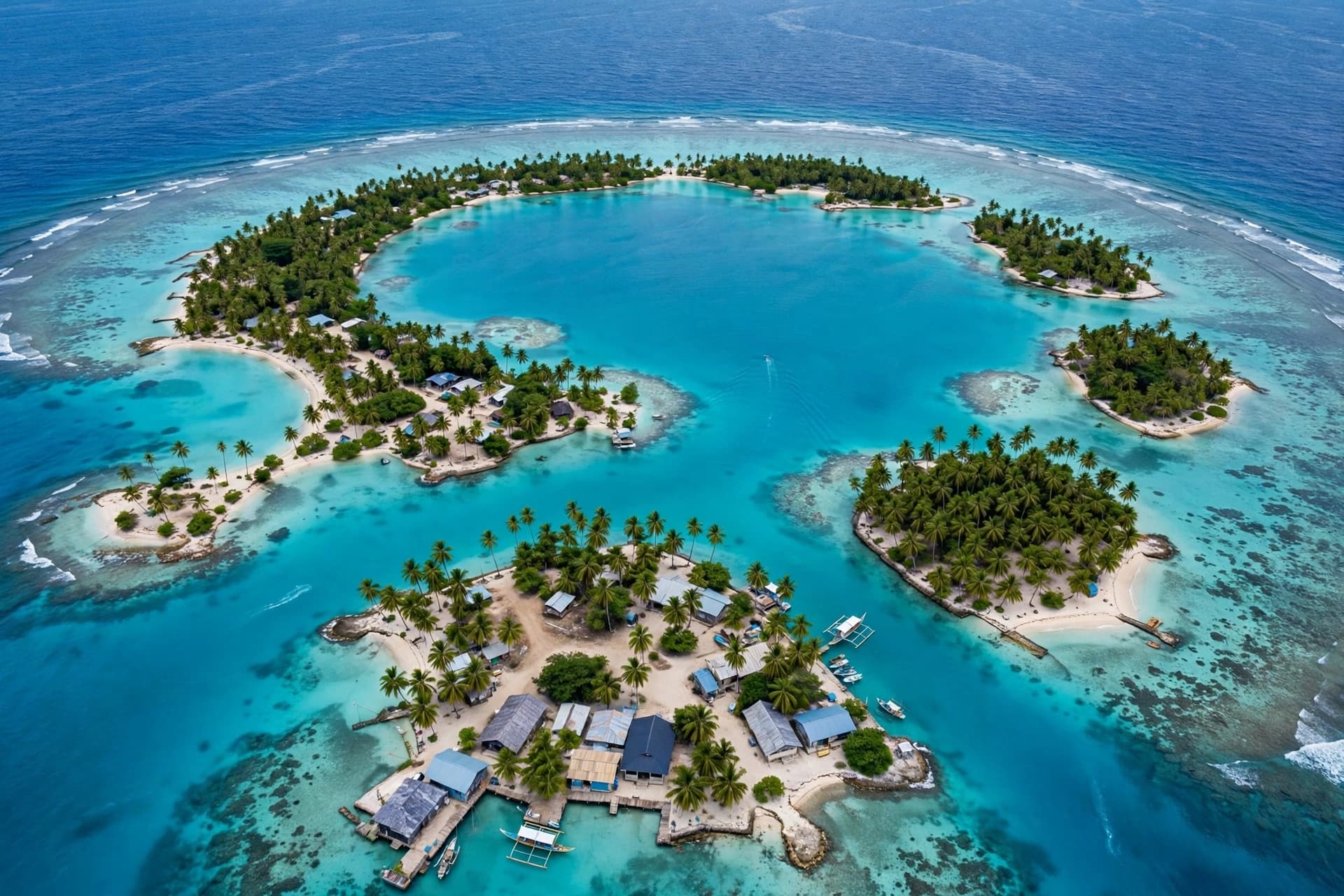
Australia had invited national leaders to visit the low-lying atoll nation of Tuvalu during the pre-COP, hoping to focus world attention on the existential threat facing Pacific nations. Distance, geopolitical ruptures, and the expectation that leaders would prioritize the main COP31 talks in Antalya made that a difficult sell. The Australian government acknowledged on Monday that only 14 national leaders would make the trip to Tuvalu on Tuesday—and just two of those, Timor-Leste's José Ramos-Horta and Mauritius' Navin Ramgoolam, have traveled from beyond the Pacific .
Climate Minister Chris Bowen defended the event, noting that world leaders do not normally attend pre-COP meetings at all. "We have some coming," he said. "We also have a good range of ministers for climate change. Climate ministers are the key negotiators for COP31. They're the ones in the room negotiating the outcome" . Bowen said around 4,000 people from 60 nations would attend, with 133 events scheduled over the three-to-four-day period. Among those traveling to Tuvalu will be EU climate commissioner Wopke Hoekstra, the heads of the Asian Development Bank and the Green Climate Fund, UN climate chief Simon Stiell, and incoming COP president Murat Kurum of Turkey .
Albanese, making his first appearance at a UN climate summit since becoming prime minister more than four years ago, framed the gathering as an opportunity to ensure Pacific voices are heard. "It is important that Pacific voices are heard, because the Pacific is the frontline of action on climate change," he said. "For many of the nations represented by leaders here it is literally a threat to their very existence, which is why the world must act" .
The summit has also faced scrutiny at home over its cost, estimated at more than $20 million in taxpayer funds . Among those attending is Nepal's Foreign Minister Shisir Khanal, whose country is still recovering from August's Himalayan flood disaster that killed nearly 1,500 people and left 5,800 missing . The pre-COP continues through the week. The main COP31 summit will be held in Antalya, Turkey, later this year—where the leaders who did not come to Fiji will gather to negotiate the outcomes that Pacific nations have traveled so far to influence.
AI Image Disclaimer: All images in this article are AI-generated and are intended for illustrative purposes only.
Sources: The Guardian, RTE, Australian Broadcasting Corporation, Herald Sun, Bangladesh Sangbad Sangstha
Published by Banx Network. This article is part of the Banx decentralized media programme, powered by the BXE token on the XRP Ledger.