There is a particular tension that arises when a party built on the idea of grassroots democracy makes a decision that leaves its members on the outside looking in. In the Greens' leadership contest this week, that tension arrived with the quiet force of a door closing—and it is this, more than the personalities involved, that may prove the most consequential.
David Shoebridge won the leadership ballot seven votes to four over Mehreen Faruqi, with Sarah Hanson-Young eliminated in the first round with just two votes . The ballot was held by the eleven-member party room after Larissa Waters resigned suddenly due to chronic kidney disease . But what many observers have focused on is the identity of the winner or the tone of the contest—Shoebridge's vow to "replace Labor," Hanson-Young's pledge to fight the "radical right" . The more significant development is that the decision was made entirely by parliamentarians, with no vote by the party's membership.
This is not a minor procedural matter. It is a direct challenge to the Greens' self-understanding. Mehreen Faruqi, in a statement after the vote, pointedly wrote: "Without a member vote, we cannot call ourselves a grassroots party" . Her statement did not congratulate Shoebridge. It called for the grassroots to have a say in future leadership contests.
The party has grappled with this question before. A plebiscite in 2020 resulted in 62 percent of members supporting a party-wide vote for leadership . But that mandate has not been implemented. The decision this week was made in a closed room, announced publicly for the first time in the party's history—a step toward transparency that simultaneously highlighted how much remains opaque.
Shoebridge, to his credit, has since bowed to calls from rank-and-file members, including former MP Max Chandler-Mather, to give them a say in the next leadership election, due immediately after the next federal election . But the current contest has already been decided. And the question of whether the Greens can credibly claim to be a grassroots party while choosing its leaders in a party-room ballot remains unanswered.
For a party that has built its identity around the idea that politics should be done differently, this is not a small matter. It is a test of whether its structures match its rhetoric. The leadership has changed. The question of who gets to decide the next one is still open.
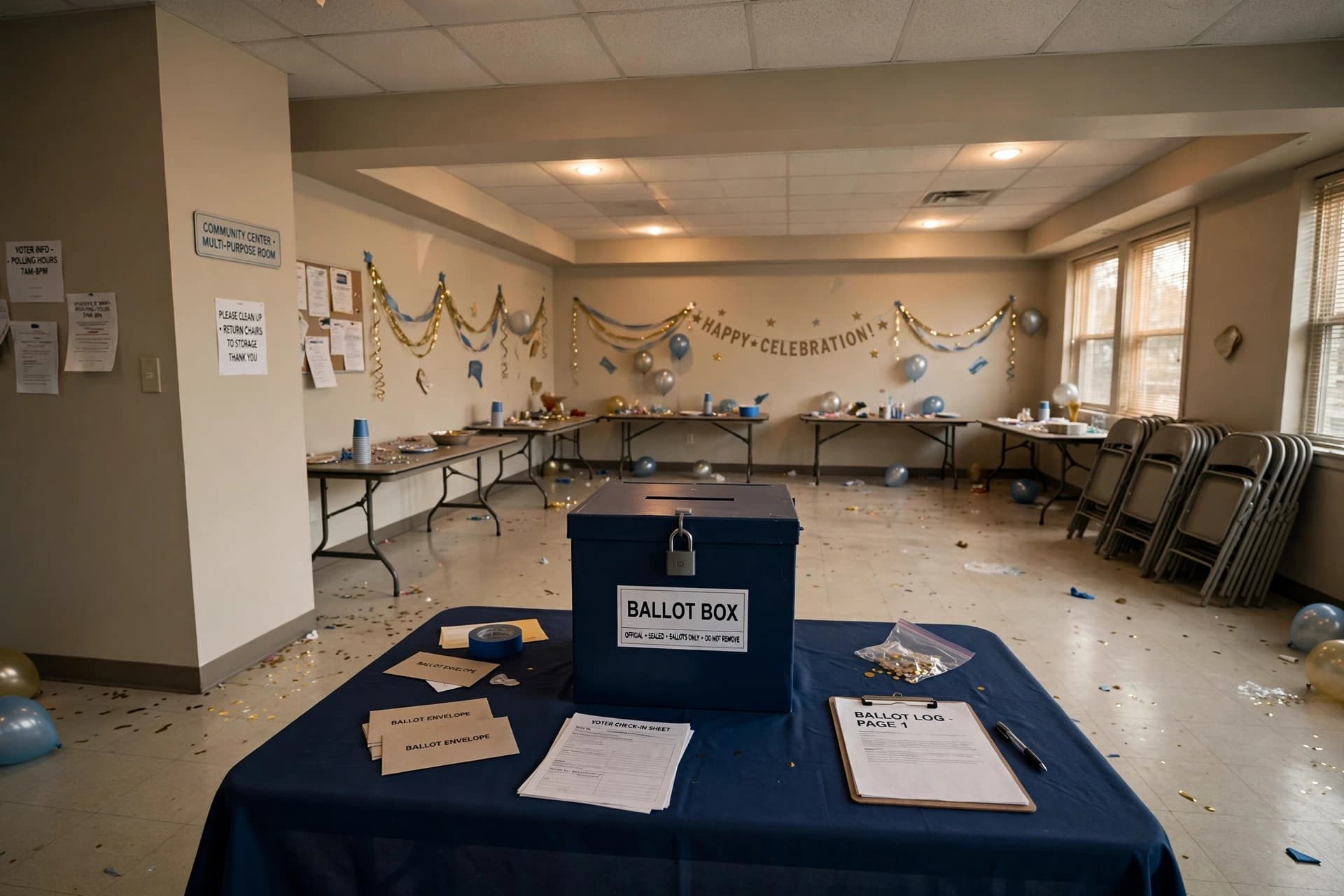
AI Image Disclaimer: Visuals in this article are AI-generated and do not depict actual events or persons.
Sources: Brisbane Times, Australian Broadcasting Corporation, The Saturday Paper, The Canberra Times
Published by Banx Network. This article is part of the Banx decentralized media programme, powered by the BXE token on the XRP Ledger.