There are nights when the sky seems to whisper secrets to those who pause long enough to look upward — an alignment of celestial neighbors that feels less like a scientific chart and more like an unspoken conversation across the vastness of space. On a clear evening over West Michigan this week, that gentle dialogue played out just after sunset, when a thin crescent moon drew near to one of the solar system’s most elusive worlds.
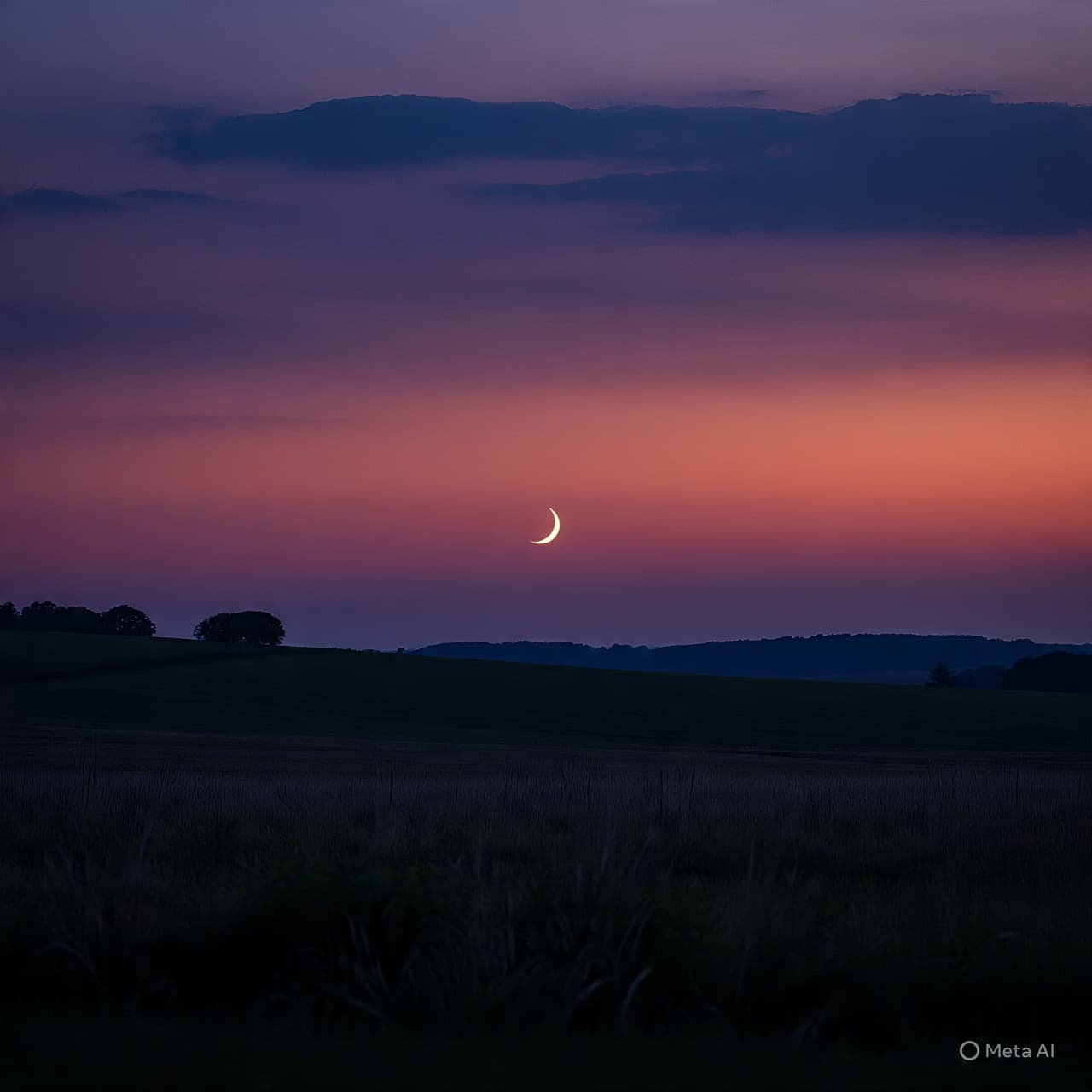
For residents and skywatchers in the Grand Rapids region, chilly winter air and clear skies combined to give an unusually good opportunity to catch Mercury in conjunction with the moon on Wednesday evening. In astronomical terms, a conjunction occurs when two celestial bodies appear close together in the sky from our vantage point on Earth. In this case, the slim waxing crescent moon — with just a few percent of its surface illuminated — stood low on the western horizon beside the fleeting glow of Mercury, the innermost planet of our solar system.
Mercury is notoriously difficult to spot because it orbits so close to the sun, often lost in the sun’s bright glare. Events like this — where it aligns near the moon — act like natural signposts for observers, making the planet much easier to find with the naked eye shortly after sunset. Sky‑watching guides note that February’s pairing was part of a broader sky event season in which Mercury reached its greatest eastern elongation, appearing higher and more visible in the twilight sky than usual.
The brief celestial show was best observed within roughly the first hour and a half after the sun dipped below the horizon, when darkness deepens but the planet has not yet slipped below the horizon. In West Michigan, favorable conditions allowed many to see the delicate thinning of the moon’s crescent hanging just above the brighter dot of Mercury. Under slightly different sky conditions, stargazers could also glance toward Saturn, which was predicted to appear nearby in the western sky on the following evening.
These conjunctions are not rare in the technical sense, but they are special in how they bring distant worlds into a kind of visual companionship that feels personal to an observer below. Celestial events like this invite people — whether casual viewers or devoted amateur astronomers — to step outside and connect with the broader rhythms of the cosmos.
For those who missed this Mercury‑moon pairing, upcoming nights may still offer a chance to explore the evening sky. Mercury will remain in view at twilight for a short time as it gradually moves toward the horizon, while other planets and lunar phases continue their own slow dance across the stars.
AI Image Disclaimer Visuals are created with AI tools and are not real photographs.
Sources WOOD‑TV via Yahoo News ABC 57 News Sky & Telescope Astronomy magazine Almanac.com
Published by Banx Network. This article is part of the Banx decentralized media programme, powered by the BXE token on the XRP Ledger.