In the silent vacuum of space, where gravity is a constant companion and fuel is a precious commodity, a new idea is taking shape. Imagine a satellite that does not need to carry its own propellant for long-term maneuvers, but instead breathes the thin air of the upper atmosphere to stay aloft. This concept, once confined to the realm of theoretical physics, is now emerging as a tangible engineering possibility, promising to extend the life of satellites and reduce the clutter of space debris.
The innovation centers on an air-breathing electric propulsion system designed for Very Low Earth Orbit (VLEO). At altitudes between 100 and 450 kilometers, the atmosphere is sparse, yet it contains enough particles to be collected and ionized. By using these atmospheric gases as fuel, satellites could theoretically maintain their orbit indefinitely without the need for heavy onboard propellant tanks. This approach challenges the traditional model of satellite design, which has long been constrained by the weight and volume of fuel.
Researchers at institutions such as the University of Stuttgart have developed plasma engines capable of operating in these extreme conditions. These engines collect neutral atoms from the upper atmosphere, ionize them, and then accelerate them to produce thrust. The process is delicate, requiring precise magnetic fields and advanced materials to withstand the harsh environment. Yet, the potential rewards are significant, offering a path toward more sustainable space operations.
The benefits of VLEO are numerous. Satellites flying at lower altitudes can capture higher-resolution images for remote sensing, improve communication latency, and reduce the power needed for data transmission. However, the drag from atmospheric particles has historically limited the lifespan of satellites in these orbits. An air-breathing engine could counteract this drag, allowing satellites to remain operational for years rather than months.
This technology also addresses the growing concern of space debris. By enabling satellites to deorbit safely at the end of their missions or to adjust their paths to avoid collisions, air-breathing propulsion could contribute to a cleaner orbital environment. It represents a shift from a disposable mindset to one of longevity and responsibility in space exploration.
For commercial space companies, the economic implications are profound. Reducing the mass of satellites lowers launch costs, making space services more accessible. It could enable new constellations of small satellites that provide real-time data for agriculture, disaster response, and climate monitoring. The ability to stay in orbit indefinitely without refueling opens up possibilities for persistent observation and continuous connectivity.
As the technology matures, collaboration between academia, industry, and space agencies will be crucial. Testing in simulated environments and eventual in-orbit demonstrations will validate the performance and reliability of these engines. The journey from concept to reality is complex, but the steps being taken today lay the foundation for a new era of space sustainability.
The development of air-breathing satellite engines marks a significant step toward a more efficient and sustainable presence in space. By turning a challenge into a resource, engineers are redefining what is possible in orbit, offering hope for a future where space technology serves humanity with greater longevity and less environmental impact.
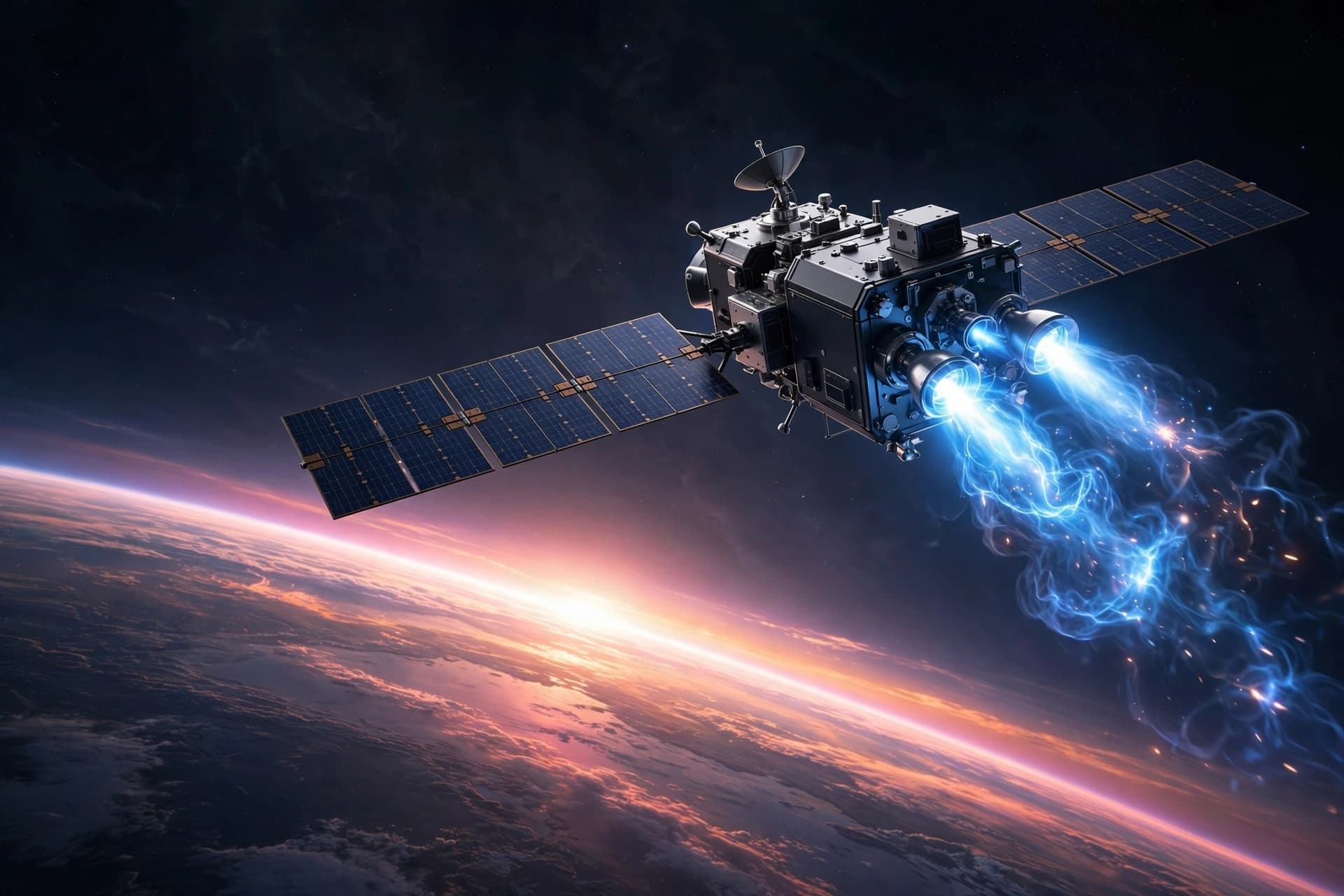
AI Image Disclaimer: The visual representations in this article are AI-generated illustrations designed to depict the concept of atmospheric propulsion and do not show actual hardware or mission footage.
Sources: Universe Today ScienceDaily University of Stuttgart NASA SpaceNews
Published by Banx Network. This article is part of the Banx decentralized media programme, powered by the BXE token on the XRP Ledger.