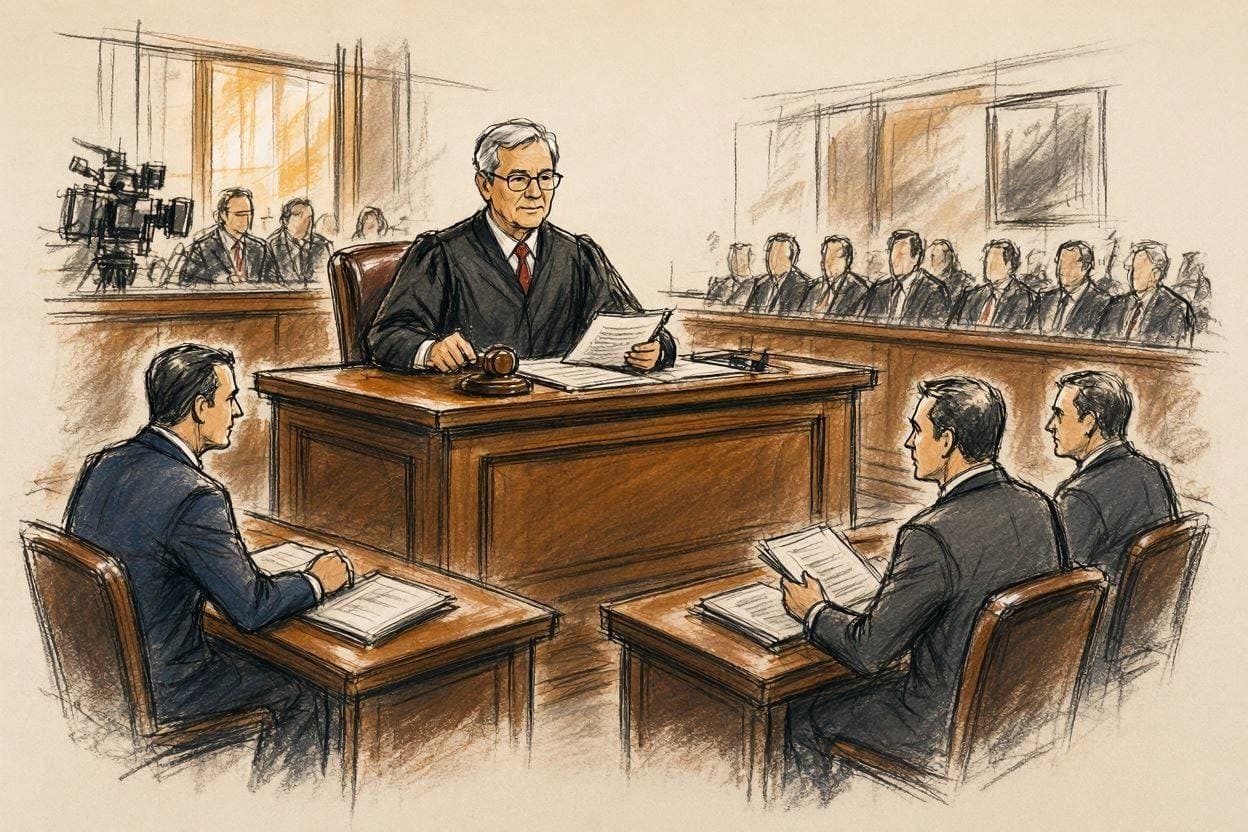
In the complex web of political narratives and legal battles, a recent court decision has brought a measure of closure to a long-standing dispute. Hunter Biden has been awarded 1.7 million in a defamation lawsuit against Patrick Byrne, the former CEO of Overstock.com. The case centered on Byrne’s persistent claims that Hunter Biden had engaged in bribery schemes involving Iran, allegations that the court found to be false and damaging.
Byrne, known for his outspoken and often controversial views, had repeatedly asserted on social media and in interviews that Hunter Biden received payments from Iranian entities in exchange for political influence. These claims, which lacked credible evidence, became part of the broader political discourse surrounding the Biden family. For Hunter Biden, the lawsuit was a necessary step to defend his reputation and challenge what he described as a coordinated campaign of disinformation.
The jury’s verdict signifies a strong rejection of Byrne’s assertions. In awarding damages, the court recognized the harm caused by the false statements to Hunter Biden’s personal and professional life. The amount reflects not only compensation for reputational damage but also a deterrent against the spread of unsubstantiated accusations in the public sphere. It underscores the legal principle that speech, while protected, carries responsibility when it causes tangible harm.
For Byrne, the loss is a significant financial and reputational setback. He has vowed to appeal, maintaining his belief in the validity of his claims despite the lack of proof presented in court. His supporters view the case as an example of political persecution, while critics see it as a consequence of spreading misinformation. The divide highlights the polarized nature of contemporary political debate.
The case also sheds light on the role of social media in amplifying unverified claims. Byrne’s platform allowed him to reach millions, spreading narratives that were difficult to counter in real-time. The lawsuit serves as a reminder of the power of digital communication and the potential legal repercussions for those who use it to spread falsehoods.
Hunter Biden’s legal team expressed relief at the outcome, stating that it validates their client’s integrity. They emphasized the importance of holding individuals accountable for defamation, regardless of their status or influence. The victory is seen as a step toward restoring truth in public discourse, though the battle against misinformation continues.
As the legal proceedings conclude, the focus shifts to the broader implications for political speech and accountability. The case demonstrates that even in a highly charged environment, the courts remain a venue for addressing falsehoods. It is a testament to the rule of law and the enduring value of truth in democratic society.
Closing: Hunter Biden won a 1.7 million defamation judgment against Patrick Byrne, former CEO of Overstock.com, over false claims of Iran-related bribery. The court ruled the allegations were baseless and damaging, marking a significant legal victory for Biden in his efforts to combat misinformation.
AI Image Disclaimer: Visuals accompanying this article are AI-generated and intended for illustrative purposes only.
Sources: Reuters, Major Legal News Outlets, Court Documents, Business Insider
Published by Banx Network. This article is part of the Banx decentralized media programme, powered by the BXE token on the XRP Ledger.