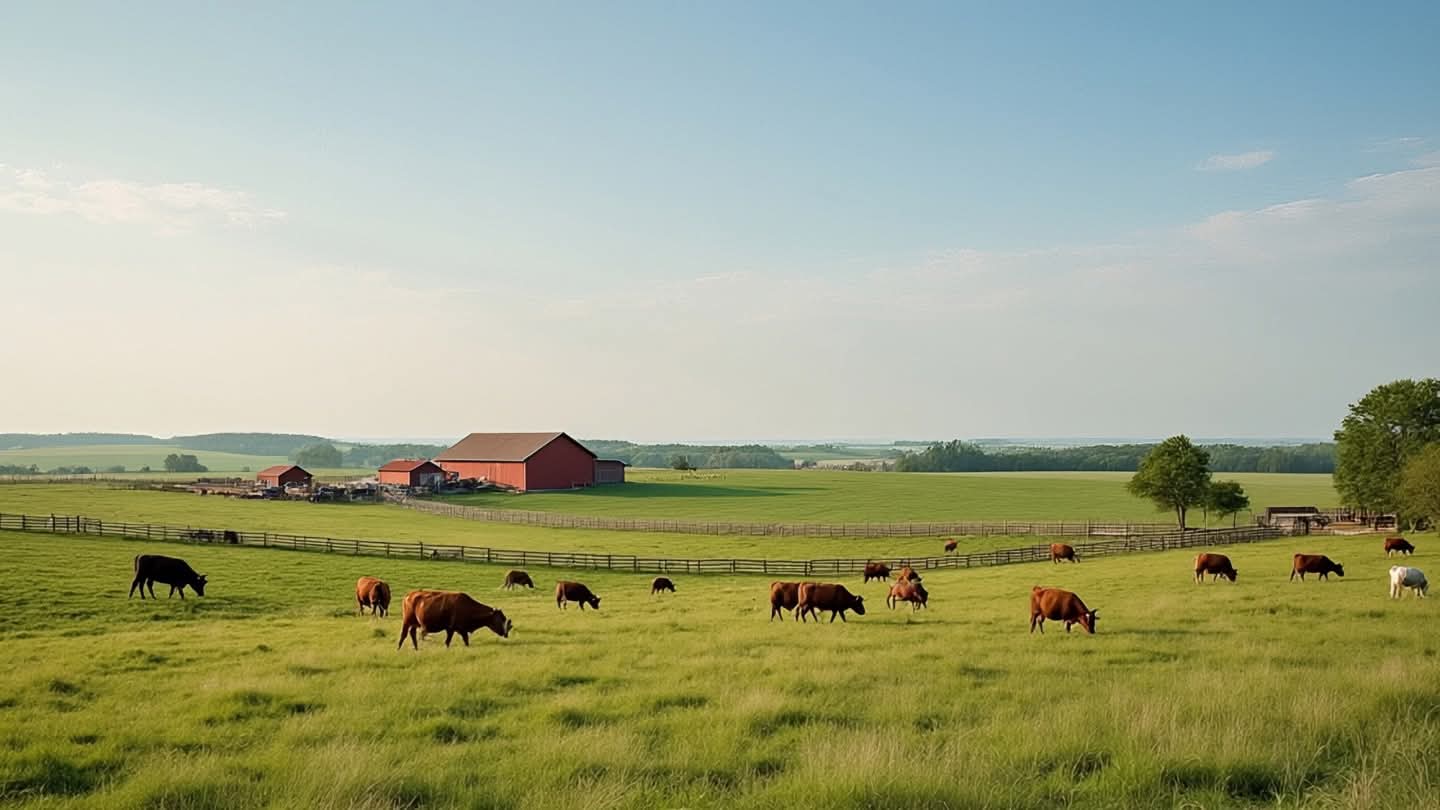
In the vast pastures of the American Midwest, where the rhythm of life is dictated by seasons and markets, a new policy decision has stirred unease among cattle ranchers. President Donald Trump has announced a temporary suspension of certain tariffs on imported beef, aiming to lower retail prices for consumers. While the move is framed as a relief for households facing high food costs, it has sparked immediate backlash from domestic producers who fear it undermines their fragile recovery and long-term viability.
The administration’s plan involves waiving "out-of-quota" tariffs on ground beef imports for a period of ninety days. This measure is intended to increase the supply of affordable beef in grocery stores, addressing inflation concerns that have weighed heavily on voters. By allowing more foreign beef to enter the market at lower rates, the government hopes to ease the financial burden on families. However, this economic logic clashes with the realities of domestic production, where margins are already thin.
For U.S. cattle producers, the announcement feels like a betrayal of previous promises to support American agriculture. The industry has been grappling with a historic low in herd sizes, driven by years of drought, high feed costs, and disease. Ranchers argue that increasing imports now will depress domestic prices further, making it harder for them to rebuild their herds. They view the policy as a short-term fix that jeopardizes long-term food security and rural livelihoods.
Industry groups, including the National Cattlemen’s Beef Association, have voiced strong opposition. They contend that the U.S. already produces high-quality beef and that the issue lies not with supply but with processing bottlenecks and market concentration. Flooding the market with cheaper imports, they warn, could drive smaller operators out of business, consolidating power in the hands of a few large corporations. This consolidation threatens the diversity and resilience of the agricultural sector.
The political implications are significant, particularly in rural states that form a key part of the President’s base. Farmers and ranchers feel caught between the promise of economic patriotism and the reality of global trade dynamics. Many question why domestic producers must bear the cost of consumer price stability. The tension highlights the difficulty of balancing competing interests in a complex economy, where every policy choice has winners and losers.
International trade partners may welcome the increased access to the U.S. market, seeing it as an opportunity to expand their exports. Countries like Australia, New Zealand, and Brazil have robust beef industries ready to fill any gap. However, this influx could alter trade balances and create dependencies that might be difficult to reverse once the temporary waiver expires. The global nature of the beef trade means that local decisions have far-reaching consequences.
As the ninety-day clock begins to tick, the industry watches closely for signs of impact. Will retail prices drop significantly? Will domestic producers suffer irreversible damage? These questions remain unanswered, fueling anxiety and debate. Some ranchers are calling for legislative action to protect their interests, while others are exploring alternative markets and value-added products to differentiate themselves from imports.
In the end, the decision to lower beef tariffs is a test of economic priorities. It pits immediate consumer relief against the sustainability of domestic agriculture. For the cattle producers, it is a reminder of their vulnerability in a globalized market. The hope is that dialogue and adjustment can find a middle ground, ensuring that both consumers and producers can thrive. Until then, the pastures remain quiet, but the uncertainty lingers.
AI Image Disclaimer: The visual elements in this article are AI-generated illustrations depicting rural landscapes and abstract representations of trade and agriculture, designed to reflect the themes of economic policy without showing real individuals or proprietary market data.
Sources: Capital Press, San Francisco Chronicle, Wall Street Journal, Farm Bureau
Published by Banx Network. This article is part of the Banx decentralized media programme, powered by the BXE token on the XRP Ledger.