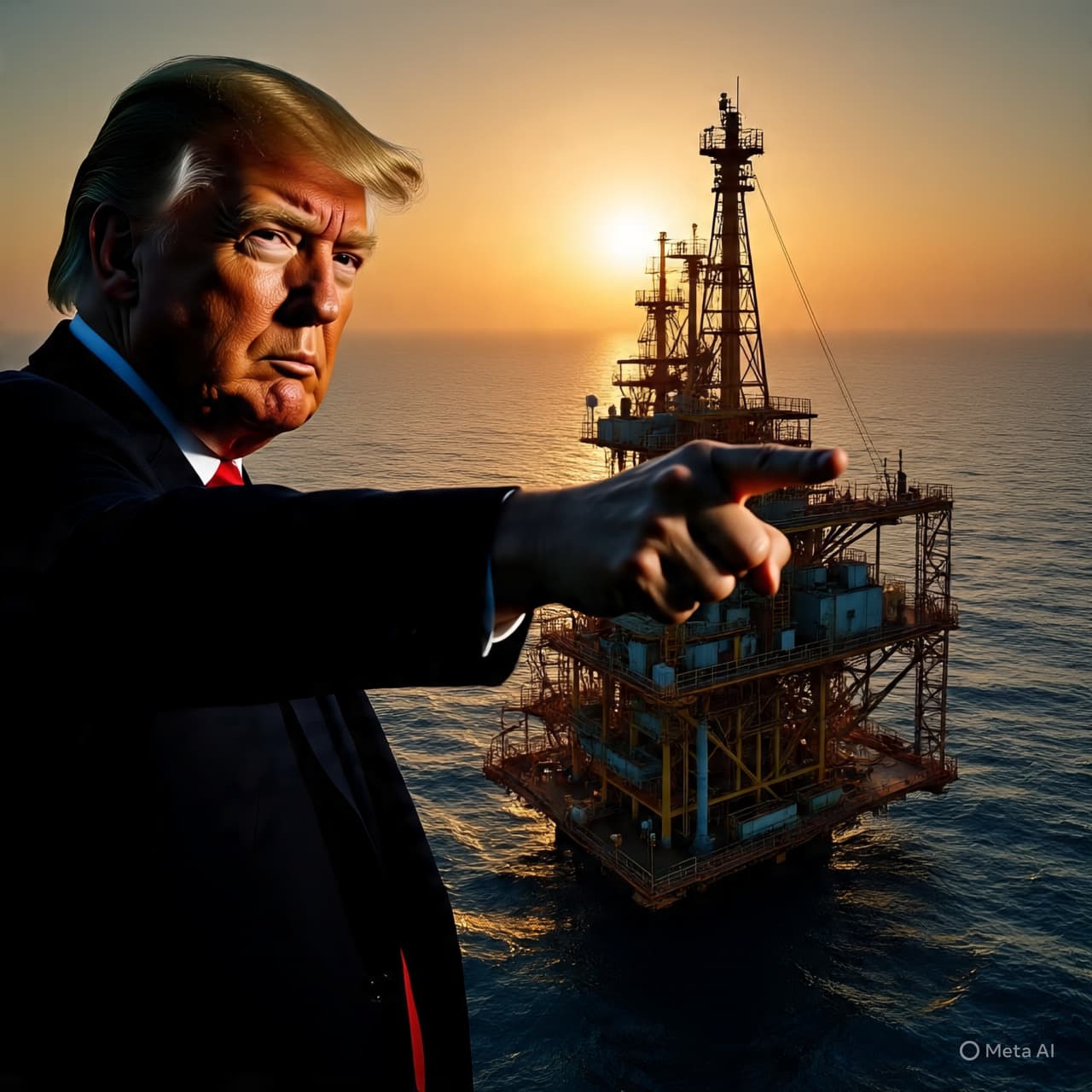
“There’s a lot of oil left in the North Sea,” claimed Donald J. Trump, standing beside Prime Minister Starmer, pointing to what he calls “a great asset.” With those words, he challenged the prevailing UK energy narrative, lighting up debates over regulation, energy costs, and the nation’s future.
Trump’s message is simple: unlock more oil and gas, cut through red tape, loosen tax burdens, and the UK can ease energy bills, reduce dependency on imports, and reclaim control over its own energy security. “Drill, baby, drill,” he says, as if invoking a mantra from another era. It is an appeal to pragmatism, to leveraging what is underfoot rather than chasing idealism that, in his view, leaves households paying for windmills and trade deals.
On one side, there is merit in his argument. The OEUK report suggests there *is* substantial oil & gas yet to be produced—up to 7.5 billion barrels in UK waters—if nearby infrastructure is used smartly and regulation supports development. That potential could mean jobs, domestic revenue, and buffer zones against volatile global oil markets. If global supply shocks return, being forced to import while sitting on resources looks politically embarrassing, economically risky.
Yet there are strong counterpoints. The North Sea is not what it once was. Many fields are mature, extraction costs are rising, and environmental and decommissioning obligations weigh heavily. Even the most bullish estimates assume favorable regulatory conditions, investment certainty, and technology that can reduce carbon emissions—three things not guaranteed in today’s politics. Starmer’s government insists that renewables and climate commitments must remain central, arguing for a balanced energy mix rather than a full tilt back to fossil fuels.
Policy inertia and public concern over climate change and emissions make pure “unlocking” of fossil resources politically sensitive. If the UK loosens regulations too much, it risks future legal, financial, and reputational costs. Also, predictions that North Sea gas will fall short for domestic heating highlight that oil and gas alone cannot cover all future energy needs—particularly for households.
In essence, Trump’s claim and call to action tap into anxiety over high energy bills and a sense of untapped national wealth. He offers a narrative: the UK could do more with what it has, provided the political will and policy adjustments follow. Whether the North Sea becomes a renewed engine or remains a declining resource hinges on those adjustments—and on whether short-term gains are worth long-term trade-offs.
Published by Banx Network. This article is part of the Banx decentralized media programme, powered by the BXE token on the XRP Ledger.