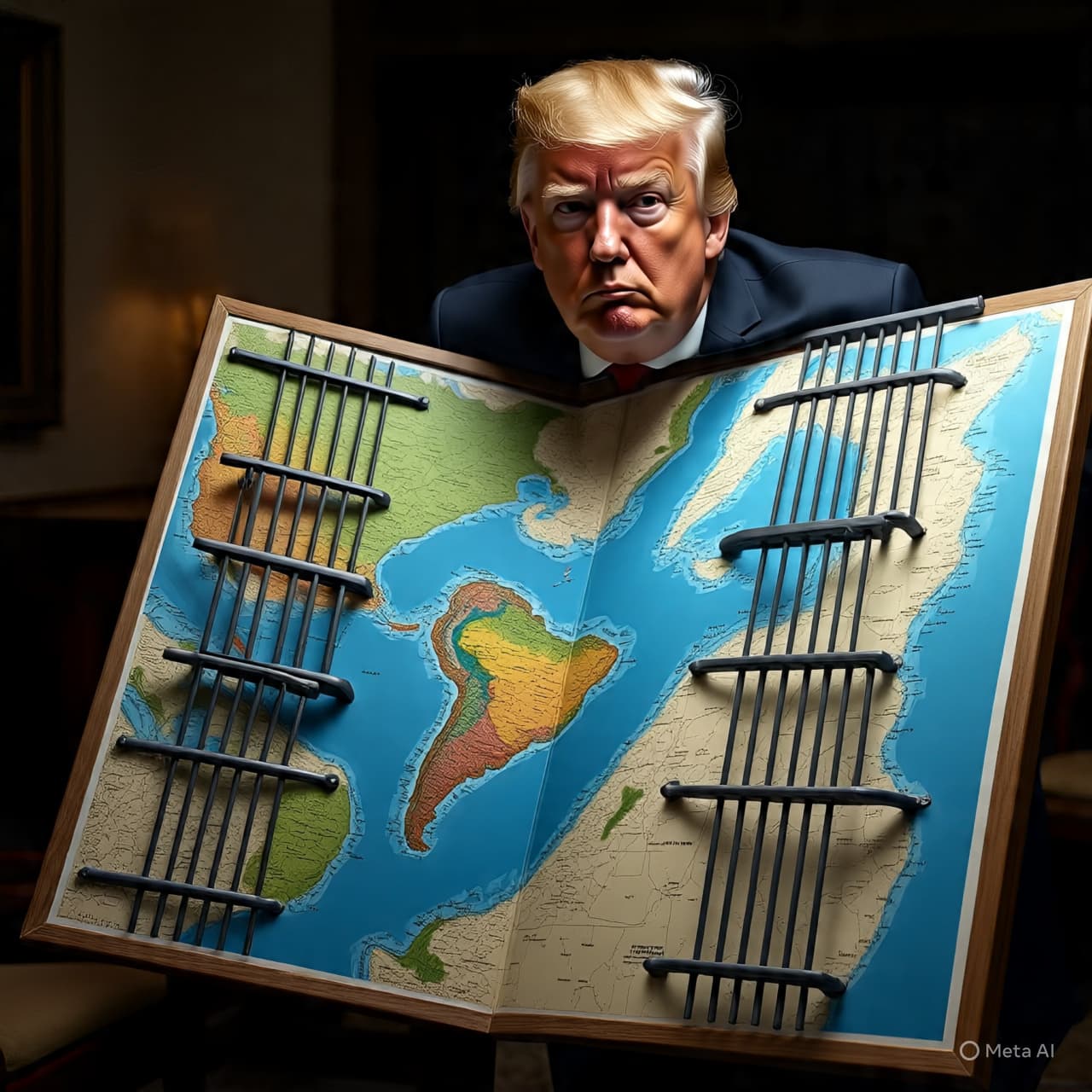
Donald Trump has issued a stern demand to Venezuela: take back prisoners—including people he claims came from mental institutions that the Venezuelan government allegedly forced into the United States—or face a price he calls “incalculable.” The message was posted on his Truth Social platform, and though he made strong claims about harm and abuses, he provided few details to back up the accusations.
He called the people he’s demanding to be sent back “prisoners,” and claimed some are from mental institutions. He claimed thousands have been injured, even killed, by what he described as “monsters.” Yet he did not clearly define who these individuals are, how many there are, or exactly what actions the U.S. would take if Venezuela refuses. The rhetoric was fierce, the tone unyielding, as strong as any diplomatic warning in recent times.
This moment crystallizes several tensions in U.S.–Venezuela relations: on one hand, issues of migration, asylum, and the treatment of noncitizens; on the other, assertions of sovereignty, national pride, and political posturing. Trump’s framing seeks not just compliance, but a symbolic reversal of what he portrays as Venezuelan overreach—forcing people into the U.S.—while positioning the U.S. as morally and politically aggrieved.
The lack of clarity is itself strategic. By using terms like “monsters” and “incalculable price,” no boundaries are clearly set, which allows for flexibility—or threatens ambiguity. The Venezuelan government, under President Nicolás Maduro, denounced U.S. actions as aggressive and violating Venezuelan sovereignty. They see in Trump’s statements a pattern: allegations, demands, and threats, often without transparent evidence or negotiated mechanisms.
International observers and human rights groups are cautioning that this sort of ultimatum can strain diplomatic norms. If the U.S. intends to act—economically, militarily, legally—it may face pushback not just from Venezuela, but also from allies concerned about precedent and human rights. Moreover, aggressive rhetoric risks inflaming domestic Venezuelan support for Maduro, framing the U.S. as a hostile invader rather than a critic.
One of the most significant consequences may be the erosion of trust. Demands for repatriation—especially of people from mental institutions or vulnerable populations—raise questions about due process, documentation, standards of care, and legal protections. If those populations are returned without transparent legal and humanitarian safeguards, the outcome could be severely troubling.
Trump’s demand also plays in domestic politics. For his supporters, it underscores his image as tough on immigration, strong on national security, and willing to confront foreign governments. It appeals to narratives of defending the borders, defending the American people, and holding other nations accountable. For opponents, the rhetoric risks overreach, mischaracterization, and possibly inflaming conflicts that could spiral.
The stakes are high. If Venezuela refuses, the “incalculable” price could include sanctions, diplomatic isolation, legal maneuvers, or economic pressure. Or it could remain rhetorical threat. The ambiguity ensures that both sides perceive leverage. For Venezuela, rejecting the demand may assert dignity; for the U.S., escalating pressure may demonstrate resolve.
In the end, this ultimatum is less about the immediate issue of prisoners, and more about projection—of power, of morality, and of politics. It reveals much about how nations increasingly use aggressive statements, moral framing, and public platforms to establish narratives, rather than quietly negotiate. Whether this confrontation leads to concrete action, broken agreements, or further destabilization remains uncertain—but the warning itself already marks a point of significant strain.
Published by Banx Network. This article is part of the Banx decentralized media programme, powered by the BXE token on the XRP Ledger.