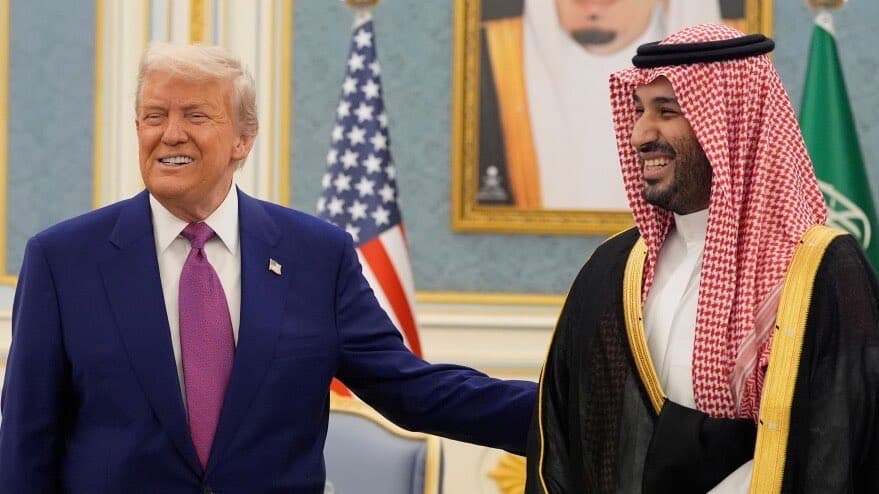
In a moment that sent waves across global political circles, President Donald Trump formally designated Saudi Arabia as a “major non-NATO ally” of the United States, marking one of the most significant diplomatic upgrades in U.S.–Middle East relations in decades. Delivered from a gold-draped podium and broadcast across major networks, Trump’s announcement signals a decisive shift in America’s long-term foreign policy strategy.
This designation is far more than a symbolic gesture. It represents a sweeping expansion of military, strategic, and economic cooperation between two nations that already share one of the world’s most influential partnerships. As a major non-NATO ally, Saudi Arabia gains access to priority U.S. military technologies, streamlined arms purchases, specialized training, enhanced intelligence sharing, and joint defense programs. Only a select group of strategic partners — including Japan, Israel, South Korea, and Australia — hold this level of trust and access.
Trump emphasized that this step is meant to “take our military cooperation to even greater heights,” underlining the vital role Saudi Arabia plays in energy markets, Red Sea security, counterterrorism operations, and regional stability. In a world shifting toward new geopolitical alliances — including the rise of BRICS cooperation and strengthened Eastern power blocs — the U.S. is clearly reinforcing its foothold in the Middle East.
Saudi Arabia’s elevation also comes at a moment when global tensions are high, energy supply chains face uncertainty, and maritime routes around the Red Sea remain strategically vulnerable. Strengthening ties with Riyadh helps secure oil flows, stabilize regional conflicts, and maintain influence over one of the most critical geopolitical corridors on Earth.
Reactions have been swift. Supporters argue that this move cements a long-standing partnership with a nation crucial to global energy and security architecture. They view it as a masterstroke that improves America’s leverage in the Middle East while protecting its interests against emerging rivals. Critics, however, warn that deepening U.S.–Saudi ties might shift political balances or intensify rivalries with countries competing for regional power.
Beyond the politics, one thing is certain: this designation solidifies Saudi Arabia’s place among America’s closest global partners. It signals expanded cooperation across defense, energy, cybersecurity, intelligence, advanced technology, and counterterrorism — shaping the future of both nations’ strategic influence for years to come.
Simple Facts Attached:
• Saudi Arabia is now a U.S. “major non-NATO ally,” unlocking high-level defense privileges.
• Only about 20 nations worldwide hold this status.
• Benefits include advanced arms access, intelligence sharing, and joint operations.
• The U.S.–Saudi partnership spans more than 80 years of strategic cooperation.
• Saudi Arabia controls the world’s largest oil exports and major global energy routes.
• Move strengthens U.S. influence in Red Sea and Middle East security networks.
• Announcement signals renewed American investment in strategic alliances.
Published by Banx Network. This article is part of the Banx decentralized media programme, powered by the BXE token on the XRP Ledger.