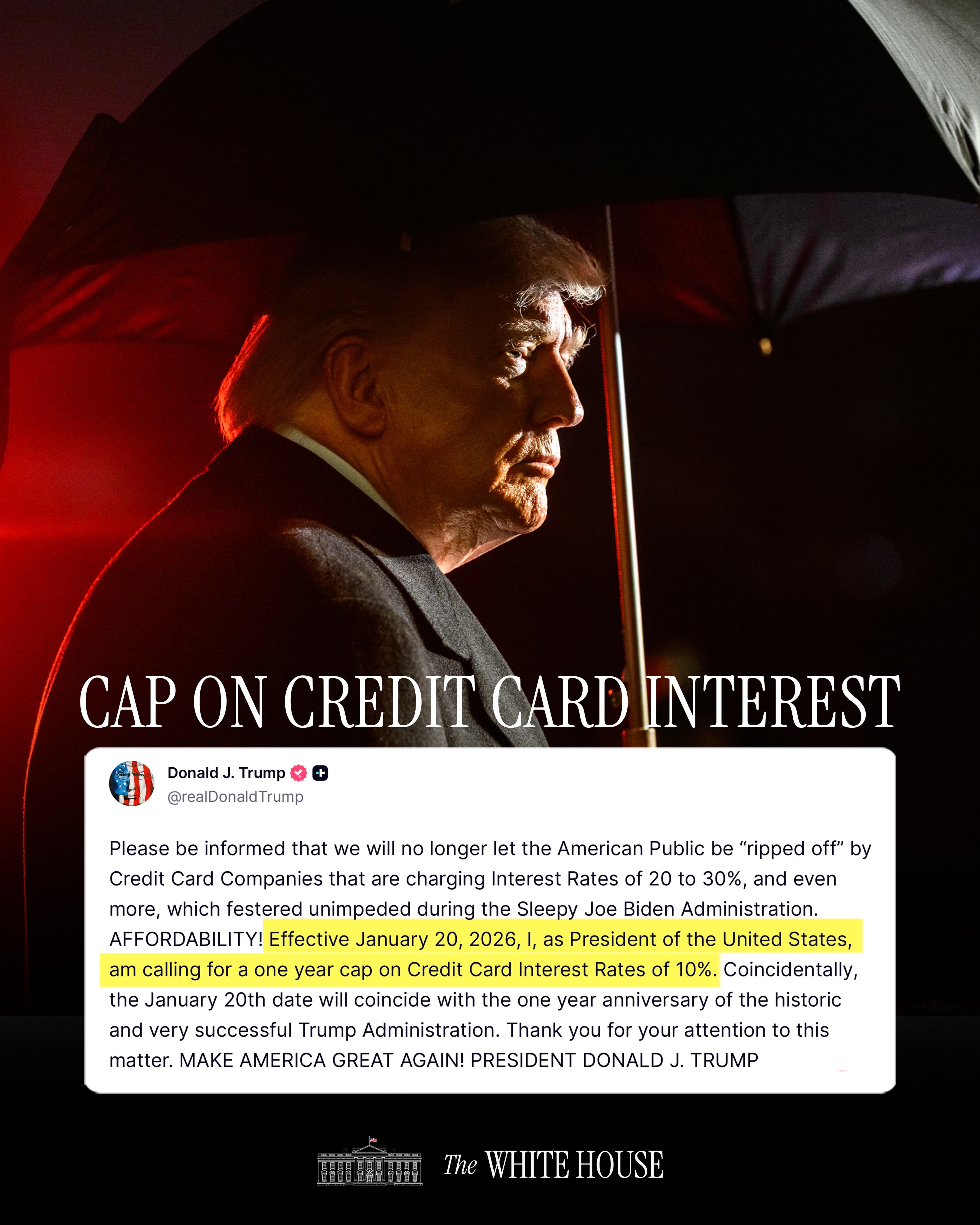
In a major announcement that has ignited nationwide debate, President Donald J. Trump revealed a proposed one-year cap on credit card interest rates at 10%, set to take effect on January 20, 2026. The move is framed as a direct response to rising household debt and long-standing concerns over what many Americans view as excessive interest charges by credit card companies. According to the statement shared by the White House, the cap would temporarily limit interest rates that currently range from 20% to over 30%, offering immediate relief to millions of consumers carrying revolving balances. The administration argues that these high rates expanded sharply during recent years, increasing financial pressure on working- and middle-class households. The proposed cap is described as temporary, lasting one year, and positioned as a stabilizing measure rather than a permanent restructuring of the credit market. Officials emphasize that the goal is affordability giving families room to recover while encouraging responsible lending practices across the financial sector. Supporters of the plan say it could: Reduce monthly debt servicing costs Slow the growth of consumer defaults Improve disposable income for households Pressure lenders to compete on transparency rather than penalties Critics, however, warn that banks and card issuers may respond by tightening credit access, raising fees, or limiting rewards programs. Financial institutions argue that interest rates reflect risk, inflation, and operational costs, and that caps could distort lending incentives. The timing of the announcement aligned with January 20 is symbolically significant, marking the anniversary of Trump’s return to office. The administration presents the proposal as part of a broader economic agenda centered on consumer protection, domestic job growth, and what it calls “fair financial access.” Whether the cap moves from announcement to implementation will depend on regulatory mechanisms and industry response. Still, the declaration alone has already sent shockwaves through financial markets, consumer advocacy groups, and social media, signaling that credit costs may soon become a central economic battleground in 2026.
Published by Banx Network. This article is part of the Banx decentralized media programme, powered by the BXE token on the XRP Ledger.