Key Highlights
- Incident:A crane collapse at the Port of Rio de Janeiro resulted in two fatalities.
- Response:Emergency services arrived promptly, but both riggers died at the scene.
- Investigation:Authorities are examining maintenance records and safety protocols.
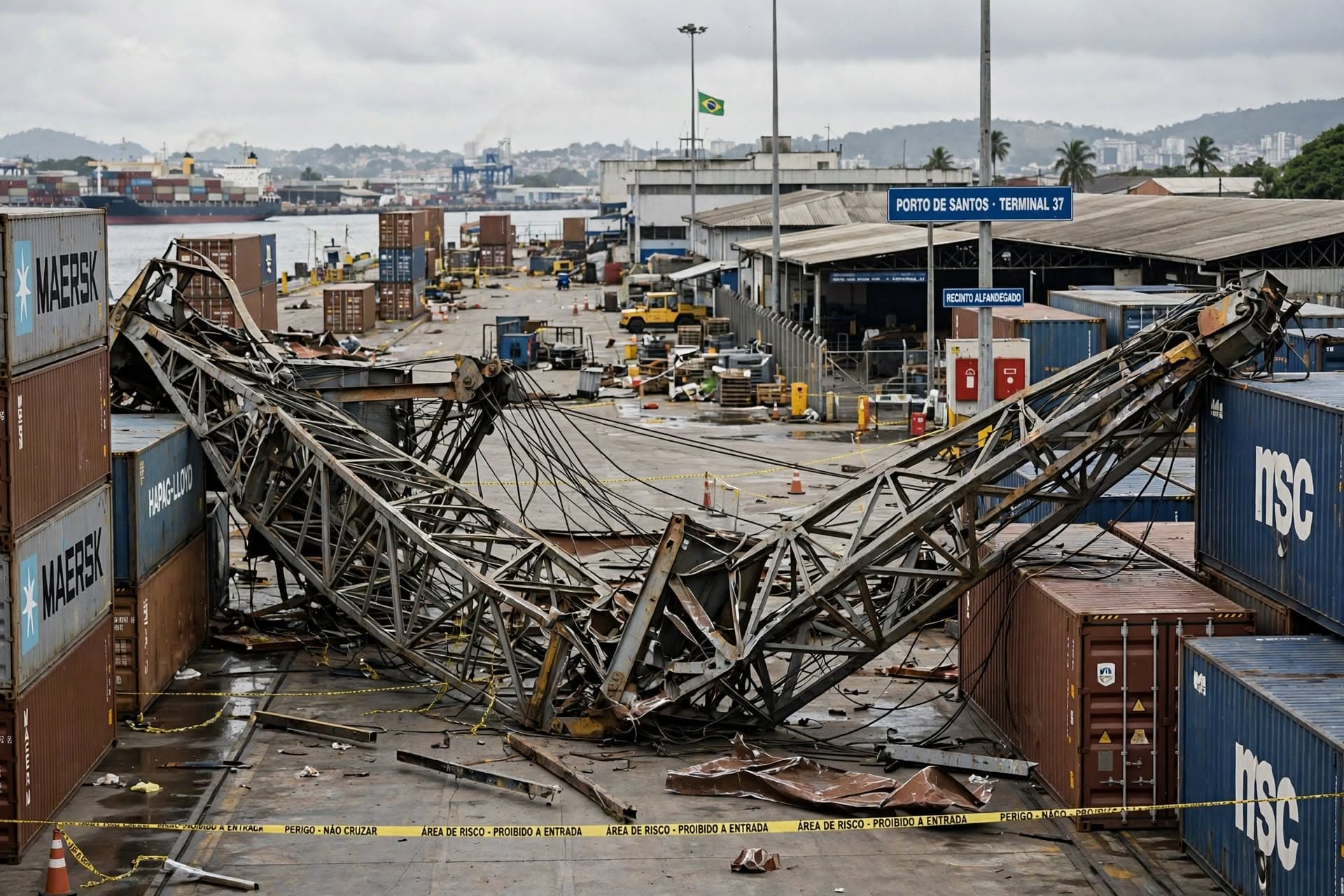
A heavy cargo crane collapsed onto a commercial dock berth at the Port of Rio de Janeiro on Sunday morning, tragically killing two riggers and halting container operations across the central terminal sector. The incident occurred during a high-tonnage freight transfer when the lattice boom snapped near its pivot base, dropping a forty-ton steel frame directly onto the primary loading deck.
Witnesses, including dockworkers operating adjacent cargo rigs, reported hearing a metallic shear sound just before the main counterweight assembly tore free from its turntable housing. The falling structure not only crushed an auxiliary utility vehicle parked alongside the vessel hull but also plunged into a narrow access lane where ground rigging crews were directing container placements.
Port paramedics and municipal emergency units reached the scene within ten minutes, but both riggers succumbed to severe blunt force trauma instantly. Heavy rescue teams deployed pneumatic lifting cushions and mobile winches to stabilize the buckled crane boom, allowing investigators to access the impact zone safely.
According to terminal records, the forty-meter crane had undergone scheduled hydraulic maintenance three weeks prior, following reports of winch drum slippage during heavy lifts. Field inspectors noted severe corrosion along the primary structural pins that locked the main jib assembly to the rotating cabin superstructure, raising concerns about the crane's operational safety.
Paulo Barbosa, a representative from the port workers union, expressed frustration as industrial police cordoned off the pier. "We filed formal maintenance grievances last month regarding metal fatigue on the older dockside cranes," Barbosa stated. "The replacement pin assemblies remained on backorder while daily cargo quotas were increased." This statement highlights ongoing safety concerns among workers at the terminal.
In response to the incident, maritime port authorities suspended container discharge operations across three adjacent berths while civil defense engineers evaluate the structural integrity of neighboring rail-mounted gantry cranes. Cargo ships anchored in the bay were instructed to remain at outer moorings until dockside safety clearances are reissued, ensuring no further incidents occur.
Federal labor inspectors have seized site maintenance logs, equipment operator certifications, and automated load-cell telemetry data from the terminal operator's central administration offices. Investigators are focusing on whether the lift exceeded maximum rated weight thresholds under the prevailing wind conditions at the time of the accident.
Municipal prosecutors have opened a formal workplace safety inquiry into the port operator and its mechanical maintenance contractors. Technical teams from the state forensic institute arrived on the berth by mid-afternoon to collect structural steel samples from the fractured boom joint for metallurgical testing, aiming to determine the cause of the failure.
As night fell across the harbor, work crews using heavy barge cranes continued positioning rigging cables around the destroyed jib arm to hoist the wreckage off the berth apron. Forensic officers remained on the scene, collecting physical evidence to aid in the investigation.
This tragic incident underscores the critical importance of rigorous safety protocols and maintenance practices in industrial environments, particularly in high-risk areas like cargo terminals.
Published by Banx Network. This article is part of the Banx decentralized media programme, powered by the BXE token on the XRP Ledger.