Key Highlights
- Incident:Six miners drowned in a flash flood at a Zimbabwe gold mine.
- Response:Emergency crews struggled to rescue trapped workers amid rising water levels.
- Investigation:Authorities have launched an inquiry into safety compliance and operational practices.
Harare, Zimbabwe—A sudden flash flood inundated an underground gold pit Sunday morning, drowning six miners trapped inside narrow extraction tunnels. Torrential surface runoff breached a dirt perimeter embankment following a heavy downpour, pouring thousands of gallons of mud and water directly down the primary entrance shaft. The incident highlights the ongoing risks associated with informal mining operations in the region, particularly during the rainy season.
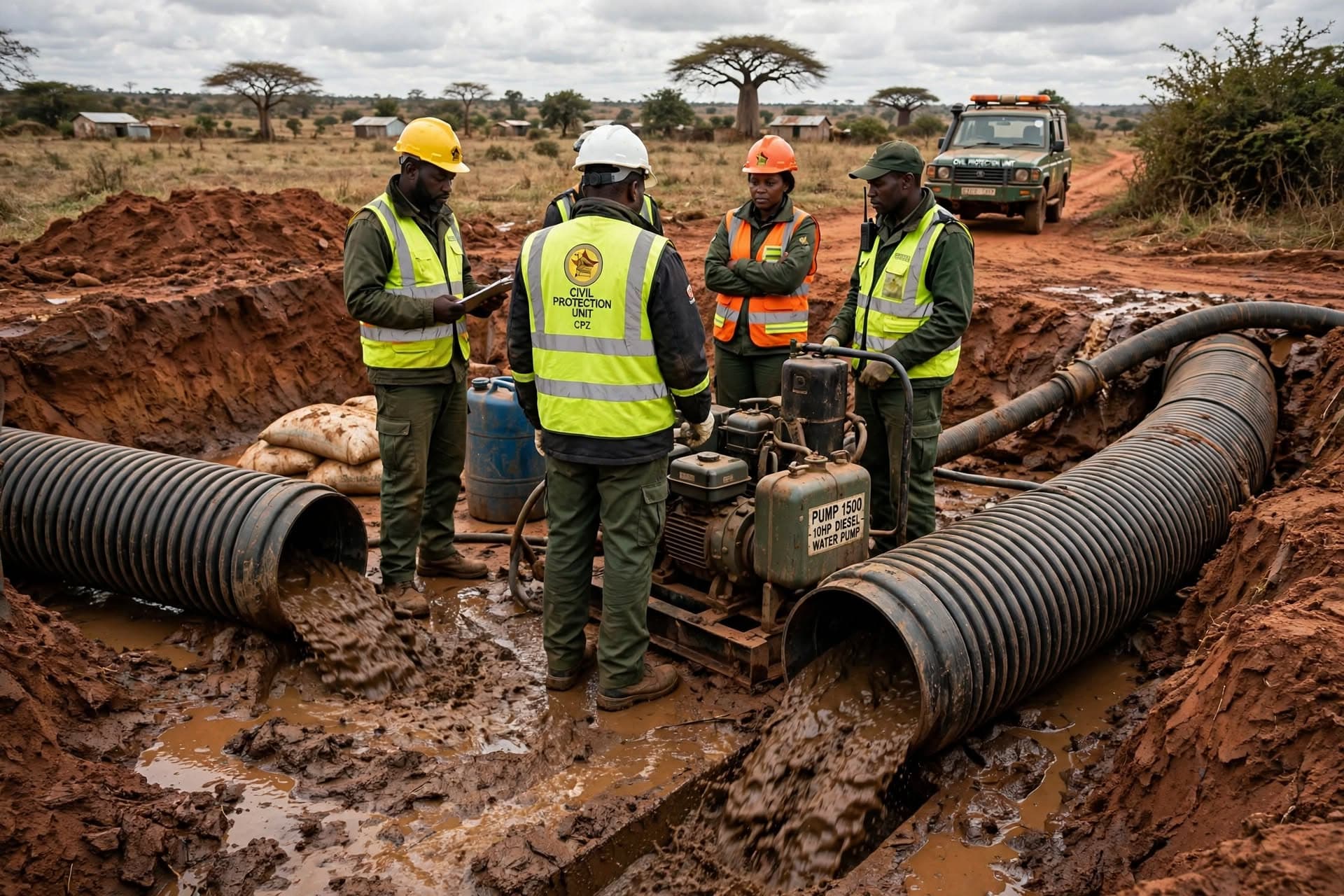
Workers at the surface attempted to operate mechanical drainage pumps, but rising water levels submerged the lower chambers within minutes. Emergency crews arrived on site as disoriented surface workers used buckets and ropes to pull floating debris out of the flooded shaft opening. Despite their efforts, the situation quickly escalated, complicating rescue operations.
Rescue teams from the national mining safety board brought high-capacity diesel pumps to clear the waterlogged subterranean passages. Drainage operations continued for six hours before divers could navigate the mud-choked shaft to reach the lower extraction face where the six miners were trapped. The urgency of the situation was compounded by the lack of adequate safety measures at the site, which had been operating without necessary infrastructure to manage seasonal flooding.
Inspection reports show the site operated without required concrete headworks or diversion channels designed to protect open shafts from seasonal surface runoff. Informal mining crews in the region frequently dig unreinforced shafts along dry riverbeds, leaving subterranean tunnels vulnerable to rapid flooding during sudden weather shifts. This incident serves as a stark reminder of the dangers faced by miners in such precarious conditions.
District mining officer Tendai Moyo addressed community members gathered near the flooded pit mouth. "The structural perimeter around the shaft collar failed completely under the pressure of surface runoff," Moyo said. "The workers below had zero warning before the water column dropped down the main access ladder." His comments reflect the broader concerns regarding mining safety in Zimbabwe, where informal operations often lack oversight.
Local health officials confirmed all six bodies were recovered from the lower gallery and transferred to a regional hospital morgue for formal identification procedures. Paramedics treated three surface workers for minor injuries and severe shock sustained during initial rescue attempts. The emotional toll on the community is profound, as families await news of their loved ones.
In response to the tragedy, government inspectors ordered the immediate suspension of all small-scale mining operations across the district pending emergency structural safety audits. Officials warned that unreinforced shafts along river basins pose an immediate hazard as seasonal rains intensify across the province. The need for stricter regulations and enforcement in the mining sector has never been more urgent.
Judicial authorities opened an inquiry into the mine's operating permit and safety compliance records. Investigators plan to question the site supervisor regarding the absence of surface drainage diversions and emergency evacuation equipment. This investigation could lead to significant changes in how mining operations are regulated in Zimbabwe.
Work crews remain on site securing the shaft entrance with heavy timber bracing to prevent further soil collapse. Safety officers plan to seal the flooded pit permanently once forensic technicians finish mapping the underground tunnel layout. The community is left grappling with the aftermath of this disaster, as calls for improved safety measures grow louder.
Published by Banx Network. This article is part of the Banx decentralized media programme, powered by the BXE token on the XRP Ledger.