Key Highlights
- Death Toll:At least 34 migrants confirmed dead after a boat sank off Senegal.
- Location:The incident occurred near Kébémer, about 180 kilometers from Dakar.
- Ongoing Crisis:The tragedy underscores the perilous migration route from West Africa to the Canary Islands.
DAKAR, Senegal — At least 34 people have died after a vessel carrying migrants bound for Spain's Canary Islands sank off the coast of northwestern Senegal, marking the latest deadly disaster along one of the world's most perilous maritime migration routes.
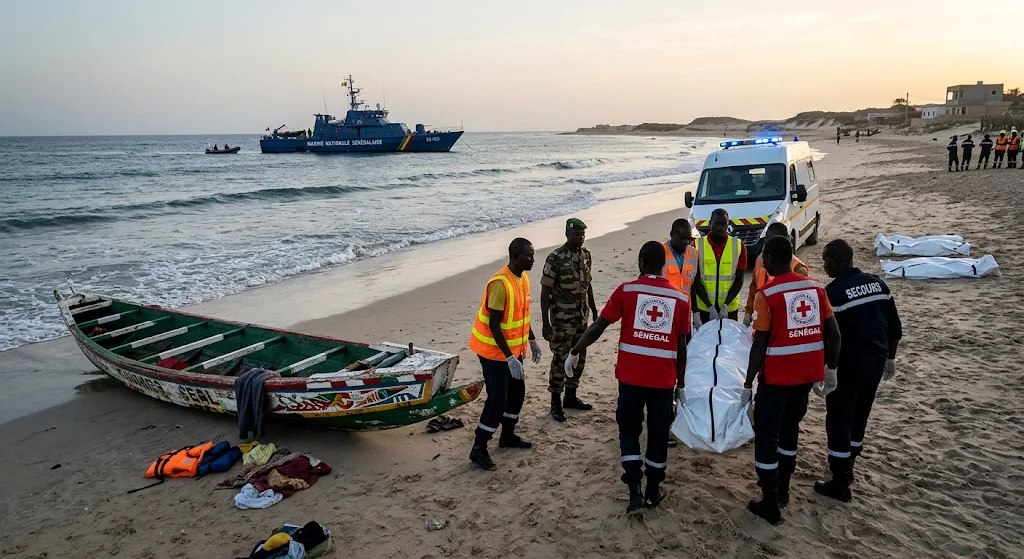
The wooden pirogue capsized near Kébémer, approximately 180 kilometers north of the capital, Dakar. Emergency responders and local naval rescue units recovered dozens of bodies from the water, while continuous search and recovery operations remain underway to locate additional missing passengers.
The vessel had set sail from the West African coast carrying dozens of migrants attempting the treacherous Atlantic crossing toward the Spanish archipelago. Strong ocean currents, high waves, and overcrowded conditions frequently cause boats along this passage to capsize or drift off course into open ocean waters.
Senegalese authorities and humanitarian organizations arrived at the coastal site after local fishermen raised the alarm about debris and bodies drifting near the shoreline. Medical teams provided immediate care to isolated survivors, while local morgues struggle to process the casualties.
The tragedy highlights the ongoing migration crisis along the West Africa-to-Canary Islands maritime trail, which human rights groups and international agencies rank among the deadliest globally. Enhanced security measures, joint naval patrols, and drone surveillance around traditional departure points in northern Senegal and Mauritania have increasingly forced smuggling networks to launch overloaded boats from further south, significantly prolonging the hazardous ocean voyage.
Local government representatives urged young Senegalese and sub-Saharan migrants against attempting the high-risk journey, pledging heightened enforcement against human trafficking networks operating along the coast. Meanwhile, emergency authorities in the Canary Islands report that local reception centers remain overwhelmed following a recent surge in migrant arrivals.
International bodies and human rights organizations are renewing calls for safe, legal migration pathways alongside comprehensive economic support for coastal communities across West Africa. Experts stress that until underlying drivers—such as severe youth unemployment, depleted local fisheries, and climate-induced economic strain—are addressed, desperate travelers will continue to risk their lives on treacherous ocean voyages despite the mounting toll.
Published by Banx Network. This article is part of the Banx decentralized media programme, powered by the BXE token on the XRP Ledger.