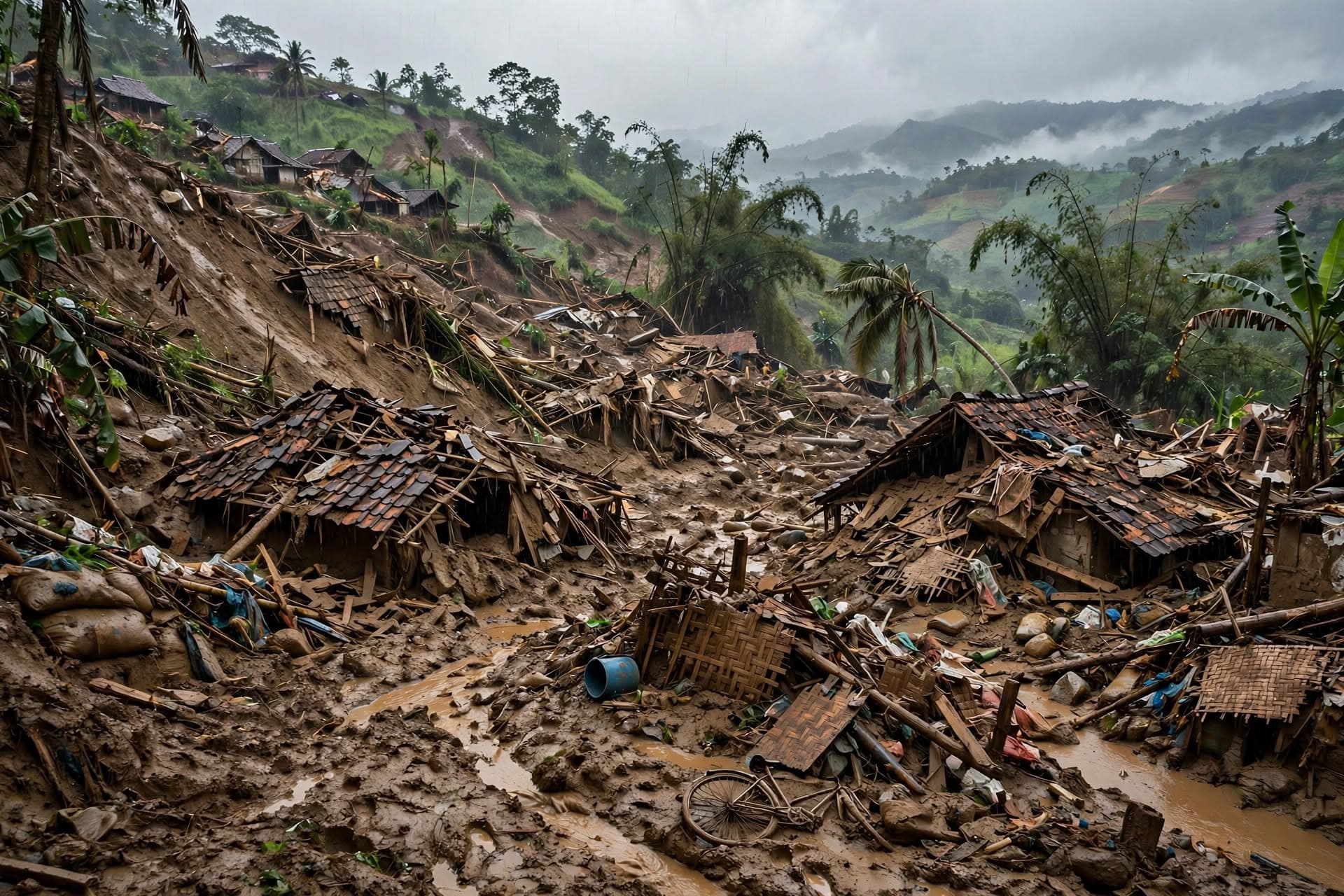
Cianjur, Indonesia— The hill gave way around 4:30 a.m. on October 30, 2026, after a night of relentless rain. Mud and rock slid 300 meters and buried at least 15 houses in a mountain hamlet above Cianjur. Screams woke neighbors. Then silence.
The rain had not stopped for 12 hours. Local officials said 180 millimeters fell. The slope above Cibuluh village was already cracked from last year’s quake. Farmers said water poured from the hillside like a waterfall before it broke.
Search teams arrived on foot. The access road was gone. “We heard a deep rumble, like trucks passing,” a survivor who lost his brother said. “When I ran out, my neighbor’s house was not there. Just mud.” He dug with his hands until his fingers bled.
By noon, the national search and rescue agency counted seven bodies recovered and at least 18 missing. The numbers are fluid. Village records are incomplete. Some families had moved in with relatives to escape the rain. No one knows exactly who was home.
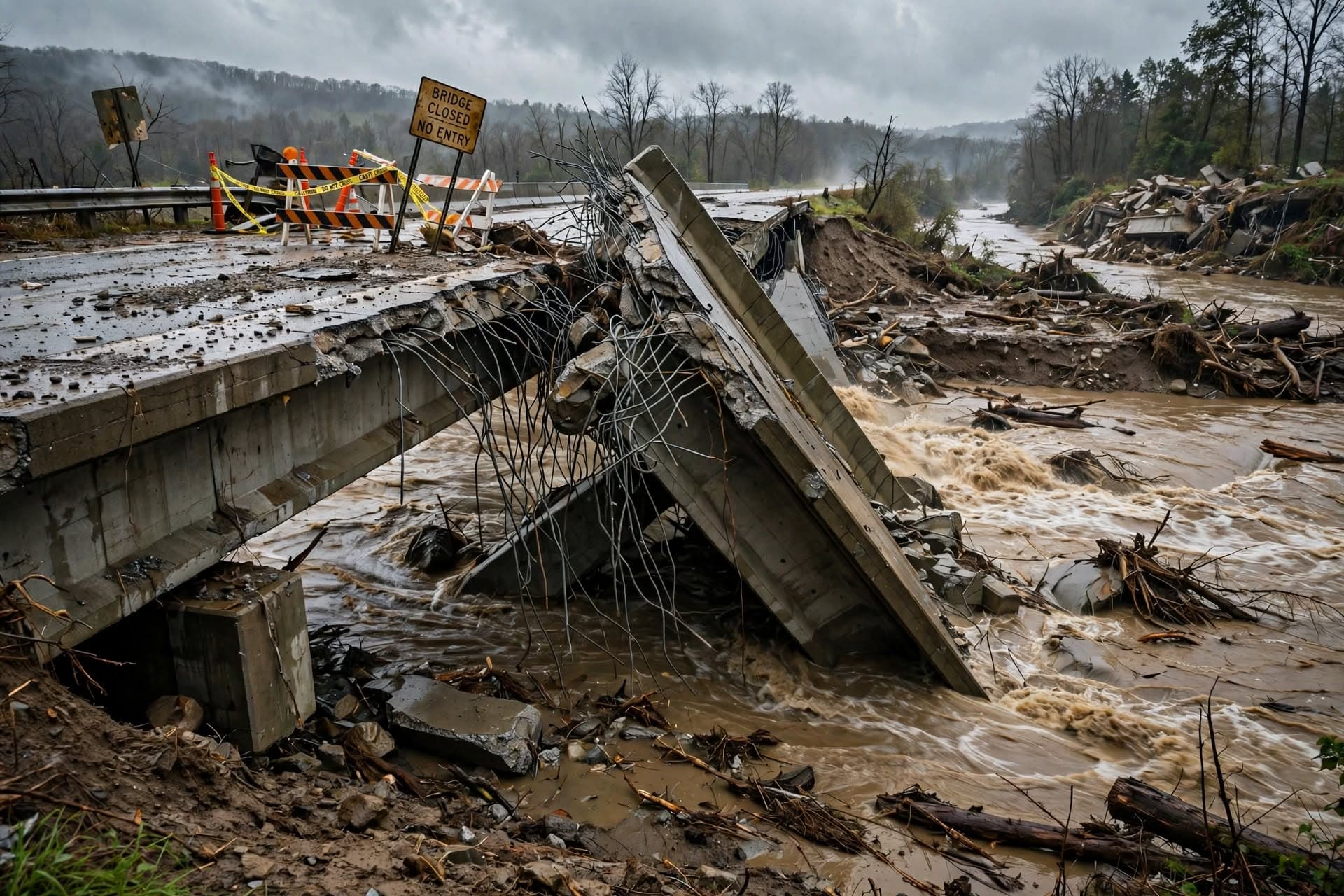
Heavy equipment cannot get up. The only road is narrow, muddy, and blocked by two smaller slides. An excavator sent from Cianjur city got stuck three kilometers down. Rescuers use hoes and shovels. Rain keeps falling.
This ridge has slid before. In 2022 a smaller slide killed two. The regional disaster office had flagged the area as high-risk and proposed relocation. The plan stalled over land titles. People stayed because farms are here. They have nowhere else to go.
The meteorological agency said West Java’s highlands are saturated. Soil moisture is at peak. More heavy rain is expected tonight. Officials ordered three neighboring hamlets to evacuate. Some refuse.
In the village health post, survivors sit wrapped in blankets. A mother waits for word on her two children. The list of missing hangs on a wet piece of cardboard.
Crews will work through the night with lights. The mud is deep and unstable.
Published by Banx Network. This article is part of the Banx decentralized media programme, powered by the BXE token on the XRP Ledger.