On the streets of Toronto, roads have never been merely asphalt and painted lines. They are the city's quiet argument about who gets to move, and in what manner. When the bike lanes along Bloor Street West began to come apart, that argument moved from council chambers to street corners, from policy papers to police arrest records.
Toronto police confirmed this week that a third person has been arrested in connection with protests against bike lane removal in Etobicoke. A 20-year-old Toronto resident was taken into custody Wednesday evening near Bloor Street West and Lothian Avenue, accused of taking a city sign and attempting to leave the area. He faces charges of theft under $5,000 and obstructing the lawful use of property. Earlier, a 25-year-old woman from Hamilton was arrested Wednesday afternoon after allegedly telling officers she would not leave the bike lane and sitting on a curb barrier separating the lane from the road. She was charged with obstructing a peace officer and a minor offense.
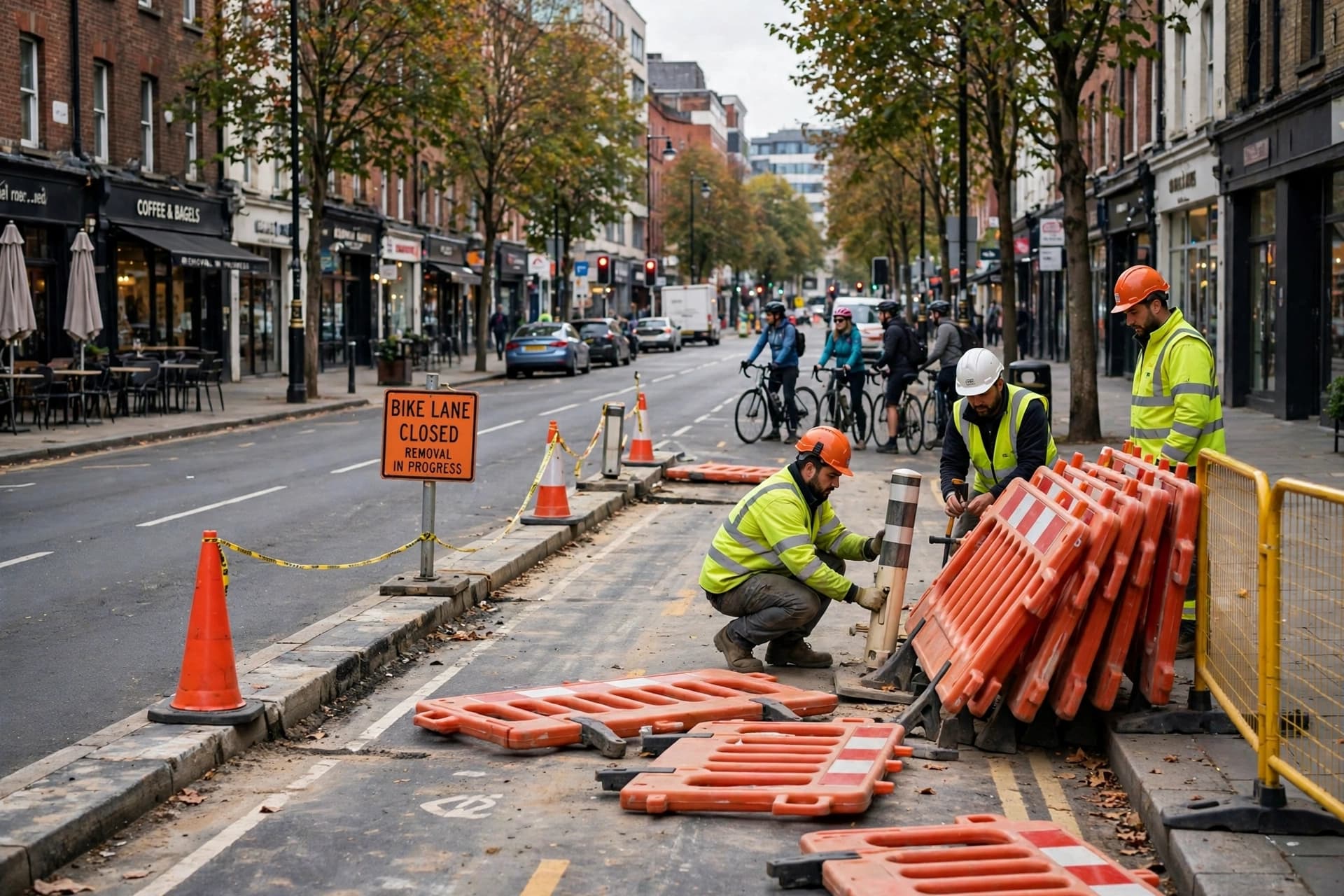
These arrests took place amid a standoff that has stretched across several days. Since demolition work began Tuesday, it has been briefly interrupted more than once by protesters at the scene. On Tuesday evening, a group of cyclists surrounded a construction vehicle and blocked its movement, and only under police escort were the workers able to leave.
The protesters' demand is not complicated. They believe removing the bike lanes will make the road more dangerous for everyone who uses it. Michael Longfield, executive director of Cycle Toronto, the advocacy group that organized the action, said on a radio program that hundreds of people came out to support the cause, and the scene was "moving." Toronto Mayor Olivia Chow had earlier proposed a compromise that would keep the bike lanes while restoring a motor vehicle lane. But Ontario Transportation Minister Prabmeet Sarkaria responded plainly on social media: "These bike lanes are coming out. We have a clear mandate, and we will deliver on it."
Toronto Police Chief Myron Demkiw chose his words carefully when addressing the matter. He acknowledged that the public holds "different views" on the issue, but noted that the removal work is "lawful" and must continue. He reminded that those who do not follow police directions or interfere with lawful activity "do put themselves in a position where they could be charged criminally and go before the courts." Those words are a statement of law, yet they also reveal a subtle tension—in a democracy, the right to peaceful protest and the duty to keep public order are separated by a line that is sometimes no clearer than the bike lane markings on the pavement.
By Thursday morning, organizers said the protests would continue. The fate of the roughly one-kilometer stretch, running from Islington Avenue to Royal York Road, is not yet settled. Litigation is still moving forward, and Cycle Toronto has sought leave to appeal to the Supreme Court of Canada in an effort to stop the removal through the courts. On the street, every curb block pried loose, every construction vehicle halted, every pair of hands placed in handcuffs tells a story still unfinished—about urban space, about rights, and about the long work of negotiation.
AI Image Disclaimer: The accompanying visual is AI-generated for illustrative purposes only.
Sources: Toronto Star, Toronto Police Service, CTV News, CBC News, NOW Toronto
Published by Banx Network. This article is part of the Banx decentralized media programme, powered by the BXE token on the XRP Ledger.